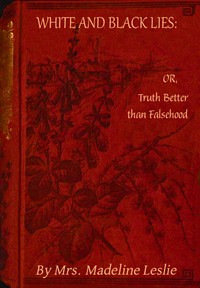
White and black lies
Human-made only is on in this browser, so Project Gutenberg's machine summaries are left out. Settings.
"White and Black Lies: Or, Truth Better than Falsehood" by Madeline Leslie is a moral tale written in the late 19th century. This book explores the themes of honesty and the consequences of deceit through the experiences of a family rendered troubled by their children’s propensity for lying. The narrative prominently features siblings Joseph, Ellen, and Alice, whose struggles with truth have far-reaching implications for their character and relationships. The opening of the story introduces us to Joseph Saunders, a mischievous young boy raised by his Aunt Clarissa after the death of his mother. Through Aunt Clarissa's indulgence, Joseph learns little about accountability, leading to a reckless attitude toward lying. The text further delves into the dynamics among Joseph's siblings—Ellen, who is highly influenced by her strong-willed younger sister, Alice—and the impact of their father's stern yet caring personality on their moral upbringing. As the scene unfolds, it becomes clear that Joseph's small acts of deceit foreshadow larger consequences, setting the stage for a tale rich with moral lessons about the importance of truthfulness and the dangers of habitual lying.
AI-generated Summary written by Project Gutenberg, by machine.
- Language
- English
- On Project Gutenberg since
- 16 May 2024
- Read in the last 30 days
- 452 times at Project Gutenberg
More by Madeline Leslie
See all: More by Madeline Leslie
Bertie and the Gardeners; or, The Way to be Happy
Minnie's Pet Lamb
Bertie's Home; or, the Way to be Happy
Minnie's Pet Dog
Minnie's Pet Horse

Minnie's Pet Monkey
Minnie's Pet Parrot
The Lost Kitty
The Factory Boy
The pearl of patience
Minnie's Pet Cat
Little Frankie on a Journey
Little Frankie and His Cousin
The Pearl of Love; or, Josey's Gift
Ingleside;
Little Frankie at His Plays
Little Robins' Love One to Another
Little Frankie at School
Cora and The Doctor; or, Revelations of A Physician's Wife