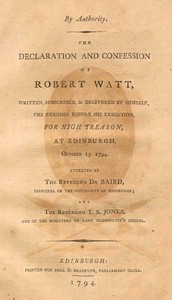
The declaration and confession of Robert Watt
by Robert Watt
With George Husband Baird · With T. S. Jones
Human-made only is on in this browser, so Project Gutenberg's machine summaries are left out. Settings.
"The Declaration and Confession of Robert Watt: Written, Subscribed, & Delivered by Himself, The Evening Before His Execution, for High Treason, at Edinburgh" is a historical account authored by Robert Watt during the late 18th century. This document serves as both a personal confession and a defense of his actions leading to his execution, and it is likely tied to the social and political unrest of that era. The likely topic revolves around political treason, religious conviction, and the personal reflections of a man facing death. In his declaration, Robert Watt recounts his life journey, beginning with his early religious influences, deep convictions, and tragic backsliding into ambition and pride, which ultimately led to his involvement in a reformist conspiracy. Watt details his plans for reforming society, which included secret societies and public agitation over what he perceived as injustices. He expresses remorse and a desire to offer his story as a cautionary tale, emphasizing his sincere intentions despite the consequences of his actions. Through his reflections, Watt implores the reader to understand the complexity of human motivation and the grave nature of his infractions against the state, ultimately seeking forgiveness and hoping for redemption as he faces his imminent execution.
AI-generated Summary written by Project Gutenberg, by machine.
- Language
- English
- On Project Gutenberg since
- 21 March 2023
- Read in the last 30 days
- 308 times at Project Gutenberg