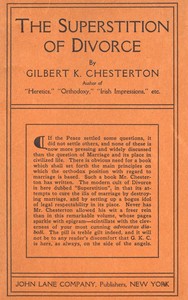
The Superstition of Divorce
"The Superstition of Divorce" by G. K. Chesterton is a philosophical examination of the social and moral implications of divorce, written in the early 20th century. The text argues that divorce is treated as a form of liberation in modern society but critiques this notion by asserting that it undermines the sanctity of marriage, which is fundamentally a promise or vow. Through a series of essays, Chesterton explores the historical significance of marital vows and the societal consequences of viewing marriage merely as a legal contract. At the start of the work, the author introduces the idea that contemporary discussions around divorce often neglect to adequately consider the meaning and implications of marriage itself. He emphasizes a need to understand what a marriage vow represents, positioning it as an act of commitment rather than a casual choice. Chesterton critiques the opportunistic attitudes of reformers who advocate for easier divorce laws without reflecting on the foundational aspects of marriage itself. He thus sets the stage for a nuanced debate about not only the nature of divorce but also the broader implications for family and society, challenging readers to reconsider their perspectives on these issues.
Summary written by Project Gutenberg, by machine.
- Language
- English
- On Project Gutenberg since
- 17 July 2020
- Read in the last 30 days
- 659 times at Project Gutenberg
More by G. K. Chesterton
See all: More by G. K. Chesterton
A Chesterton Calendar
Index of the Project Gutenberg Works of Gilbert K. Chesterton
G. F. Watts
The Man Who Was Thursday: A Nightmare
The innocence of Father Brown
The secret of Father Brown
The wisdom of Father Brown

The Ballad of the White Horse
Orthodoxy

What's Wrong with the World

Tremendous Trifles
Heretics

The Napoleon of Notting Hill

Orthodoxy
Eugenics and Other Evils
All Things Considered

The Everlasting Man
Appreciations and Criticisms of the Works of Charles Dickens

A Short History of England