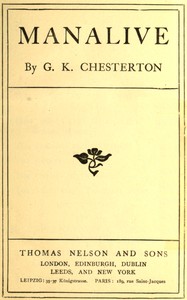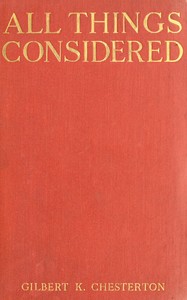
All Things Considered
"All Things Considered" by G. K. Chesterton is a collection of essays written during the early 20th century. The work features Chesterton's keen observations and critiques on various contemporary topics, weaving through themes of society, culture, and morality, with an emphasis on humor and philosophical musings. The opening portion of the collection sets the stage for Chesterton’s candid reflections on literature and modernity. He expresses a certain disdain for the seriousness with which literature is often approached, emphasizing the joy of humor over solemnity. By acknowledging the imperfections inherent in his own writing—characterized as “crude and shapeless”—he playfully defends the spontaneity and urgency behind his essays. He critiques the notion of modernism as a form of snobbery and underscores the significance of authentic experiences over mere trendiness in thought, while hinting at his broader interrogation of societal values, particularly regarding philanthropy, journalism, and the implications of anonymity in modern life.
Summary written by Project Gutenberg, by machine.
- Language
- English
- On Project Gutenberg since
- 1 March 2004
- Read in the last 30 days
- 2,454 times at Project Gutenberg
Listen to it

More by G. K. Chesterton
See all: More by G. K. Chesterton
A Chesterton Calendar
Index of the Project Gutenberg Works of Gilbert K. Chesterton
G. F. Watts
The Man Who Was Thursday: A Nightmare
The innocence of Father Brown
The secret of Father Brown
The wisdom of Father Brown
The Ballad of the White Horse
Orthodoxy
What's Wrong with the World
Tremendous Trifles
Heretics
The Napoleon of Notting Hill
Orthodoxy
Eugenics and Other Evils
The Everlasting Man
Appreciations and Criticisms of the Works of Charles Dickens
A Short History of England
The Man Who Knew Too Much