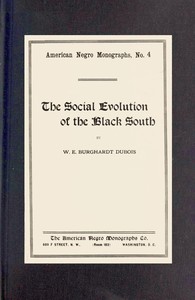
The social evolution of the Black South
"The Social Evolution of the Black South" by W. E. B. Du Bois is a scholarly historical account published in the early 20th century. The book examines the social dynamics and transformations of Black communities in the Southern United States from the era of slavery to a period of increased freedom. It reflects on the historical context and the evolving relationships within the Black population and between Black individuals and their white counterparts. In this work, Du Bois explores the structure of plantation life and the impact of slavery on the social interactions among Black individuals. He discusses the hierarchical divisions that arose, differentiating between field hands, artisans, and house servants. The narrative emphasizes the evolution of these groups post-emancipation, highlighting the migration of Black individuals to urban areas in search of better opportunities and education. Du Bois also delves into the complexities of race relations in the South, with a focus on the growing segregation of Black communities and their efforts toward self-sufficiency and organization. Ultimately, he critiques the social conditions that foster moral contradictions for both Black and white populations, advocating for a conscious acknowledgment of these issues to pave the way for a more just society.
Summary written by Project Gutenberg, by machine.
- Language
- English
- On Project Gutenberg since
- 8 July 2020
- Read in the last 30 days
- 397 times at Project Gutenberg
More by W. E. B. Du Bois
See all: More by W. E. B. Du Bois
The Souls of Black Folk

Darkwater: Voices from Within the Veil

The Suppression of the African Slave Trade to the United States of America

The Negro

The Quest of the Silver Fleece: A Novel

John Brown

The Gift of Black Folk: The Negroes in the Making of America

The Conservation of Races

The Negro in the South