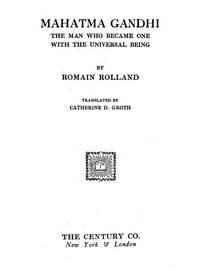
Mahatma Gandhi: The Man Who Became One With the Universal Being
Translated by Catherine Dase Groth
"Mahatma Gandhi: The Man Who Became One With the Universal Being" by Romain Rolland is a biographical account exploring the life and philosophy of Mahatma Gandhi, likely written in the early 20th century. The book delves into Gandhi's transformation from a frail young man to a leader who inspired a nation to fight for independence through non-violent resistance. It focuses on the principles of ahimsa (non-violence) and the significance of spiritual and moral strength in achieving social and political change. At the start of the narrative, the author paints a vivid picture of Gandhi, depicting him as a simple yet formidable figure. Identified as Mohandas Karamchand Gandhi, the text outlines his early life experiences, including his upbringing in a devout Hindu family and the influences that shaped his worldview. Rolland recounts Gandhi's formative years spent in England, his initial experiences with racism in South Africa, and how these events ignited his relentless quest for justice. As Gandhi confronts harsh realities, he begins to formulate his philosophy of non-violence and commitment to serving the oppressed. The opening sets the stage for a deeper exploration of Gandhi’s teachings and struggles, laying the groundwork for an account that transcends mere biographical details to address the broader implications of his ideals on humanity.
Summary written by Project Gutenberg, by machine.
- Language
- English
- On Project Gutenberg since
- 7 March 2020
- Read in the last 30 days
- 682 times at Project Gutenberg
More by Romain Rolland
See all: More by Romain Rolland
Tolstoy

Michelangelo
Beethoven

Jean-Christophe, Volume I

Musicians of to-day
Above the Battle
Handel
The Forerunners
The Fourteenth of July, and Danton: Two Plays of the French Revolution

Jean-Christophe in Paris: The Market-Place, Antoinette, the House
L'âme enchantée I: Annette et Sylvie
Clerambault
Vie de Tolstoï
Das Leben Tolstois
Musiciens d'autrefois
Jean-Christophe Journey's End
Peter und Lutz
Les Précurseurs
Jean-Christophe Volume 1
Pierre and Luce
More from the shelf “Nobel Prizes in Literature”
See all: More from the shelf “Nobel Prizes in Literature”
A farewell to arms
The Jungle Book

The Problems of Philosophy
The Lock and Key Library: Classic Mystery and Detective Stories: Modern English

The Phantom 'Rickshaw, and Other Ghost Stories

The Red Lily — Complete

Siddhartha
Pygmalion
Buddenbrooks: Verfall einer Familie
Quo Vadis: A Narrative of the Time of Nero

Tractatus Logico-Philosophicus

The Knights of the Cross, or, Krzyzacy: Historical Romance
Just so stories
The Sun Also Rises
Demian

Der Zauberberg. Erster Band
The Life of Joan of Arc, Vol. 1 and 2
The sound and the fury
Gitanjali