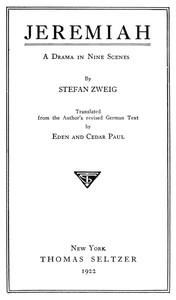
Jeremiah: A Drama in Nine Scenes
by Stefan Zweig
Translated by Cedar Paul · Translated by Eden Paul
"Jeremiah: A Drama in Nine Scenes" by Stefan Zweig is a dramatic work written in the early 20th century. This play focuses on the biblical prophet Jeremiah as he grapples with the impending doom facing Jerusalem and his burden as a messenger of God. With themes of prophecy, despair, and the tension between war and peace, the narrative explores the moral and emotional turmoil of its central figure amidst national crisis. The opening of the drama introduces Jeremiah in a state of panic as he perceives ominous visions foretelling the destruction of his city. He experiences a haunting conflict between his duty to deliver God's message and the skepticism of those around him, including his mother, who implores him to seek peace rather than war. The narrative unfolds with vivid dialogue reflecting Jeremiah's anguish and the contrasting perspectives of other characters, laying the groundwork for themes that will resonate throughout the play. We are immediately drawn into a world of heightened emotions and significant stakes as Jeremiah grapples with his calling and the fate of his people, setting a deeply contemplative and dramatic tone for the work.
Summary written by Project Gutenberg, by machine.
- Language
- English
- On Project Gutenberg since
- 9 April 2012
- Read in the last 30 days
- 1,826 times at Project Gutenberg
More by Stefan Zweig
See all: More by Stefan Zweig
Die Liebe der Erika Ewald: Novellen
Romain Rolland: The Man and His Work
Émile Verhaeren
The Burning Secret

Brennendes Geheimnis: Erzählung
Amok: Novellen einer Leidenschaft
Jeremias: Eine dramatische Dichtung in neun Bildern

Drei Meister: Balzac, Dickens, Dostojewski

Paul Verlaine
Tolstoï

Tolsztoj