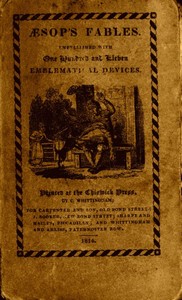
Æsop's Fables, Embellished with One Hundred and Eleven Emblematical Devices.
by Aesop
Translated by Samuel Croxall
"Æsop's Fables, Embellished with One Hundred and Eleven Emblematical Devices" is a collection of moral tales attributed to the ancient Greek storyteller Æsop, and it likely reflects the early 19th century's interest in such classical works. This collection features a variety of fables, each conveying moral lessons through anthropomorphized animals and other characters. The overarching theme emphasizes the virtues of knowledge, justice, kindness, and prudence, offering insights into human behavior and ethics. At the start of the book, the reader is introduced to the unique approach of presenting fables, accompanied by illustrations and moral applications tied to the narratives. The opening portion outlines several fables, beginning with a Cock who finds a jewel but prefers barley, drawing attention to the value of wisdom over superficiality. Each fable serves as a lens for examining moral truths, from the perils of envy to the importance of unity and cooperation. The stories engage the audience with relatable characters and situations while imparting significant life lessons, making it a timeless collection for readers seeking both entertainment and educative insights.
Summary written by Project Gutenberg, by machine.
- Language
- English
- On Project Gutenberg since
- 18 March 2012
- Read in the last 30 days
- 1,060 times at Project Gutenberg
More by Aesop
See all: More by Aesop
The Aesop for Children
The Fables of Aesop
The Baby's Own Aesop
Aesop, in Rhyme: Old Friends in a New Dress
The Fables of Æsop, and Others
Bewick's Select Fables of Æsop and others.

Aesop's Fables; a new translation
Three hundred Aesop’s fables
Æsop's Fables: A Version for Young Readers

Aesop's Fables: A New Revised Version From Original Sources

Æsop's Fables
Some of Æsop's Fables with Modern Instances
Æsop's fables in words of one syllable