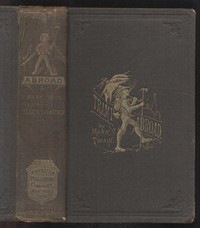
The Facts Concerning the Recent Carnival of Crime in Connecticut
by Mark Twain
Human-made only is on in this browser, so Project Gutenberg's machine summaries are left out. Settings.
"The Facts Concerning the Recent Carnival of Crime in Connecticut" by Mark Twain is a satirical short story written during the late 19th century. The book delves into themes of conscience, morality, and self-reflection through a humorous lens, exploring the inner struggles of a man grappling with feelings of guilt and the nature of wrongdoing. The storyline follows the narrator, who experiences a blissful moment upon receiving a letter from his beloved Aunt Mary. However, his contentment is short-lived as he encounters a peculiar dwarf—an embodiment of his conscience—who relentlessly highlights his past misdeeds and failures. This confrontation with his conscience leads to a dialogue filled with wit and sarcasm, shedding light on the absurdity of guilt and societal morals. The tale culminates in an act of rebellion as the narrator figures he can rid himself of his conscience entirely, leading to a darkly humorous declaration of newfound freedom in committing various crimes without remorse. Throughout the narrative, Twain masterfully critiques human nature, the complexities of morality, and the often hypocritical views society holds about vice and virtue.
AI-generated Summary written by Project Gutenberg, by machine.
- Language
- English
- On Project Gutenberg since
- 16 September 2004
- Read in the last 30 days
- 839 times at Project Gutenberg
More by Mark Twain
See all: More by Mark Twain
The Entire Project Gutenberg Works of Mark Twain
The Works of Mark Twain: An Index of all Project Gutenberg Editions
Quotes and Images From The Works of Mark Twain
Moments with Mark Twain

Quotations from the Project Gutenberg Editions of the Works of Mark Twain

Mark Twain: Tri Ceteraj Noveloj

Mark Twain: Tri Noveloj

Mark Twain's Speeches

Mark Twain's Letters — Volume 4 (1886-1900)

Mark Twain's Letters — Volume 3 (1876-1885)

Mark Twain's Letters — Volume 1 (1853-1866)

Mark Twain's Letters — Complete (1853-1910)

Mark Twain's Letters — Volume 5 (1901-1906)
Mark Twain's Letters — Volume 2 (1867-1875)

Mark Twain's Letters — Volume 6 (1907-1910)

Mark Twain's Burlesque Autobiography
The Adventures of Tom Sawyer, Complete
Adventures of Huckleberry Finn
Life on the Mississippi