
Franse Toestanden
"Franse Toestanden" by Heinrich Heine is a socio-political commentary written during the early 19th century. This work serves as a vivid and satirical reflection on the state of Paris amidst the cholera outbreak of 1832, examining the societal upheaval, moral decay, and governmental incompetence of the time. Heine's writing not only documents the historical moment but also delves into the emotional and physical turmoil that ensued as the disease ravaged the population. The book presents a series of observations and narratives from Paris, capturing the chaos of everyday life during the cholera crisis. Heine describes the alarming number of deaths, the confusion surrounding the disease's origins, and the startling reactions of the citizens, who turn to scapegoating and riots instead of rationality. As the cholera spreads, fear grips the population, leading to violent outbursts against perceived threats—namely, individuals believed to be responsible for poisoning the food supply. Through sharp wit and poignant prose, Heine vividly illustrates the intersection of personal tragedy and collective panic, offering a profound reflection on human behavior in the face of catastrophe.
Summary written by Project Gutenberg, by machine.
- Language
- Dutch (Nederlands)
- On Project Gutenberg since
- 1 September 2001
- Read in the last 30 days
- 416 times at Project Gutenberg
More by Heinrich Heine
See all: More by Heinrich Heine
The Prose Writings of Heinrich Heine

Poems and Ballads of Heinrich Heine

The poems of Heine; Complete

Die Harzreise

Buch der Lieder
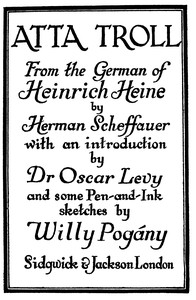
Atta Troll

Deutschland. Ein Wintermärchen

Almansor: Eine Tragödie

Das Lied vom blöden Ritter

Romanzero

Aikarunoja

Valikoima runoelmia

De Franse Pers

De Beurs Lacht

Saksanmaa