Melancholy
Lucas Cranach (I) (German, 1472–1553)
1532
- Medium
- Oil on panel
- Classification
- Painting
- Dimensions
- width 110.5 cm, height 66.5 cm, height 51 cm, width 97 cm
- Culture
- German
- Museum
- SMK – National Gallery of Denmark
- Rights
- Public Domain Mark: SMK waives its rights in this photograph, as the museum states it.
- Who can see it
- Teens profiles and older: its museum says too little about what it shows to place it for younger viewers. How works are placed
View at the SMK – National Gallery of Denmark
About this work
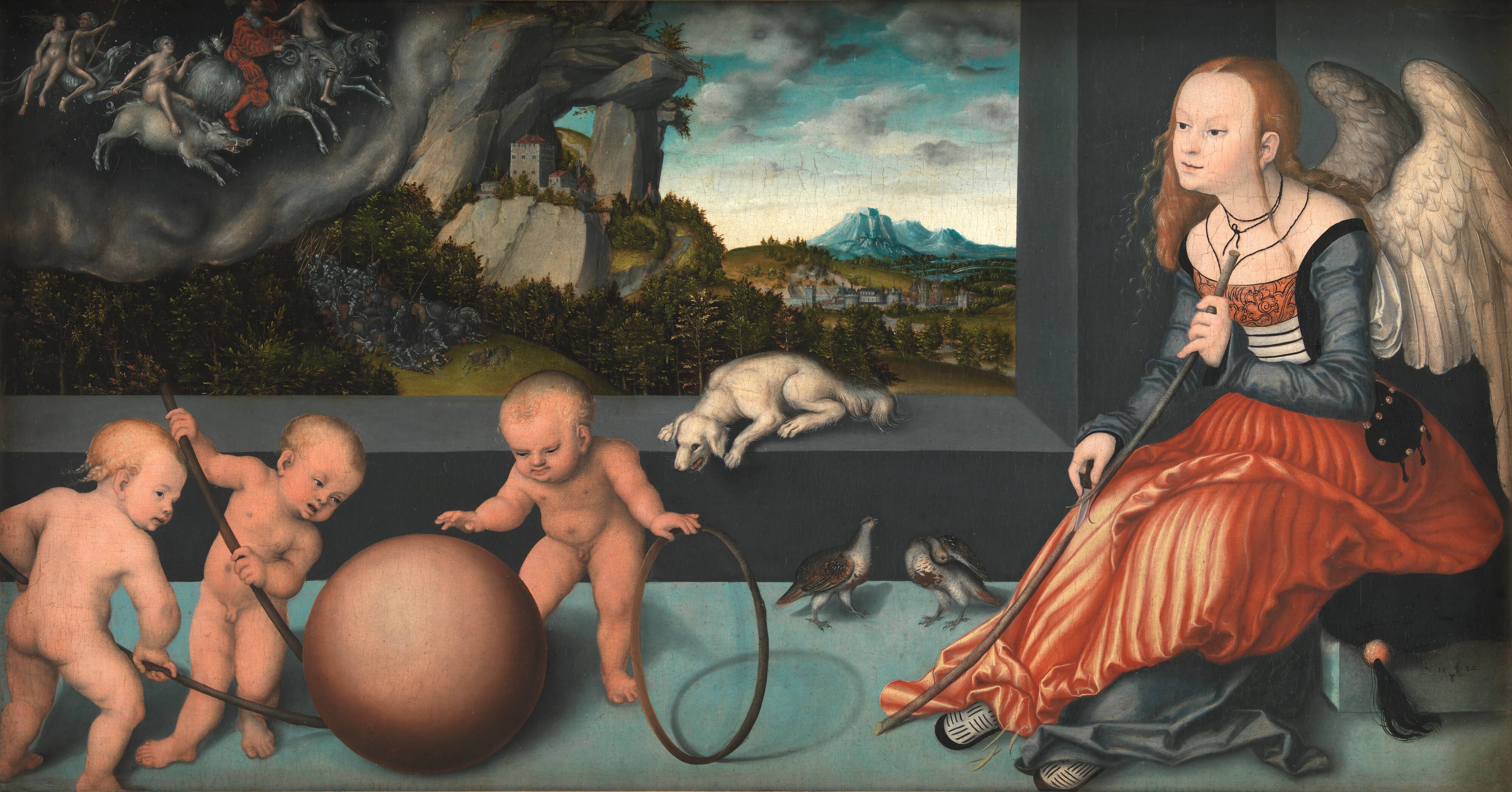
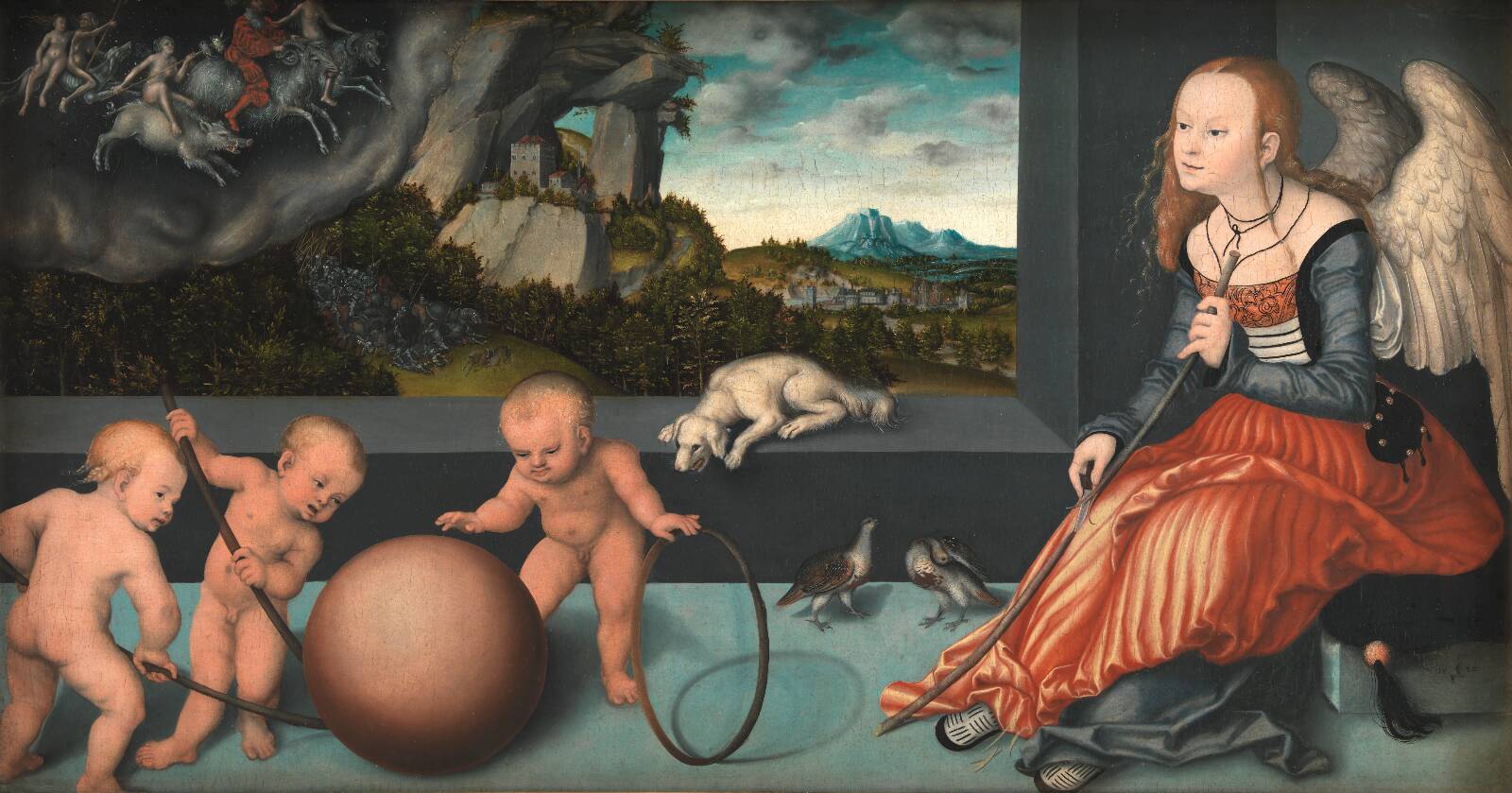
Melancholy, represented as a winged woman, is whittling a stick without much enthusiasm. Far greater fervour is evident in the three children trying hard to push a ball through a toonarrow barrel hoop. How should we understand this scene? Lucas Cranach the Elder was a central artist in the German Reformation era, a time when the theologian and monk Martin Luther fronted a rebellion against the Roman Church (later called the Catholic Church). Cranach transformed Luther’s theology into images. Luther saw melancholy as the work of the devil, sent to paralyse our powers of action. Melancholy had to be fought with faith in God: even if the tasks facing you here in life seem impossible (getting the ball through the hoop), you must trust that God will help you succeed. It is the devil who makes us lose heart. Women were easy victims of the devil’s influence, according to the theologians: in the painting, Melancholy is a woman, and at the top we see naked women, witches, riding wild boars and goats in a dark cloud. They are in league with the devil and have abducted (and seduced?) a foolish man dressed in red. Melancholy (and women) are dangerous (50 Favorites in the…