Window mode follows your eyes with your camera, in this browser only: no picture or position leaves your device.
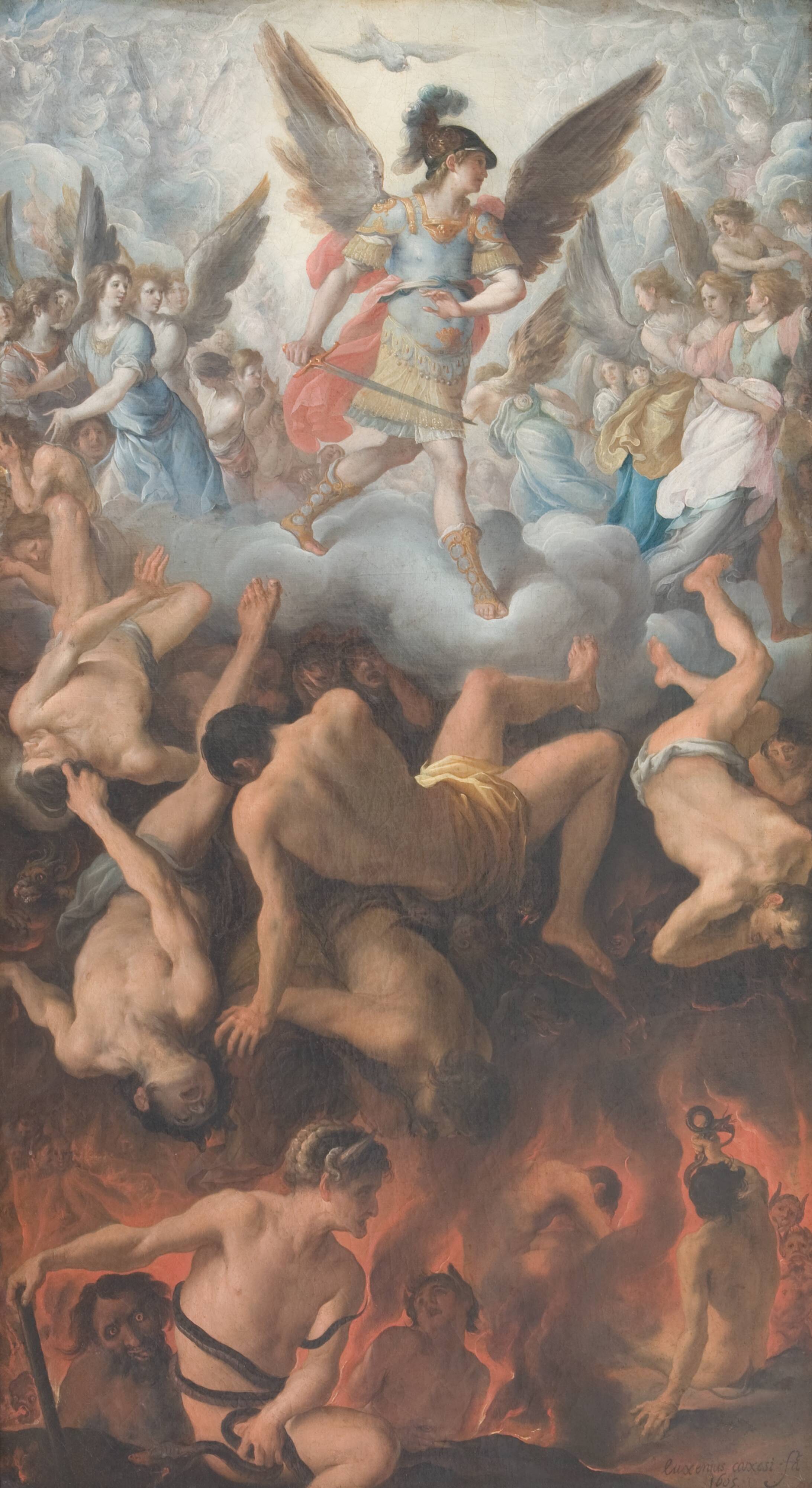
The Fall of the Rebel Angels
Eugenio Cajés (Spanish, 1575–1634)
1605
- Medium
- Oil on canvas
- Classification
- Painting
- Dimensions
- height 74 cm, width 41 cm, height 90 cm, width 56.3 cm
- Culture
- Spanish
- Museum
- SMK – National Gallery of Denmark
- Rights
- Public Domain Mark: SMK waives its rights in this photograph, as the museum states it.
- Who can see it
- Tweens profiles and older: its subjects are known and suit older children. How works are placed
View at the SMK – National Gallery of Denmark
About this work
Eugenio Cajés takes his starting point in the biblical narrative about the evil angels and their leader, Satan, who were originally part of the heavenly host. Enemies of God and friends of evil, they were eventually cast down into Hell by the archangel Michael. During their fall, vividly depicted by Cajés, the rebel angel sprouted tails, claws and other demonic traits. Cajés became acquainted with a new manner of painting during a trip to Italy, the so-called ‘chiaroscuro’. With the advent of chiaroscuro, artists began mixing local colours with blacks and browns to create shaded areas. Cajés used this new manner of painting to evoke a sense of dread and horror in Hell, creating a contrast to the divine realm at the top where Michael and his army are portrayed in shimmering pastels.