Window mode follows your eyes with your camera, in this browser only: no picture or position leaves your device.
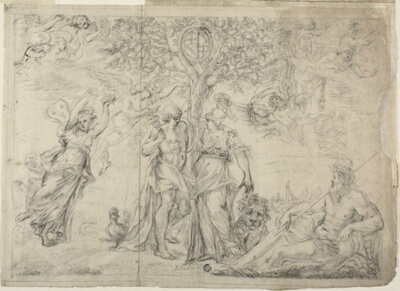
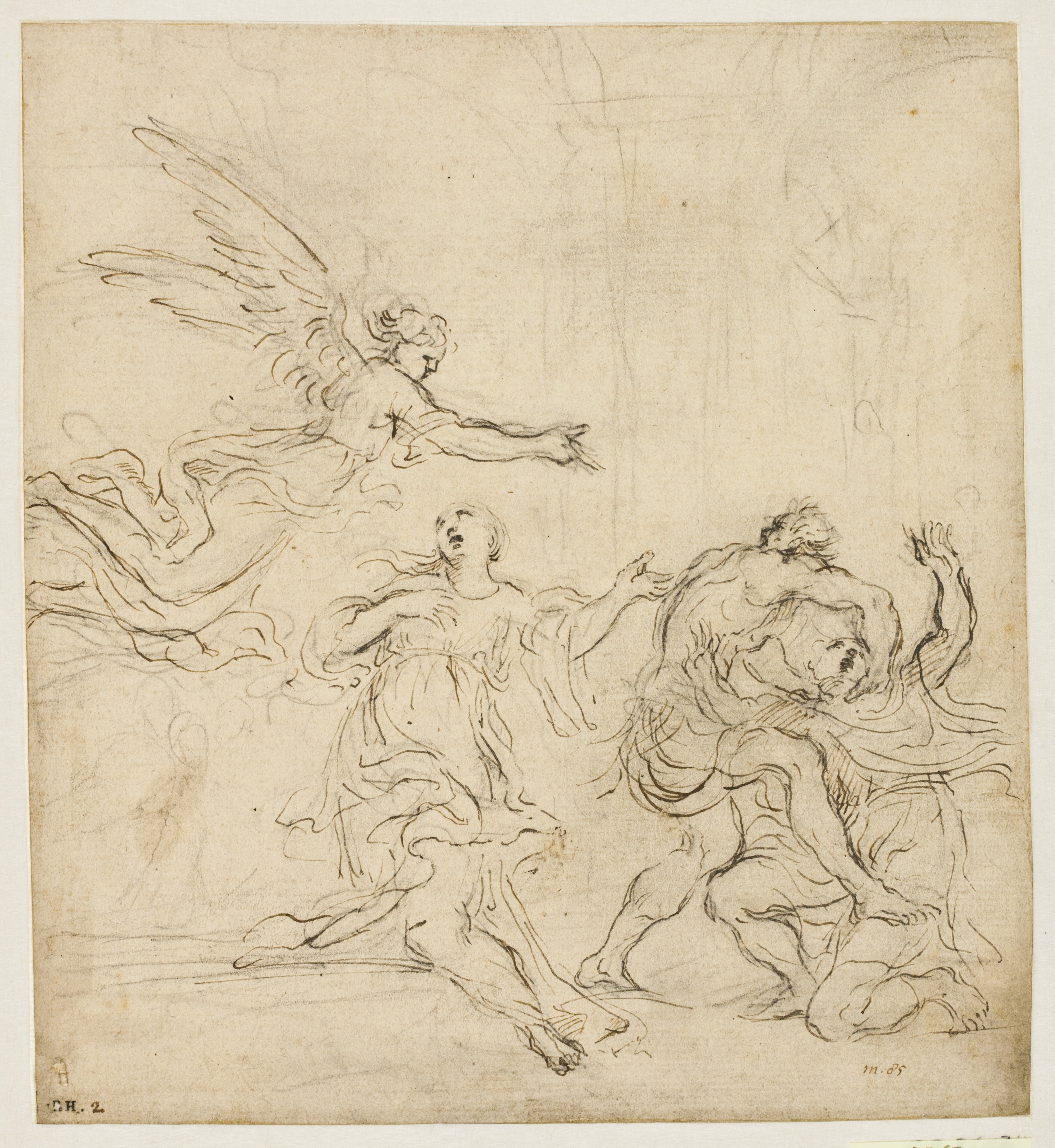
The miracle of St Agnes
Alessandro Algardi (Italian, 1602–1654)
1598-1654
- Medium
- Black chalk, pen and brown ink
- Classification
- Drawing
- Dimensions
- height 211 mm, width 192 mm
- Culture
- Italian
- Museum
- SMK – National Gallery of Denmark
- Rights
- Public Domain Mark: SMK waives its rights in this photograph, as the museum states it.
- Who can see it
- Teens profiles and older: its museum says too little about what it shows to place it for younger viewers. How works are placed
View at the SMK – National Gallery of Denmark
About this work
The drawing was first published by Minna Heimbürger, who also noticed the relationship to the relief on the high altar of the Pamphilj church of S. Agnese in Agone (Piazza Navona), Rome, which was commissioned from Algardi shortly before his death. According to Bellori, he “fece più di un modello per la tavola grande di marmo che egli doveva fare... espressovi Christo a sedere nell’aria e la Santa ginocchione che lo prega con braccia aperte, mentre l’angelo additta l’impuro giovine soffocato in terra del Demonio”.[1] No such models are known, but it is clear from the sources that one of them was selected for execution.[2] After Algardi’s death a full-scale model in stucco was made by his pupils Domenico Guidi and Ercole Ferrata. Despite the purchase of marble in 1654 the idea for carving this large altarpiece was abandoned and in 1660 Pope Alexander VII gave the stucco model to the Oratorio dei Filippini, Rome, where it can still be seen today. Although the drawing appears to be a study for the lower part of the relief, Jennifer Montagu doubts that there is a direct relationship. She finds it impossible to imagine that Algardi could ever have contemplated a square altarpiece,…