Window mode follows your eyes with your camera, in this browser only: no picture or position leaves your device.
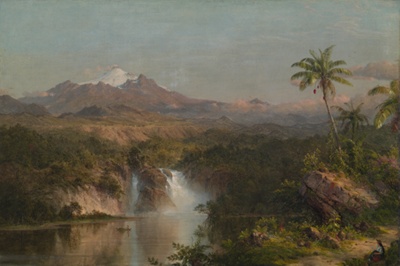
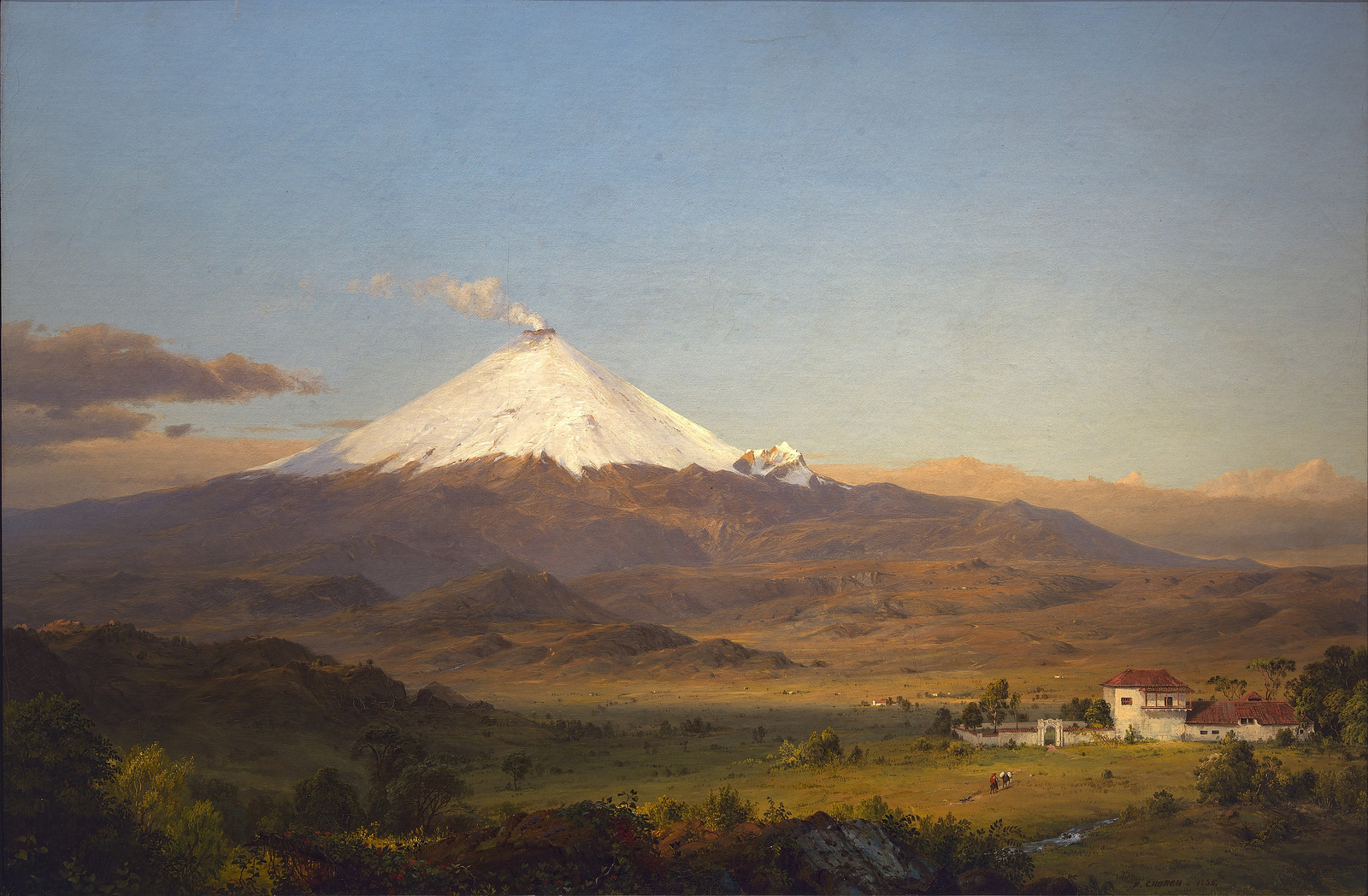
Cotopaxi
Frederic Edwin Church (born Hartford, CT 1826-died New York City 1900)
1855
- Medium
- oil on canvas
- Classification
- Paintings
- Dimensions
- 28 x 42 in. (71.1 x 106.8 cm)
- Culture
- Ecuador
- Museum
- Smithsonian Institution, Smithsonian American Art Museum, Painting and Sculpture
- Credit line
- Smithsonian American Art Museum, Gift of Mrs. Frank R. McCoy
- Rights
- CC0 (Smithsonian Open Access), as the museum states it.
- Who can see it
- Tweens profiles and older: its subjects are known and suit older children. How works are placed
View at the Smithsonian Institution
About this work
Frederic Church was an ambitious painter and enthusiastic amateur scientist. He had read Darwin's books and Alexander von Humboldt's descriptions of Cotopaxi,"the most dreadful volcano...its explosions most frequent and disastrous."The fabled Ecuadorian mountain provided both a poetic symbol of God's creation and an exciting window into the planet's natural history. Geology was a new science in the nineteenth century, and Church was among those who believed that volcanoes offered clues to the age and origins of the earth.On his first visit to Ecuador, the artist waited an entire day near the hacienda pictured here, hoping that the clouds would part to reveal the peak. American critics complained that Church's paintings of the volcano did not capture the soft atmospheric haze that they were used to seeing in landscapes. Those who had never traveled to the high country of the Andes did not understand that in the thin, clear air, Cotopaxi's icy flanks gleamed just as Church had painted them.Exhibition Label, Smithsonian American Art Museum, 2006