Window mode follows your eyes with your camera, in this browser only: no picture or position leaves your device.
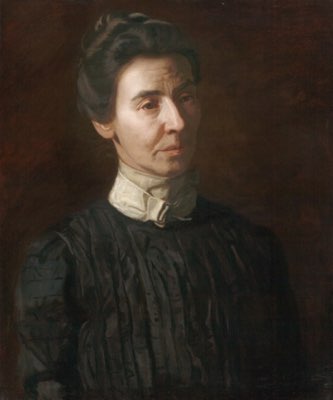
Mother (Annie Williams Gandy)
Thomas Eakins (born Philadelphia, PA 1844-died Philadelphia, PA 1916)
ca. 1903
- Medium
- oil on canvas
- Classification
- Paintings
- Dimensions
- 24 x 20 in. (61.0 x 50.8 cm.)
- Museum
- Smithsonian Institution, Smithsonian American Art Museum, Painting and Sculpture
- Credit line
- Smithsonian American Art Museum, Bequest of Mrs. Lucy G. Rodman through her sister Miss Helen W. Gandy
- Rights
- CC0 (Smithsonian Open Access), as the museum states it.
- Who can see it
- Tweens profiles and older: its subjects are known and suit older children. How works are placed
View at the Smithsonian Institution
About this work
Annie Williams Gandy, affectionately nicknamed “Mother,” was a close friend of Thomas Eakins and his wife. One critic noted Eakins’s ability to capture an expression in which “mere thinking is portrayed without the aid of gesture or attitude.” (Simpson, “The 1880s,” Thomas Eakins, 2002) Here, Eakins enlists the viewer in an intimate, pensive moment, portraying Annie in a morning coat and braids to suggest that she has just risen from bed. While the subject of women lost in reverie was fashionable at the turn of the twentieth century, most artists chose to idealize their sitters. Eakins, on the other hand, did not disguise their blemishes and “worry lines,” and many people considered his portraits to be unflattering. (Perry, Women on the Verge: The Culture of Neurasthenia in Nineteenth-century America, 2004)