Window mode follows your eyes with your camera, in this browser only: no picture or position leaves your device.
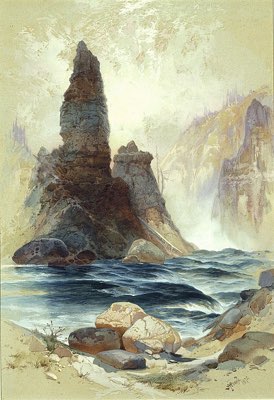
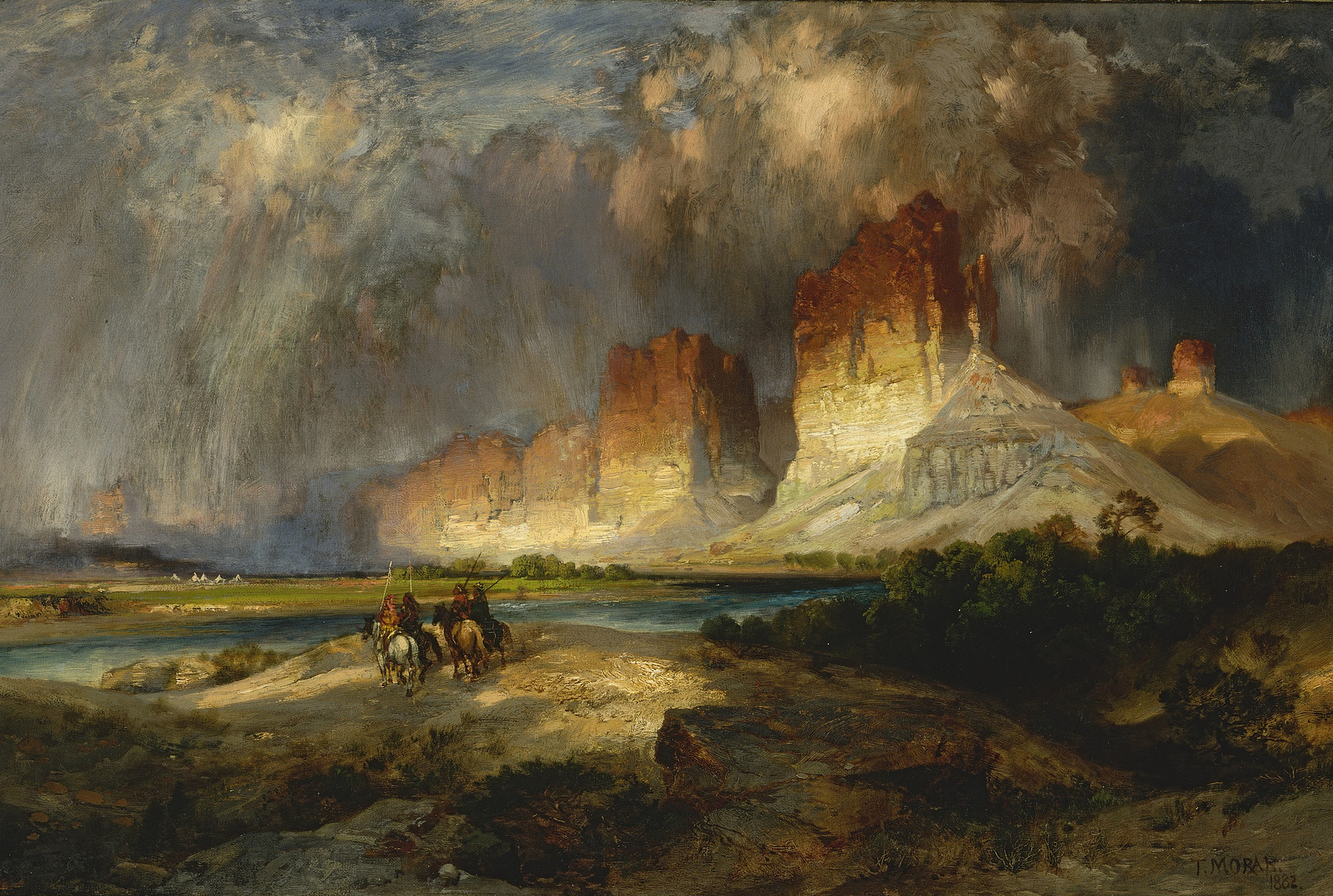
Cliffs of the Upper Colorado River, Wyoming Territory
Thomas Moran (born Bolton, England 1837-died Santa Barbara, CA 1926)
1882
- Medium
- oil on canvas
- Classification
- Paintings
- Dimensions
- 16 x 24 in. (40.5 x 61.0 cm.)
- Culture
- Indians of North America
- Museum
- Smithsonian Institution, Smithsonian American Art Museum, Painting and Sculpture
- Credit line
- Smithsonian American Art Museum, Bequest of Henry Ward Ranger through the National Academy of Design
- Rights
- CC0 (Smithsonian Open Access), as the museum states it.
- Who can see it
- Tweens profiles and older: its subjects are known and suit older children. How works are placed
View at the Smithsonian Institution
About this work
Thomas Moran knew from his first sight of the Green River (also called the Upper Colorado) that he had found an ideal theme for the East Coast art market. The town of Green River was a rowdy settlement tucked into a valley between sandstone bluffs. It had popped up overnight as the Union Pacific Railroad stretched across the continent. By 1882 the West was largely settled, but banks and laundry houses did not offer a romantic scene, so Moran painted the valley as he imagined it looked when Indians rode there. Such vividly colored western scenes proved to be a bonanza for the Union Pacific's chief rival, the Northern Pacific Railroad. Jay Cooke, the Philadelphia financier who owned the Northern Pacific, kept Moran on retainer for several years, generating nostalgic images that helped to draw thousands of greenhorns out to the farthest stops on his railroad.Exhibition Label, Smithsonian American Art Museum, 2006