Window mode follows your eyes with your camera, in this browser only: no picture or position leaves your device.
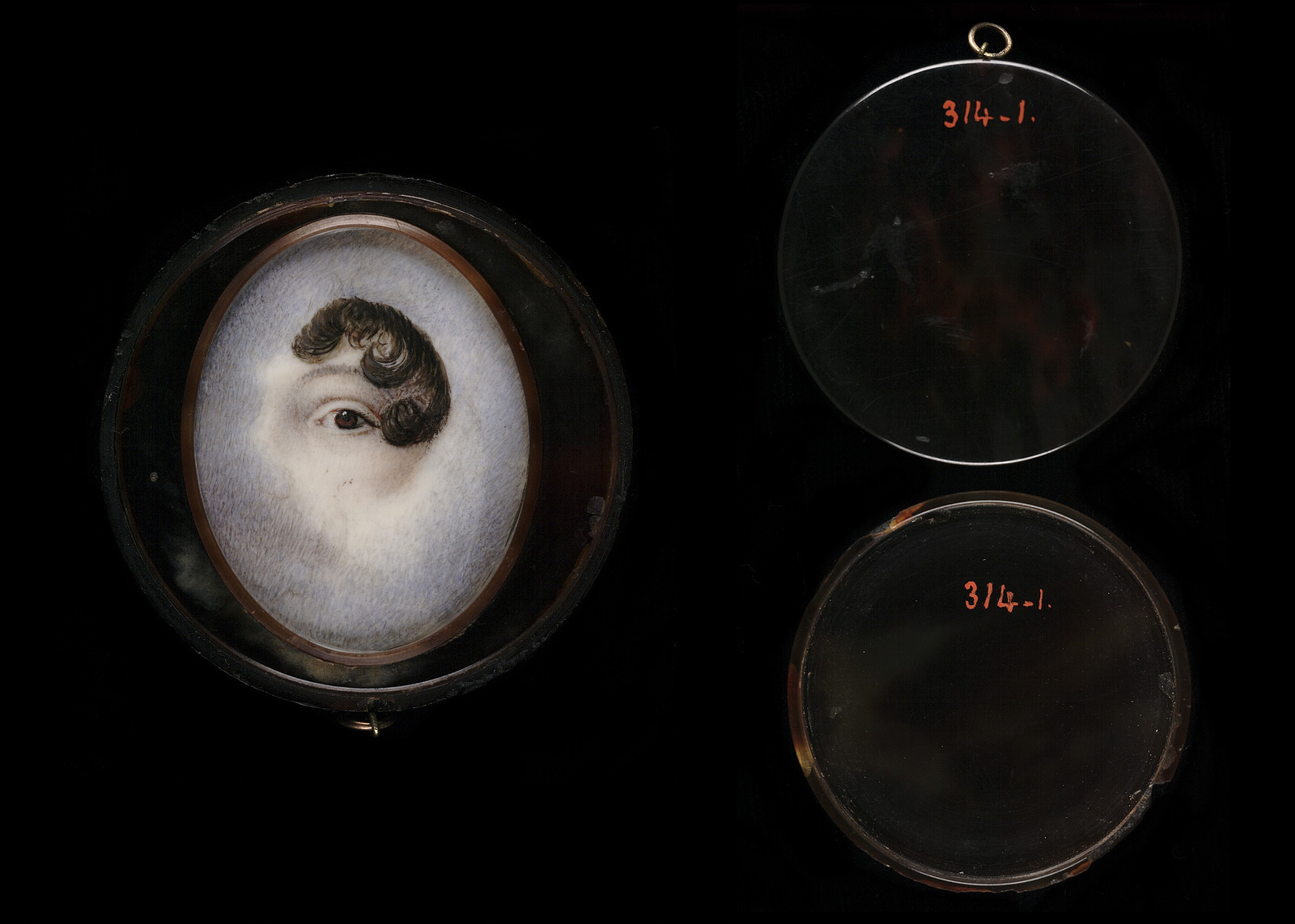
Eye
ca. 1800
- Medium
- watercolor on ivory
- Classification
- Paintings
- Dimensions
- sight 1 1/4 x 1 in. (3.2 x 2.5 cm) oval
- Museum
- Smithsonian Institution, Smithsonian American Art Museum, Painting and Sculpture
- Credit line
- Smithsonian American Art Museum, Gift of John Gellatly
- Rights
- CC0 (Smithsonian Open Access), as the museum states it.
- Who can see it
- Tweens profiles and older: its subjects are known and suit older children. How works are placed
View at the Smithsonian Institution
About this work
Small paintings of eyes first became popular during the late eighteenth century. They reminded wearers of a loved one, whose identity remained a secret. The single eye also symbolized the watchful gaze of a jealous partner, who feared that his or her lover might stray. One of the earliest known eye miniatures was painted in 1786 by the English artist Richard Cosway for the Prince of Wales, later King George IV. The miniature showed the eye of Mrs. Fitzherbert, the prince’s mistress. The eye miniatures shown in the Luce Center would have been set in lockets, brooches, rings, or small boxes.