Window mode follows your eyes with your camera, in this browser only: no picture or position leaves your device.
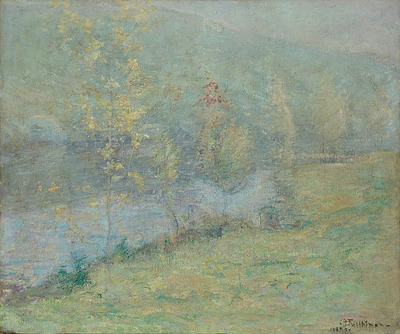
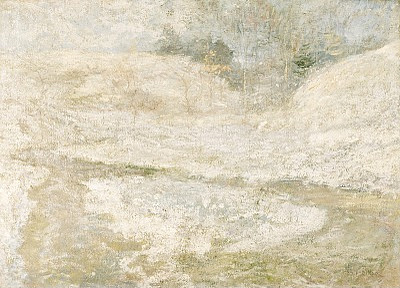
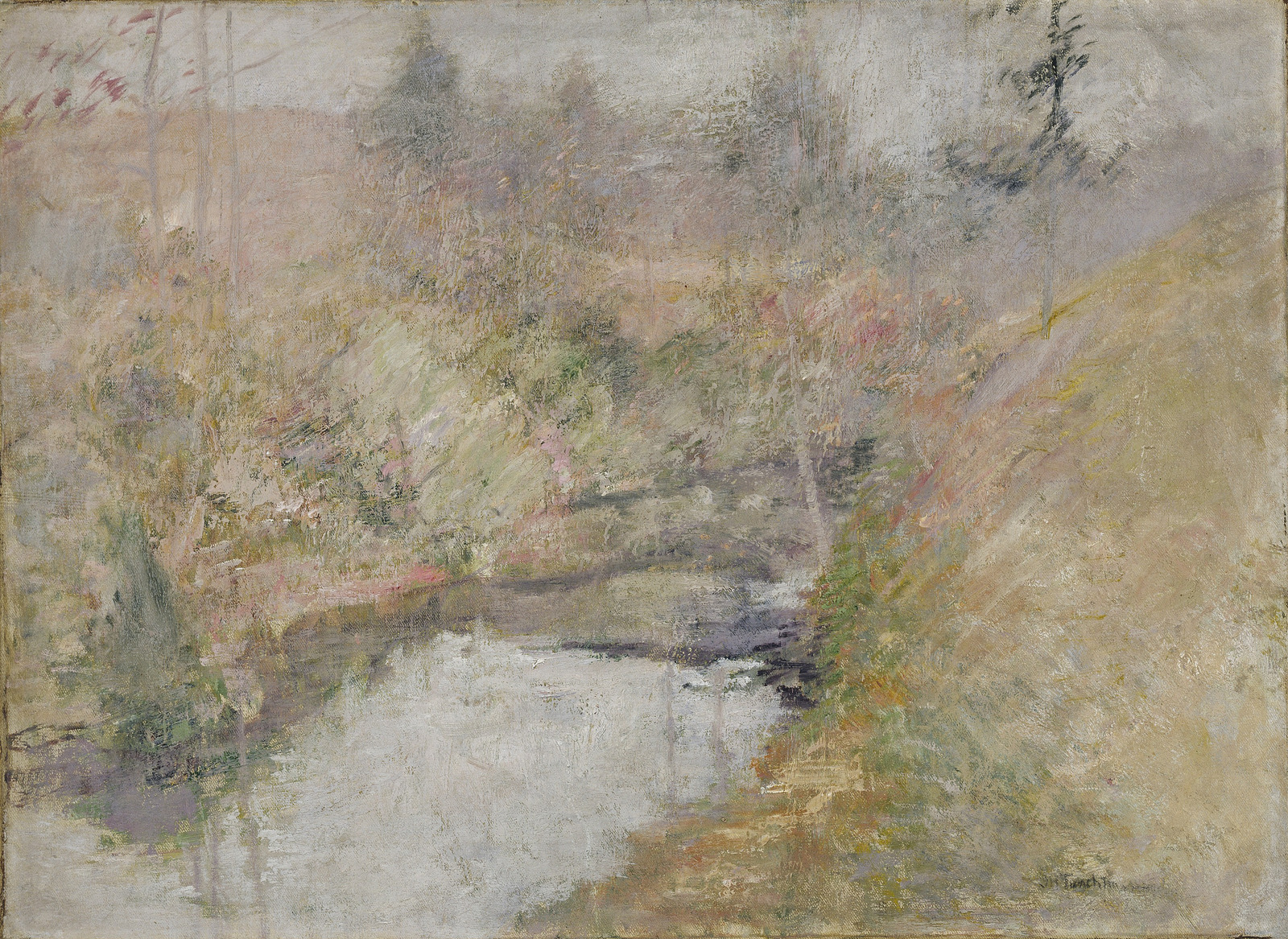
Hemlock Pool
John Henry Twachtman (born Cincinnati, OH 1853-died Gloucester, MA 1902)
ca. 1890-1900
- Medium
- oil on canvas
- Classification
- Paintings
- Dimensions
- 22 1/4 x 30 1/4 in. (56.5 x 76.7 cm)
- Culture
- Connecticut
- Museum
- Smithsonian Institution, Smithsonian American Art Museum, Painting and Sculpture
- Credit line
- Smithsonian American Art Museum, Gift of John Gellatly
- Rights
- CC0 (Smithsonian Open Access), as the museum states it.
- Who can see it
- Little Ones profiles and older: it shows gentle subjects for the very young. How works are placed
View at the Smithsonian Institution
About this work
John Twachtman painted this scene in all different seasons. He drew inspiration from his seventeen acres of land in Greenwich, Connecticut, and his paintings of the property express the emotional and spiritual comfort he found there. This image, likely made in autumn, shows a pond located behind his house at the bottom of a steep incline along the Horseneck Brook. Twachtman created many images of streams and brooks, and these ceaselessly moving bodies of water might have held a deeper significance for him. By the time Twachtman painted his Connecticut landscapes, American artists and intellectuals had been interested in Buddhism for more than two decades, and the artist himself had studied Zen philosophy and Japanese art. (Pyne, "John Twachtman and the Therapeutic Landscape," in Chotner et al., John Twachtman: Connecticut Landscapes, 1989) This may account for the meditative quality of his pictures, the sense of looking not at an actual landscape, but at an inward image of something seen long before.