Window mode follows your eyes with your camera, in this browser only: no picture or position leaves your device.
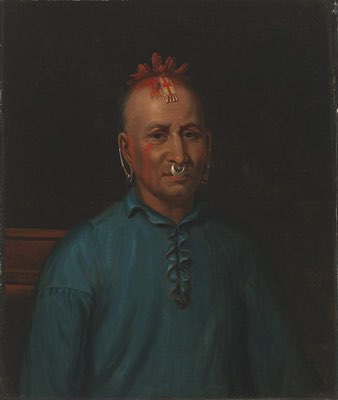
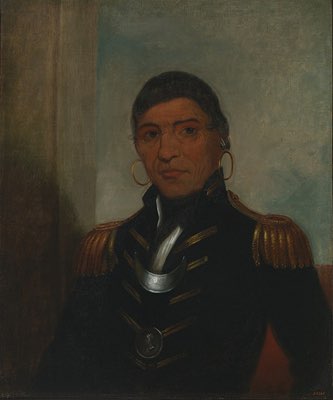
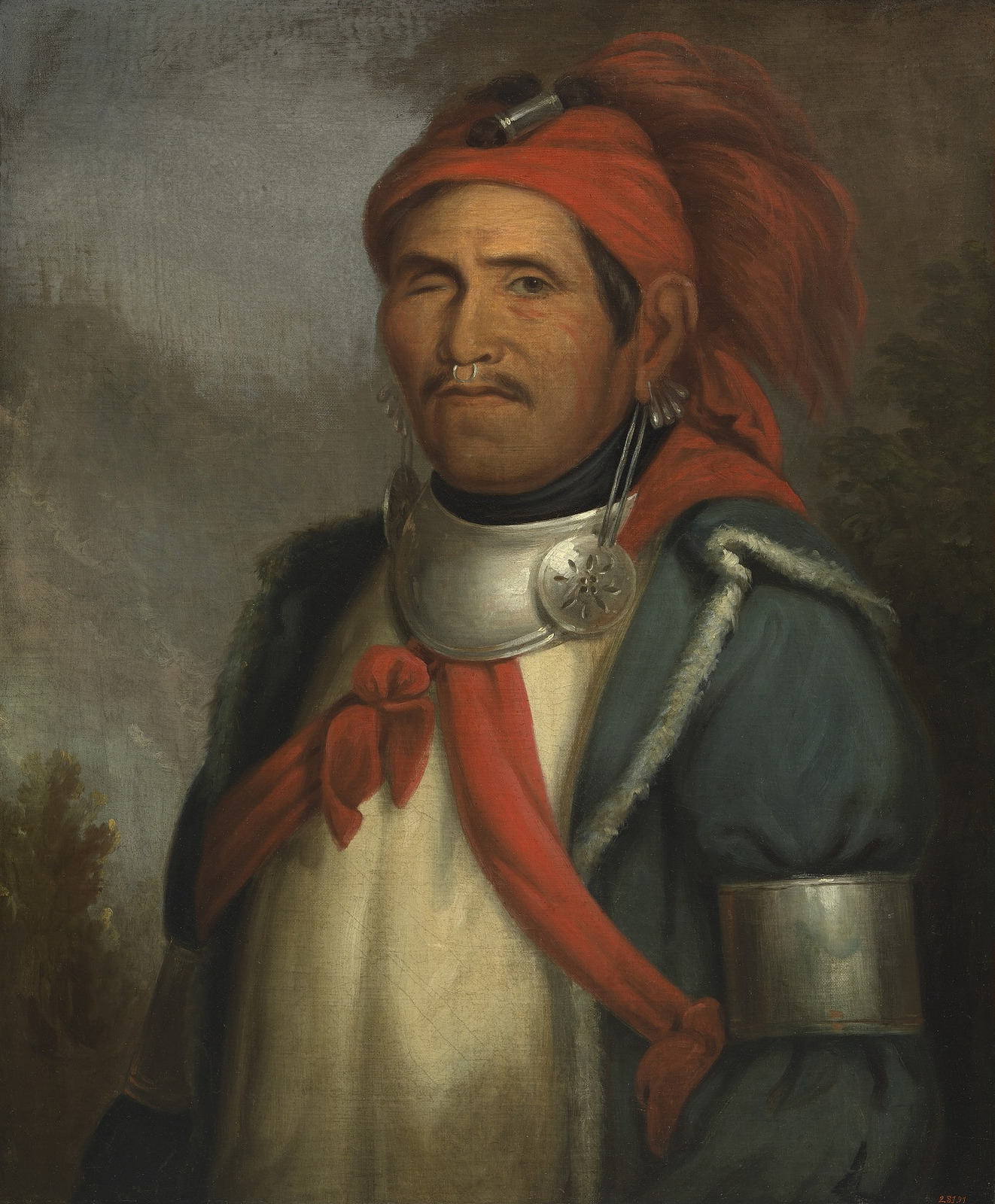
Tenskwatawa
Henry Inman (28 Oct 1801 - 17 Jan 1846)
c. 1830-33
- Medium
- Oil on canvas
- Classification
- Paintings
- Dimensions
- Stretcher: 77.2 x 62.9 x 2.5cm (30 3/8 x 24 3/4 x 1")
- Museum
- Smithsonian Institution, National Portrait Gallery
- Credit line
- National Portrait Gallery, Smithsonian Institution
- Rights
- CC0 (Smithsonian Open Access), as the museum states it.
- Who can see it
- Teens profiles and older: its subject is for older viewers (war, death, the Passion, drink or the like). How works are placed
View at the Smithsonian Institution
About this work
Tenskwatawa, the foremost religious leader of the Shawnee, preached a return to traditional ways. Possessed with great oratorical skills, he built a large movement, and in 1808 he established Prophet’s Town in the Indiana Territory. He bitterly opposed territorial governor William Henry Harrison’s Treaty of Fort Wayne (1809), a dubious agreement in which some Native leaders ceded three million acres to the government. Tenskwatawa denied the legitimacy of their claim to the lands and warned Harrison not to allow white settlement on them. Harrison surrounded the Shawnees at Prophet’s Town, demanding they disperse and hand over those guilty of frontier raids. Tenskwatawa attacked on November 7, 1811, promising his warriors that his powers would protect them. Each side suffered heavy casualties in what became known as the Battle of Tippecanoe. When the Shawnees abandoned the field, Harrison burned out Prophet’s Town, claiming victory. Tenskwatawa was discredited and no longer led his people into battle.