Window mode follows your eyes with your camera, in this browser only: no picture or position leaves your device.
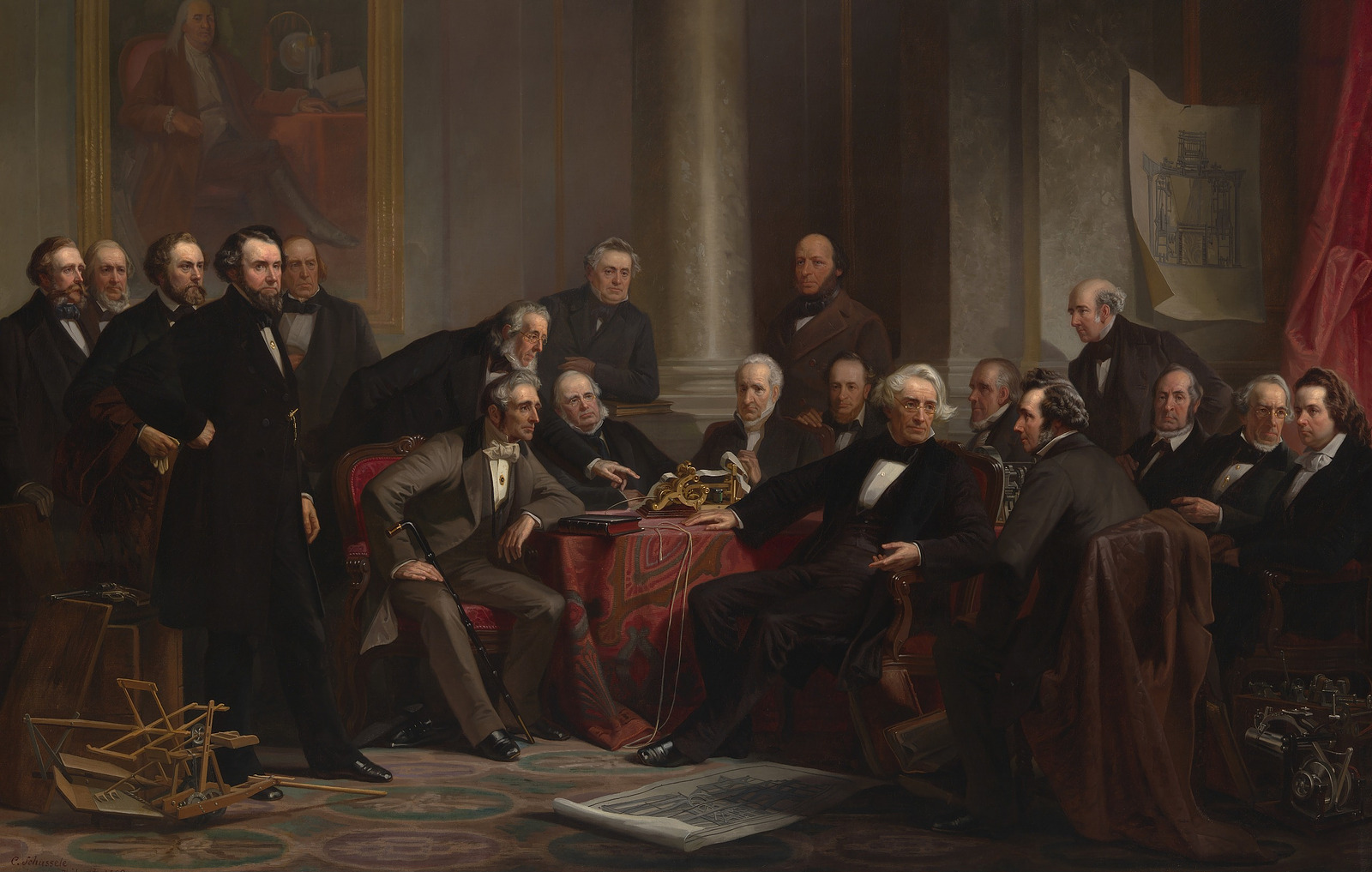
Men of Progress
Christian Schussele (16 Apr 1824 - 1879)
1862
- Medium
- Oil on canvas
- Classification
- Paintings
- Dimensions
- Stretcher: 128.3 × 190.5 × 5.1 cm (50 1/2 × 75 × 2")
- Culture
- United States
- Museum
- Smithsonian Institution, National Portrait Gallery
- Credit line
- National Portrait Gallery, Smithsonian Institution; transfer from the National Gallery of Art; gift of the A.W. Mellon Educational and Charitable Trust, 1942
- Rights
- CC0 (Smithsonian Open Access), as the museum states it.
- Who can see it
- Teens profiles and older: its subject is for older viewers (war, death, the Passion, drink or the like). How works are placed
View at the Smithsonian Institution
About this work
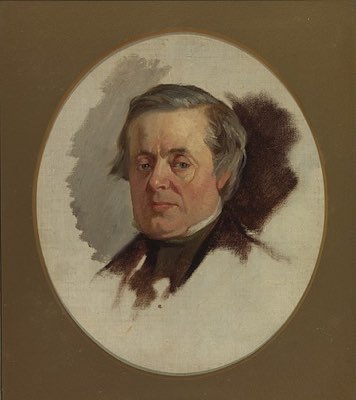
In 1857, the inventor of a coal-burning stove, Jordan Mott, commissioned Christian Schussele to paint this group portrait of nineteen scientists and inventors of the United States who “had altered the course of contemporary civilization.” Schussele represents the group gathered around a table discussing Samuel F. B. Morse’s telegraph device, with other inventions and diagrams scattered about the room. The portrait did not commemorate an actual occasion but was meant to honor national achievement. Schussele began by sketching each figure individually before designing the group composition. In the background, he included a painting of the men’s famed eighteenth-century predecessor, Benjamin Franklin.