Window mode follows your eyes with your camera, in this browser only: no picture or position leaves your device.
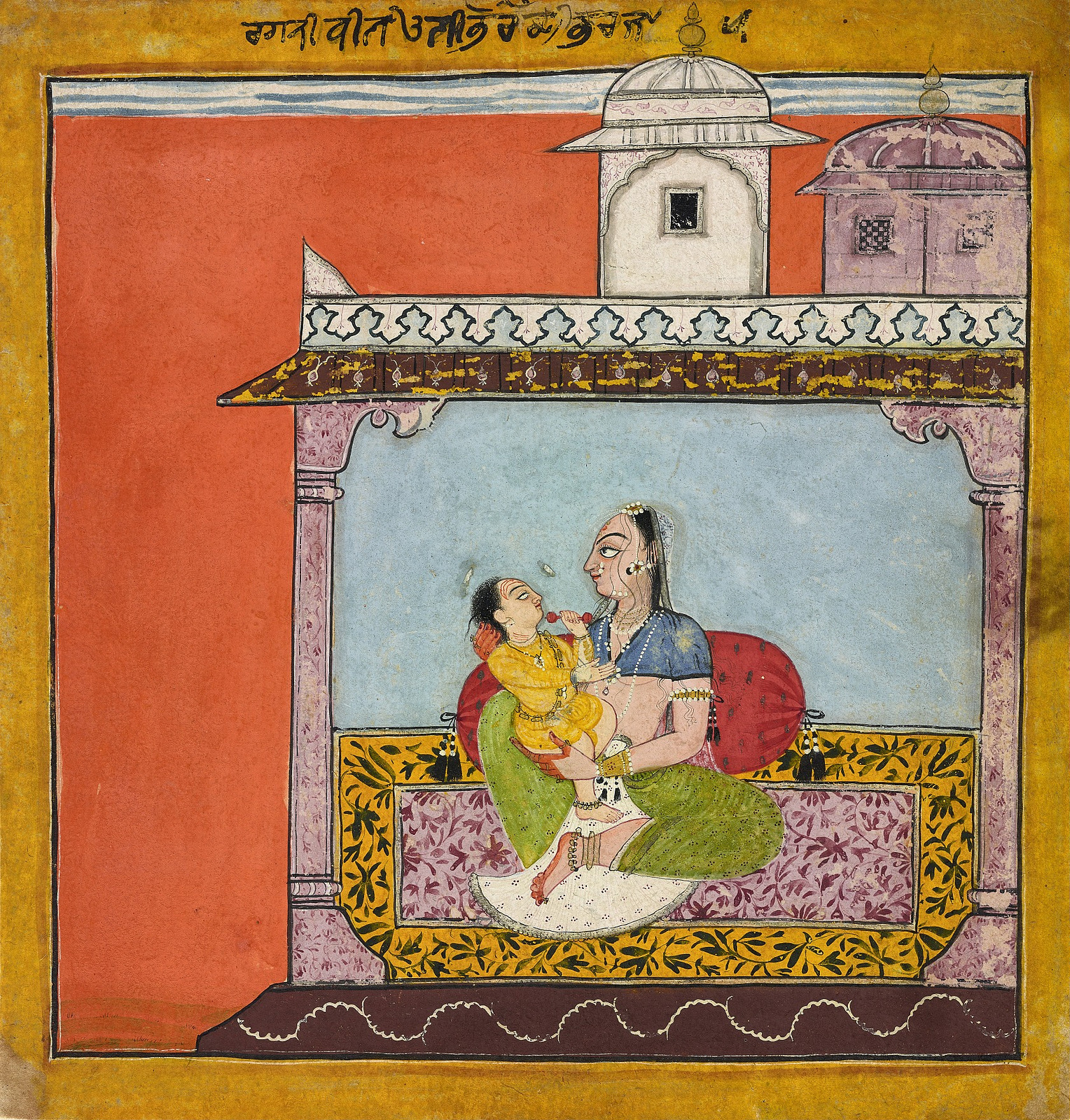
Vilaval Ragini, from a Ragamala
ca. 1690-95
- Medium
- Opaque watercolor on paper
- Classification
- Paintings
- Dimensions
- H x W (overall): 20.3 × 19.7 cm (8 × 7 3/4 in)
- Culture
- Himalayan peoples
- Museum
- Smithsonian Institution, National Museum of Asian Art
- Credit line
- Purchase and partial gift from the Catherine and Ralph Benkaim Collection — funds provided by the Friends of the National Museum of Asian Art
- Rights
- CC0 (Smithsonian Open Access), as the museum states it.
- Who can see it
- Tweens profiles and older: its subjects are known and suit older children. How works are placed
View at the Smithsonian Institution
About this work
Raga (Sanskrit, color or passion) is the term for a classical music mode, a set framework for improvisation. Having originated in the first millennium, ragas were systematized and classified during the thirteenth through sixteenth century, they were classified into ragamalas, meaning garlands of musical modes. A common system recognized six raga husbands, each "married" to five ragini wives for a total of thirty-six "families." Families of musical modes sometimes included sons or ragaputras as well. By the fifteenth century, ragas had become associated with specific moods, times, seasons, affective properties, deities, lovers, and heroes. Around 1590-1620, illustrated ragamala series became a favorite subject for Rajput patrons, as well as for some Mughals, such as Abd-ur Rahim, patron of the Freer Ramayana and the Laud Ragamala. Specific iconographies were developed for depicting each mode. These formulae lent themselves to variations, which were sometimes dependent on region.







