Window mode follows your eyes with your camera, in this browser only: no picture or position leaves your device.
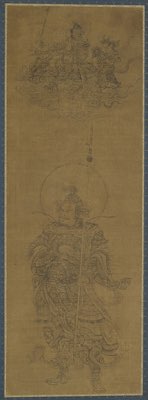
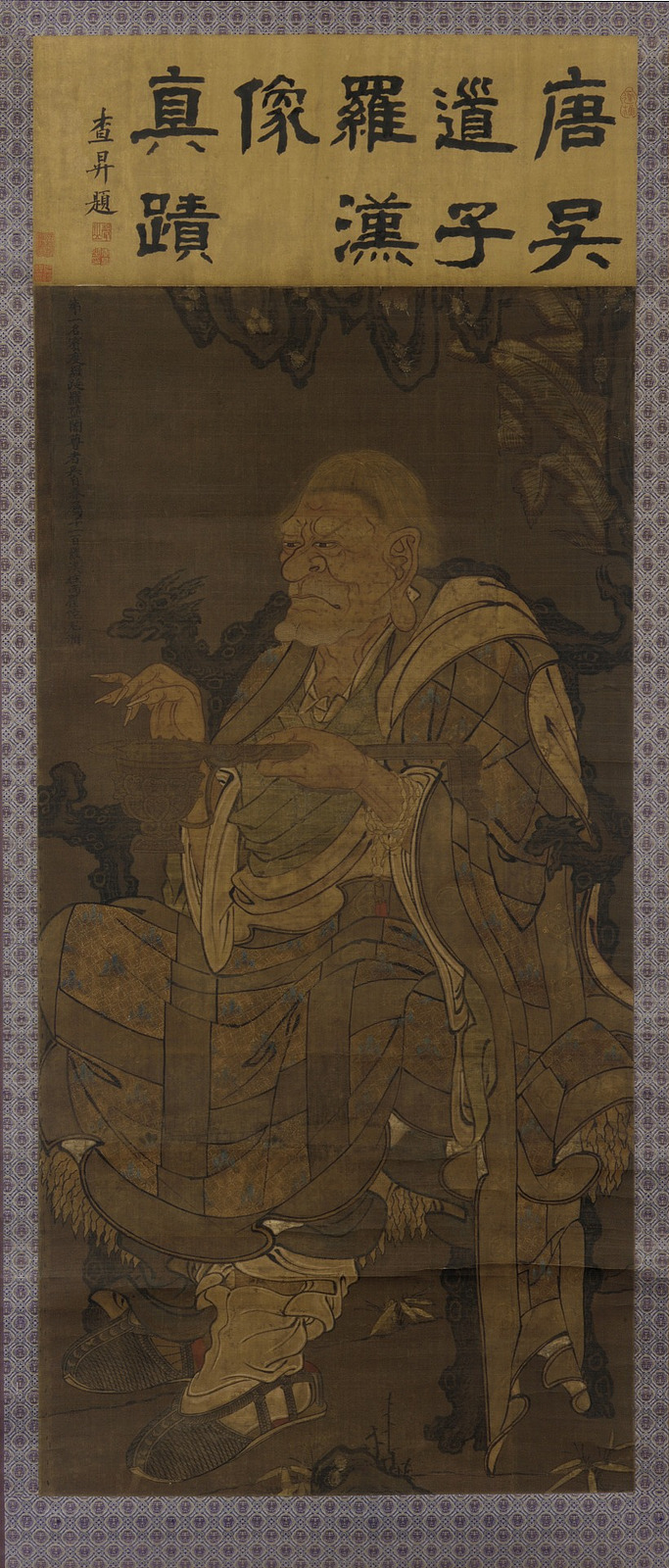
Pindola Bharadvaja, the first venerable Luohan 賓度羅跋羅墮闍尊者像
Formerly attributed to Wu Daozi (傳)吳道子 (active ca. 710-760)
1345
- Medium
- Ink and color on silk
- Classification
- Paintings
- Dimensions
- H x W (image): 126.2 x 62.6 cm (49 11/16 x 24 5/8 in)
- Culture
- Buddhists
- Museum
- Smithsonian Institution, National Museum of Asian Art
- Credit line
- Gift of Ruth Meyer Epstein
- Rights
- CC0 (Smithsonian Open Access), as the museum states it.
- Who can see it
- Tweens profiles and older: its subjects are known and suit older children. How works are placed
View at the Smithsonian Institution
About this work
The subject of this painting, Pindola Bharadvaja (Binduluo Boluoduoshe), was one of the Buddha's main disciples. He was a vigouous exponent of the Buddhist Law (dharma), and has manifested himself on several occasions to pious Chinese believers. Pindola has a voice like a lion's roar, and is often depicted with extraordinarily long eyebrows, a physical attribute for which he is sometimes named Changmai seng. Pindola was one of the first arhats to be depicted in China, and is the only luohan afforded special worship. He is said to dwell with eleven-hundred luohan protogees in the Western Continent of Apara-godaniya (Xi Qutuoni zhou).