Window mode follows your eyes with your camera, in this browser only: no picture or position leaves your device.
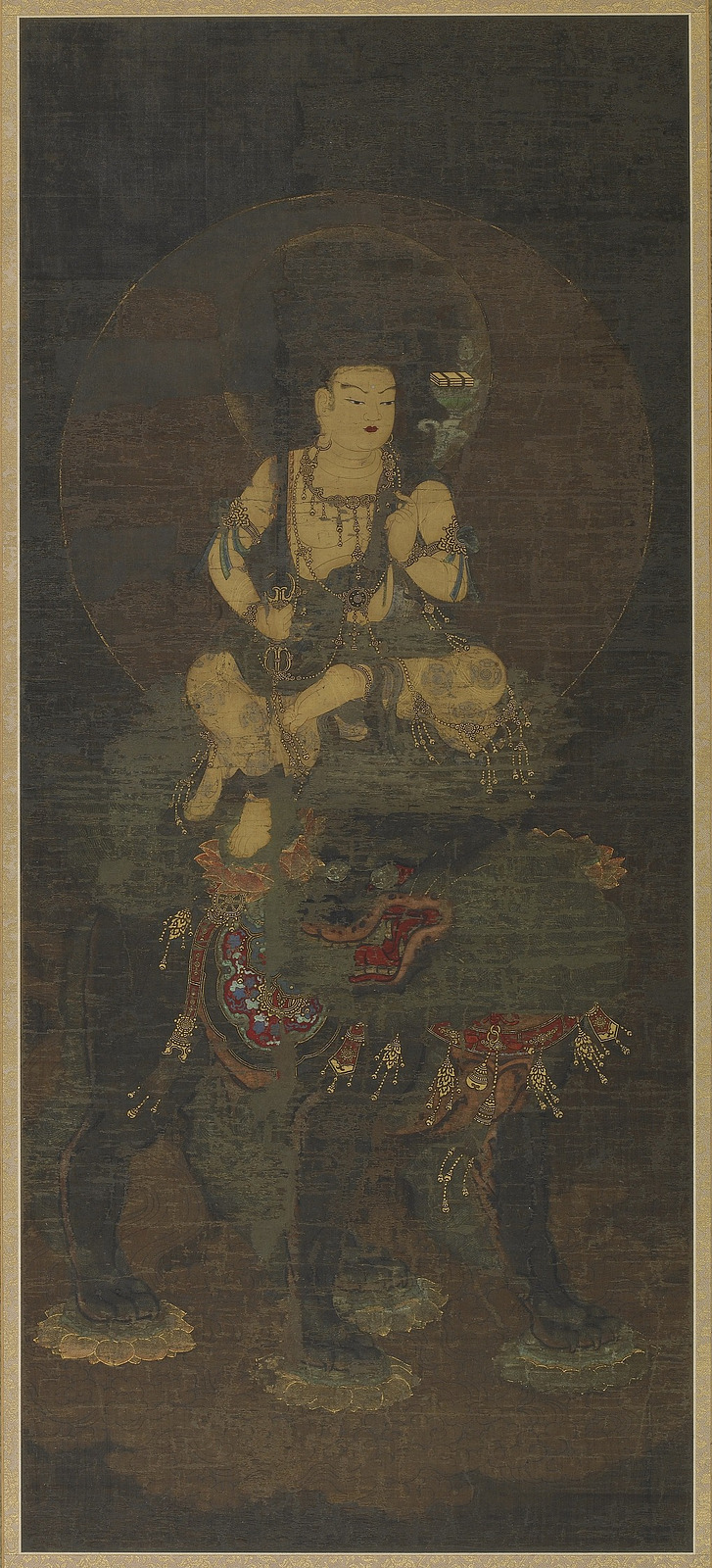
The Bodhisattva Monju
13th century
- Medium
- Ink, color, gold, and silver on silk
- Classification
- Paintings
- Dimensions
- H x W (image): 129.6 × 56.7 cm (51 × 22 5/16 in)
- Culture
- Buddhists
- Museum
- Smithsonian Institution, National Museum of Asian Art
- Credit line
- Gift of Charles Lang Freer
- Rights
- CC0 (Smithsonian Open Access), as the museum states it.
- Who can see it
- Tweens profiles and older: its subjects are known and suit older children. How works are placed
View at the Smithsonian Institution
About this work
The bodhisattva (enlightened being) known in Japanese as Monju Bosatsu (or Manjushri in Sanskrit) is a Buddhist deity who represents wisdom. Paintings of Monju often show him riding a lion and holding a sacred scripture (sutra) in the form of a book or scroll. Here he holds in his left hand a lotus, a symbol of purity, which is surmounted by a book. In his right hand is a weapon to protect against ignorance and evil. Monju is often depicted with the bodhisattva Fugen, who rides an elephant and represents teaching, meditation, and practice of the Buddha. Together they are attendants to the historical Buddha, Shakyamuni, but each bodhisattva is also individually worshipped.