Window mode follows your eyes with your camera, in this browser only: no picture or position leaves your device.
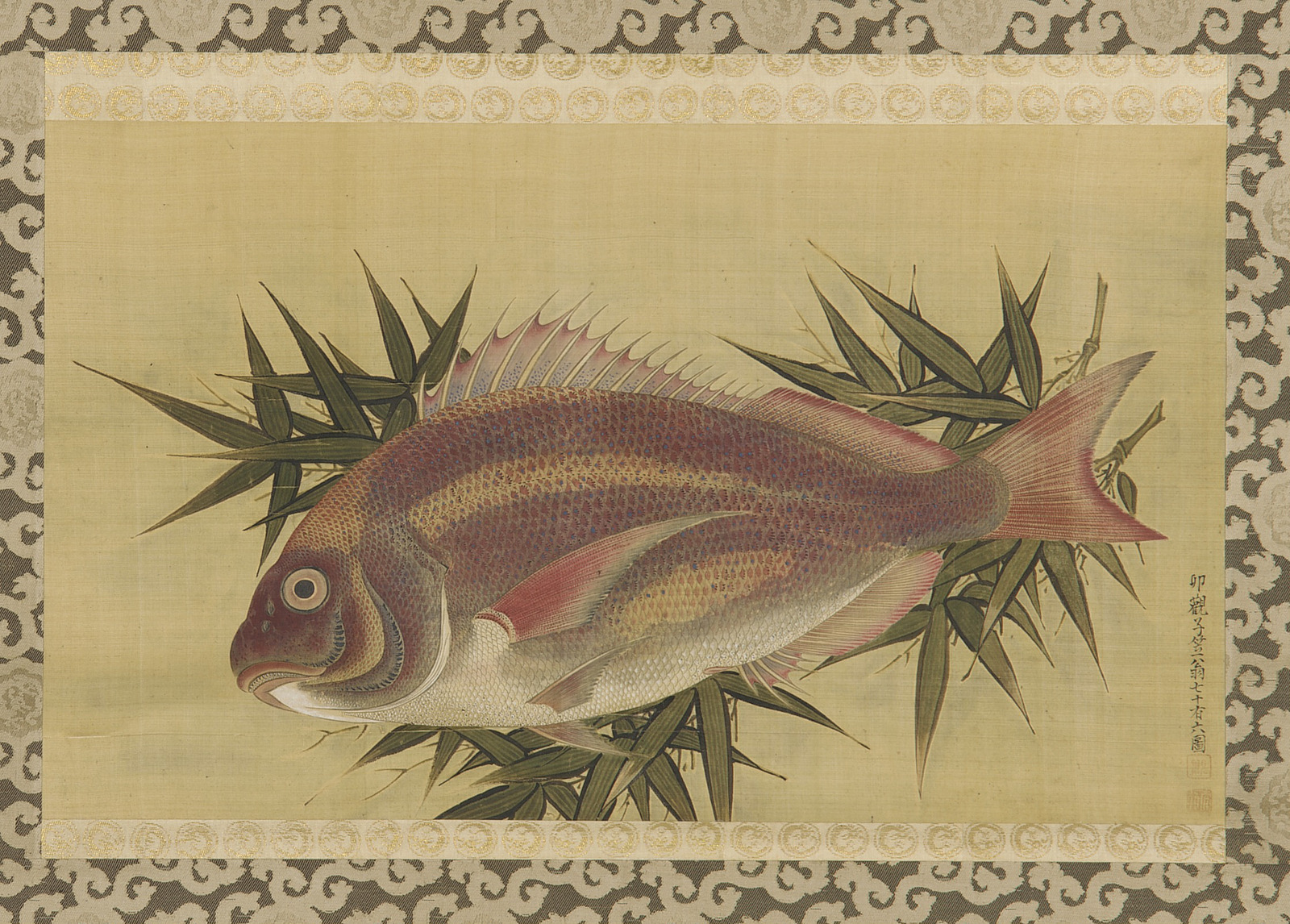
Red sea bream (<em>tai</em>) on bamboo leaves
18th century
- Medium
- Color on silk
- Classification
- Paintings
- Dimensions
- H x W (image): 30 x 50.7 cm (11 13/16 x 19 15/16 in)
- Culture
- Japanese
- Museum
- Smithsonian Institution, National Museum of Asian Art
- Credit line
- Gift of Charles Lang Freer
- Rights
- CC0 (Smithsonian Open Access), as the museum states it.
- Who can see it
- Little Ones profiles and older: it shows gentle subjects for the very young. How works are placed
View at the Smithsonian Institution
About this work
The Japanese word tai (sea bream) is also an element of the word medetai, which means auspicious or fortunate. Tai is prized for its flavor and as a food signifying good fortune for the New Year, weddings, and other celebrations. Here, the painter Ogawa Ritsuo, who was skilled in the decoration of lacquer, presented the tai on a bed of bamboo, a plant that symbolizes longevity. The tai exhibits meticulous details and unusual coloration in its scales. Ritsuo’s inclusion of gold behind the silk creates unusual iridescent effects that utilize the technical knowledge and precision he developed from his experience in maki-e, the practice of applying metal powders and gold leaf to lacquerware for decoration. According to the inscription to the right, Ritsuo painted this intriguing still life in his seventy-sixth year.