Window mode follows your eyes with your camera, in this browser only: no picture or position leaves your device.
Vase After the Antique
Aubert Henri Joseph A. Parent (French, 1753–1835)
1789-1792
- Medium
- Etching and engraving on paper
- Classification
- Prints
- Culture
- Rome
- Museum
- Smithsonian Institution, Cooper Hewitt, Smithsonian Design Museum
- Credit line
- Purchased for the Museum by the Advisory Council
- Rights
- CC0 (Smithsonian Open Access), as the museum states it.
- Who can see it
- Teens profiles and older: its museum says too little about what it shows to place it for younger viewers. How works are placed
View at the Smithsonian Institution
About this work
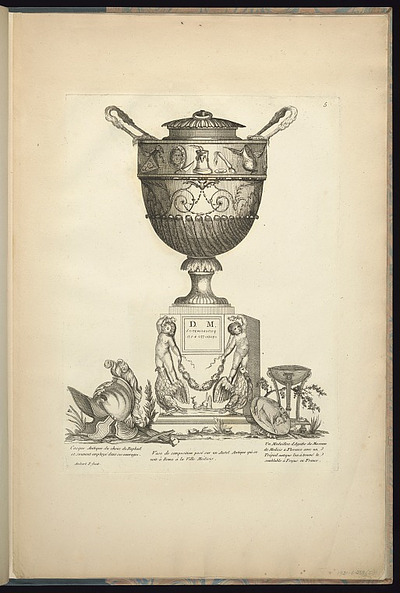
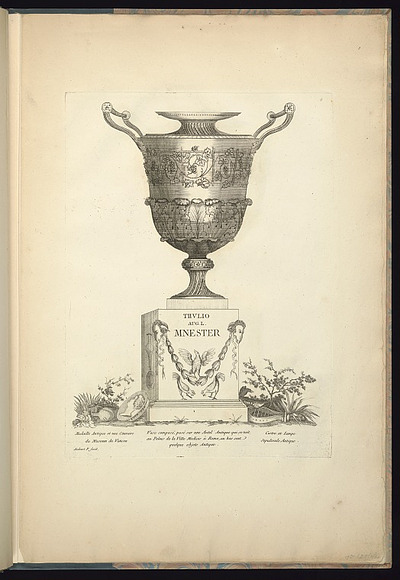
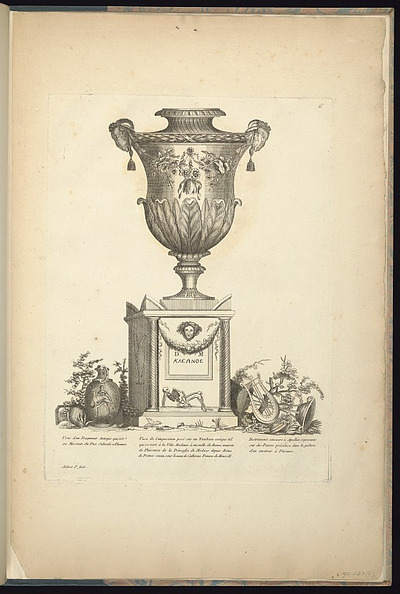
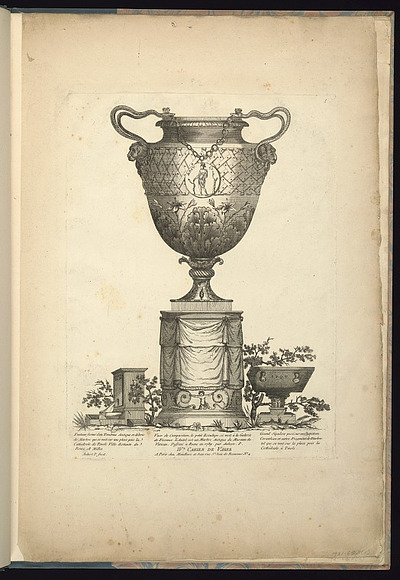
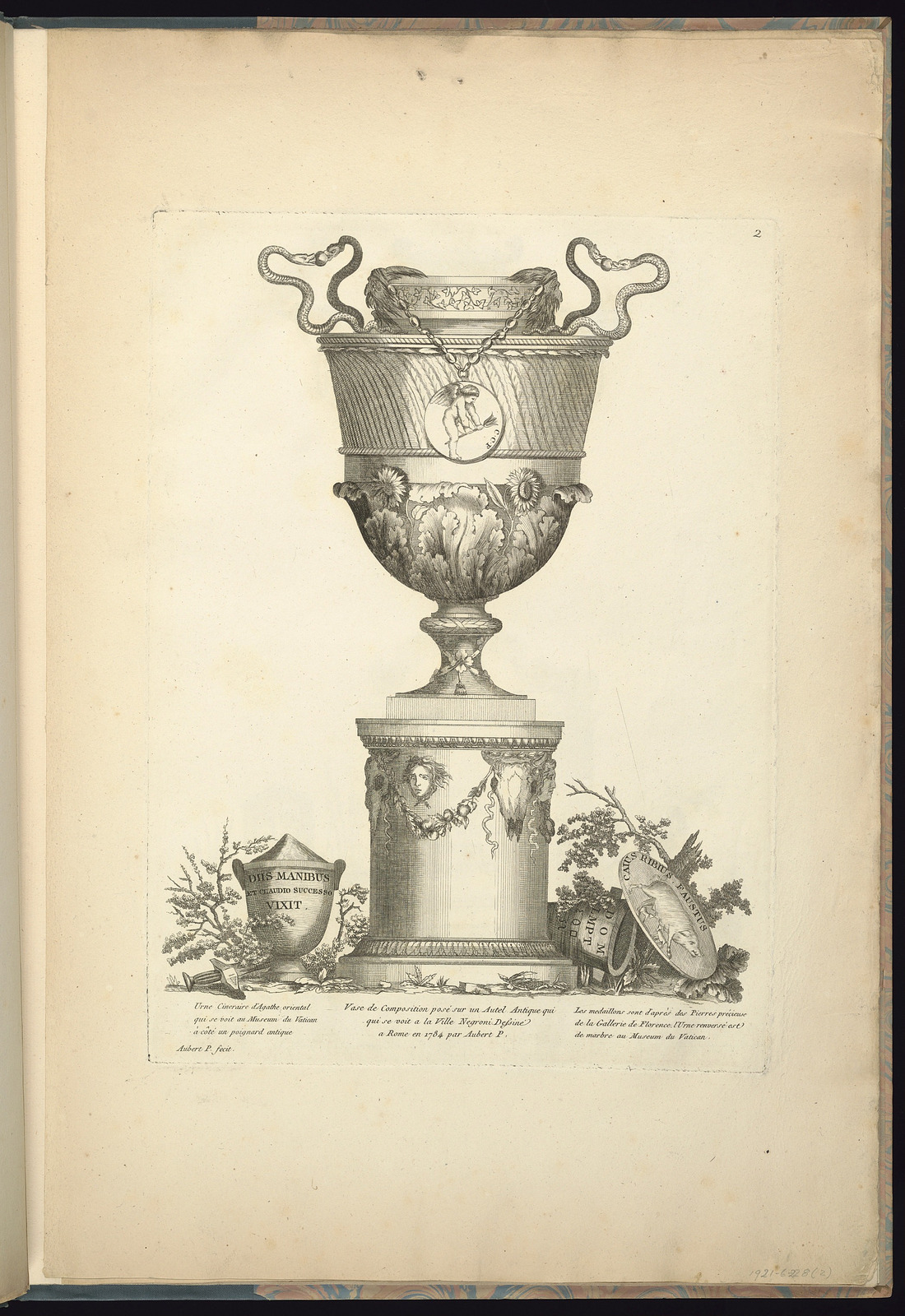
Vase with two curving snake handles. The vase has a chain attached two mascarons at either side of the neck. The chain drapes over the shoulder and terminates with a medallion, on which a winged putto breaks a trident with his knee; the medallion has on it the initials C.C.F. The vase is decorated with ivy, acanthus leaf, and sunflower ornamentation, and is elevated on a column with animal skull, mascaron, and garland decorations. To the left of the column is a smaller urn inscribed: DIIS MANIBUS / ET CLAUDIO SUCCESS / VIXIT. To the right of the column is an overturned urb inscribed: D O M / LMPT / [faux Greek script]; and a large round plate with a suckling pig and the words: CAIUS RIBIUS FAUSTUS. The objects are surrounded by small trees and foliage. Although the printed descriptions provide locations for Parent's study of antiquities, the compositional arrangement is imagined. The plate is signed, dated, and numbered.