Window mode follows your eyes with your camera, in this browser only: no picture or position leaves your device.
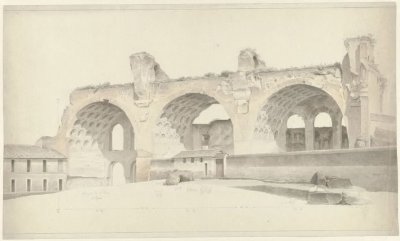
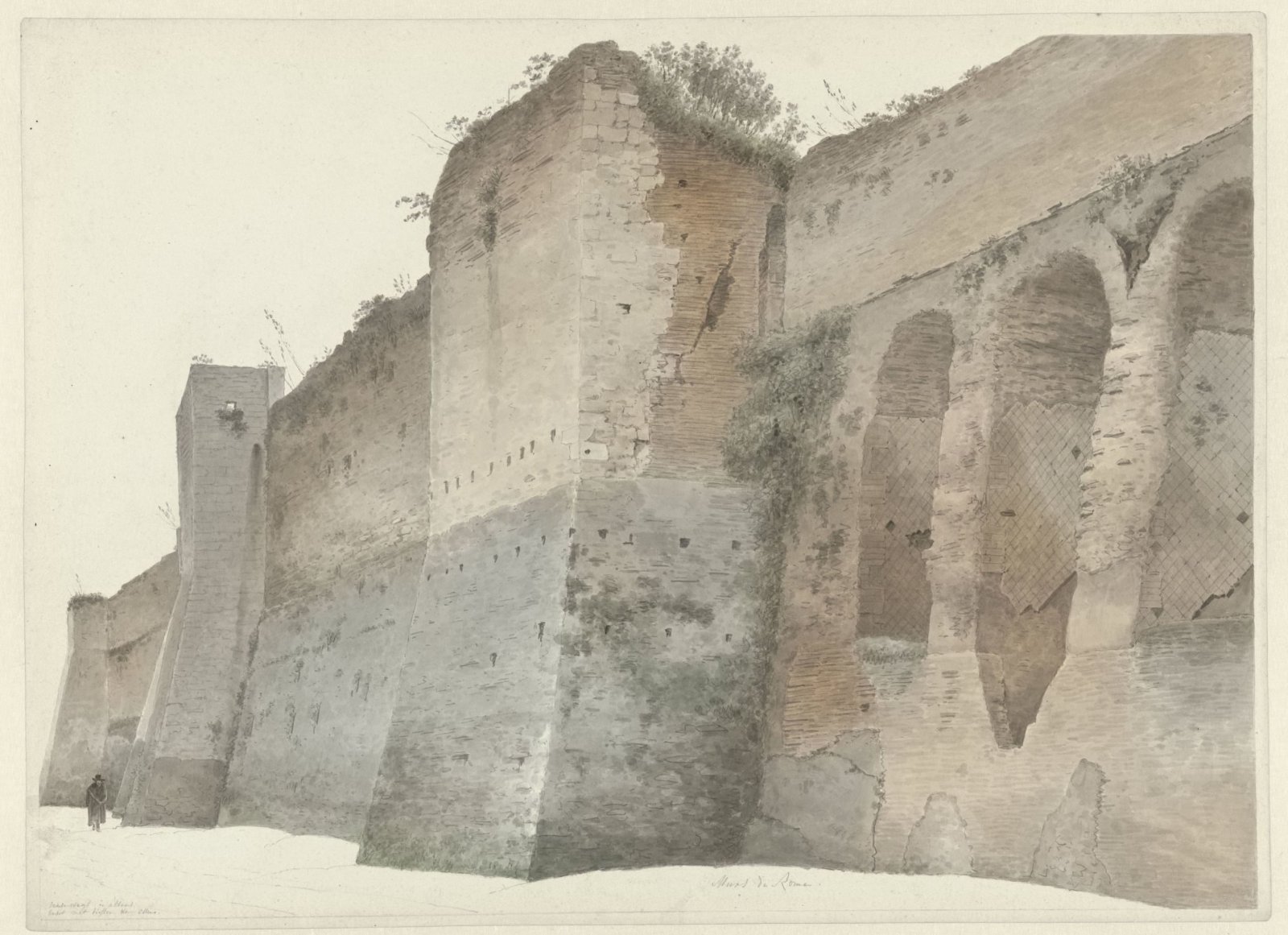
The Aurelian Wall in Rome
Also titled De Aureliaanse Muur in Rome
Josephus Augustus Knip (Tilburg, 1777–1847)
c. 1809 - c. 1812
- Medium
- paper, watercolor (paint), graphite (mineral)
- Classification
- drawing
- Dimensions
- height 368 mm x width 502 mm
- Museum
- Rijksmuseum
- Credit line
- Purchased with the support of the Gerhards Fonds/Rijksmuseum Fonds, the VSBfonds, the Mondriaan Fonds and the Vereniging Rembrandt with additional funding from the Hendrik de Jong Fonds and the Liente Dons Fonds
- Rights
- Public Domain Mark, as the museum states it.
- Who can see it
- Kids profiles and older: it shows nature, places, still life or a children's book. How works are placed
About this work
Construction of this 18-kilometre-long rampart began under the reign of Roman Emperor Aurelian (270–275 AD), which explains its name, the Aurelian Wall. In choosing a low vantage point, Knip underscored the structure’s menacing massiveness. Knip’s inscription on this drawing is amusing: evidently herds of cattle regularly caused jams on the road along the wall.