Window mode follows your eyes with your camera, in this browser only: no picture or position leaves your device.
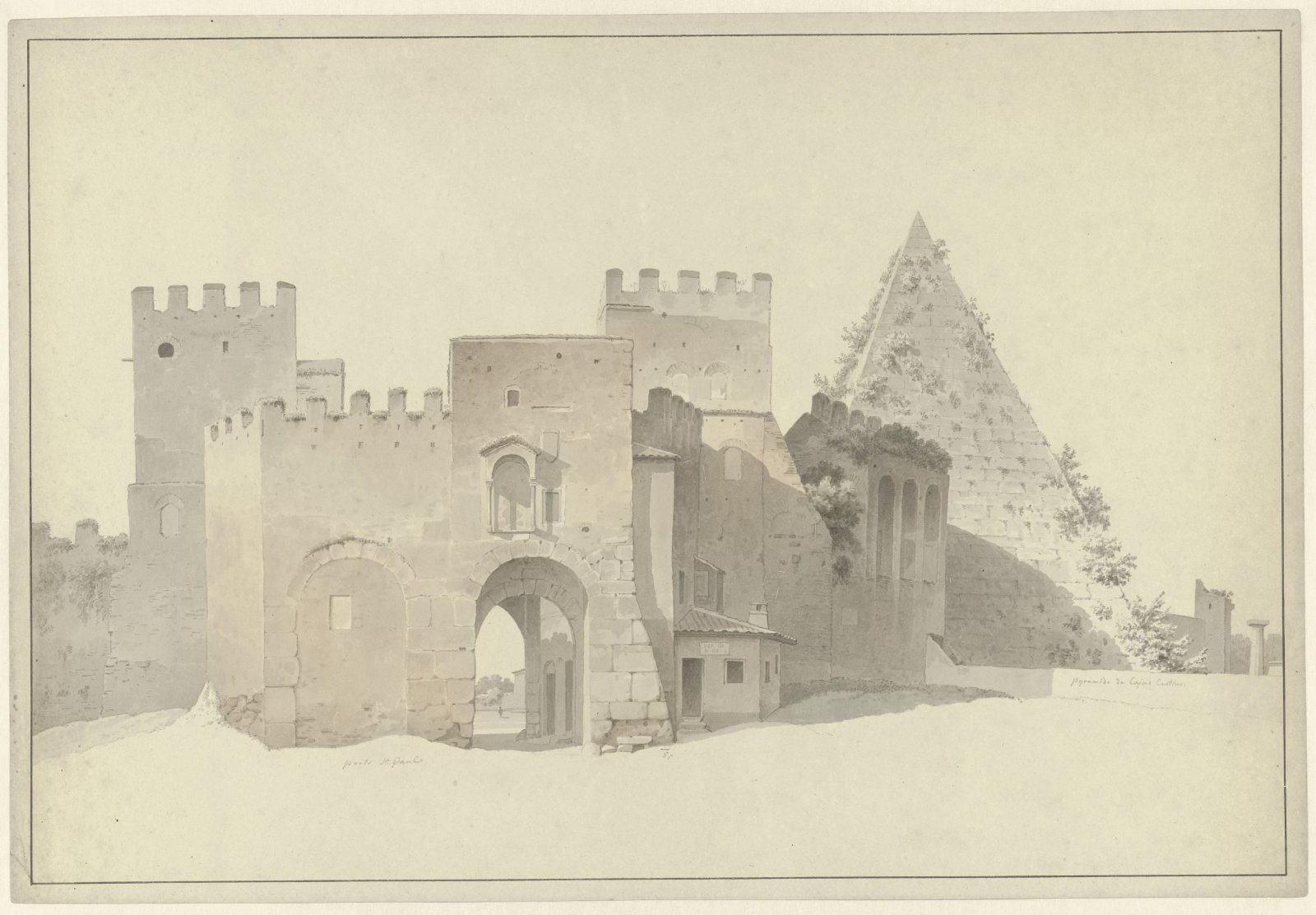
The Porta San Paolo and the Pyramid of Cestius in Rome
Also titled De Porta San Paolo en de Piramide van Cestius in Rome
Josephus Augustus Knip (Tilburg, 1777–1847)
c. 1809 - c. 1812
- Medium
- paper, watercolor (paint), graphite (mineral)
- Classification
- drawing
- Dimensions
- height 413 mm x width 611 mm
- Museum
- Rijksmuseum
- Credit line
- Purchased with the support of the Gerhards Fonds/Rijksmuseum Fonds, the VSBfonds, the Mondriaan Fonds and the Vereniging Rembrandt with additional funding from the Hendrik de Jong Fonds and the Liente Dons Fonds
- Rights
- Public Domain Mark, as the museum states it.
- Who can see it
- Kids profiles and older: it shows nature, places, still life or a children's book. How works are placed
About this work
The Porta San Paolo lies on the south side of the ancient city. Knip drew the gate from the city side. That one of the two passages was bricked up in Knip’s time is clearly visible. The structure at the right is the Pyramid of Cestius, a tomb built for Gaius Cestius, a Roman magistrate who held various high positions and died in 12 BC.