Window mode follows your eyes with your camera, in this browser only: no picture or position leaves your device.
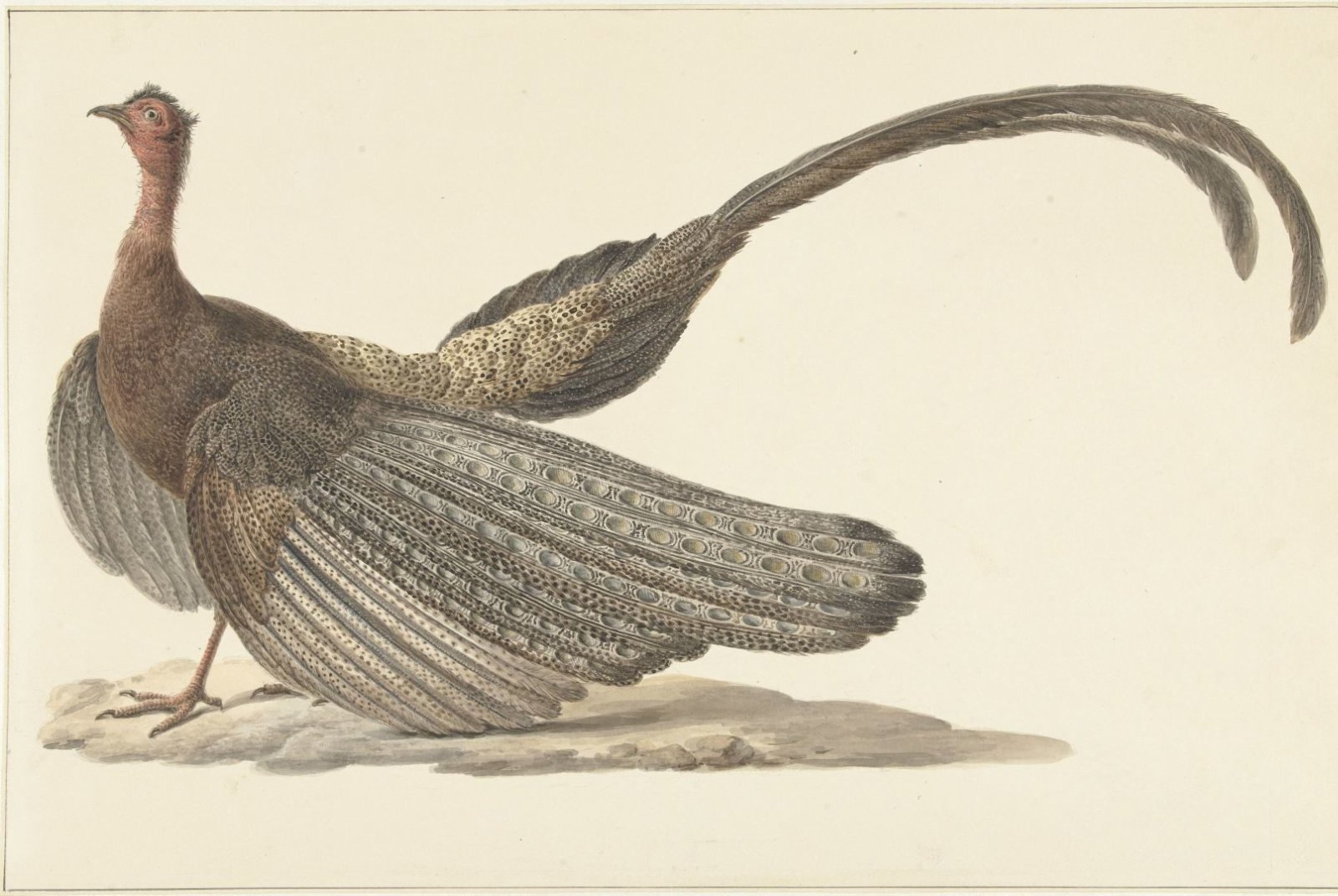
Argus Pheasant
Also titled Argusfazant
Pieter Pietersz. Barbiers (Amsterdam, voor–1842)
c. 1780 - c. 1842
- Medium
- paper, pencil, watercolor (paint)
- Classification
- drawing
- Dimensions
- height 338 mm x width 512 mm
- Museum
- Rijksmuseum
- Credit line
- M.E. van den Brink Bequest, Velp
- Rights
- Public Domain Mark, as the museum states it.
- Who can see it
- Little Ones profiles and older: it shows gentle subjects for the very young. How works are placed
About this work
In recording this argus pheasant, Pieter Barbiers focused on the faithful depiction of its plumage. The countless dots and round spots on the tail and wing feathers are called Argus eyes, a reference (like the bird’s name itself) to the hundred-eyed giant Argus in Greek mythology. According to the classical myth, the giant’s eyes were forever preserved in the similar pattern on a peacock’s tail.