Window mode follows your eyes with your camera, in this browser only: no picture or position leaves your device.
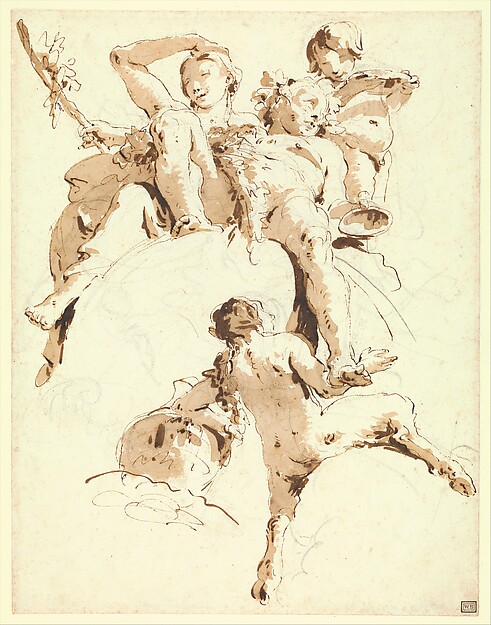
The Discovery of Pulcinella’s Grave
Also titled De ontdekking van het graf van Pulcinella
Giovanni Battista Tiepolo (Venice, 1696–1770)
in or before c. 1750
- Medium
- paper
- Classification
- Dimensions
- height 223 mm x width 182 mm
- Museum
- Rijksmuseum
- Credit line
- Purchased with the support of the J.W. Edwin Vom Rath Fonds/Rijksmuseum Fonds
- Rights
- Public Domain Mark, as the museum states it.
- Who can see it
- Teens profiles and older: its subject is for older viewers (war, death, the Passion, drink or the like). How works are placed
About this work
How can Pulcinella’s grave be discovered? After all, Pulcinella is a stock character in the commedia dell’ arte, the improvised Italian theatre. As such he does not actually exist, yet he is nevertheless immortal. However, everything is possible in the world that sprang from Tiepolo’s mind, and so he lies buried here (right foreground). The bone and hourglass emphasize that Pulcinella is also just a human, who has died.