Window mode follows your eyes with your camera, in this browser only: no picture or position leaves your device.
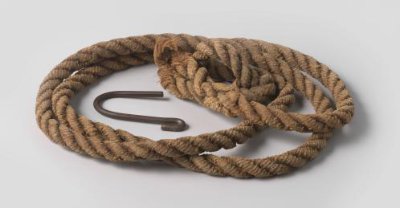
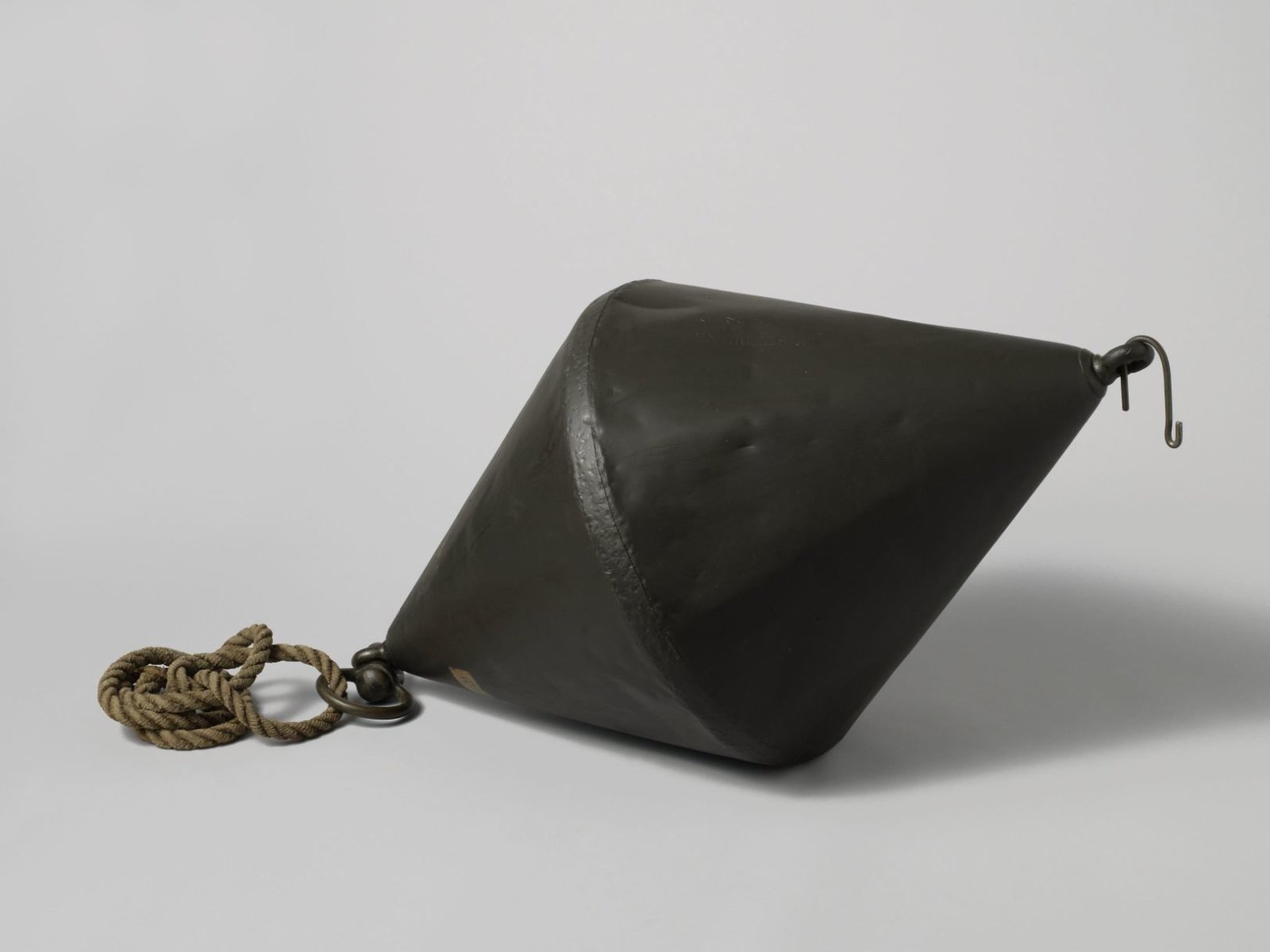
Anchor buoy
Also titled Ankerboei
George Stebbing (London, 1775–1847)
c. 1820 - c. 1840
- Medium
- copper (metal), rope, paint (coating), brass (alloy)
- Classification
- anchor buoy
- Dimensions
- length 100 cm (without rope) x diameter 48 cm x weight 17.2 kg
- Museum
- Rijksmuseum
- Rights
- Public Domain Mark, as the museum states it.
- Who can see it
- Tweens profiles and older: its subjects are known and suit older children. How works are placed
About this work
An anchor buoy was floated on the water’s surface to prevent other ships from sailing over the anchor chain of a moored ship. It also marked the location of the anchor and allowed it to be recovered if the cable broke or had to be cut. This anchor buoy, designed by the Englishman George Stebbing, was lighter and had a longer life than those previously used.