Window mode follows your eyes with your camera, in this browser only: no picture or position leaves your device.
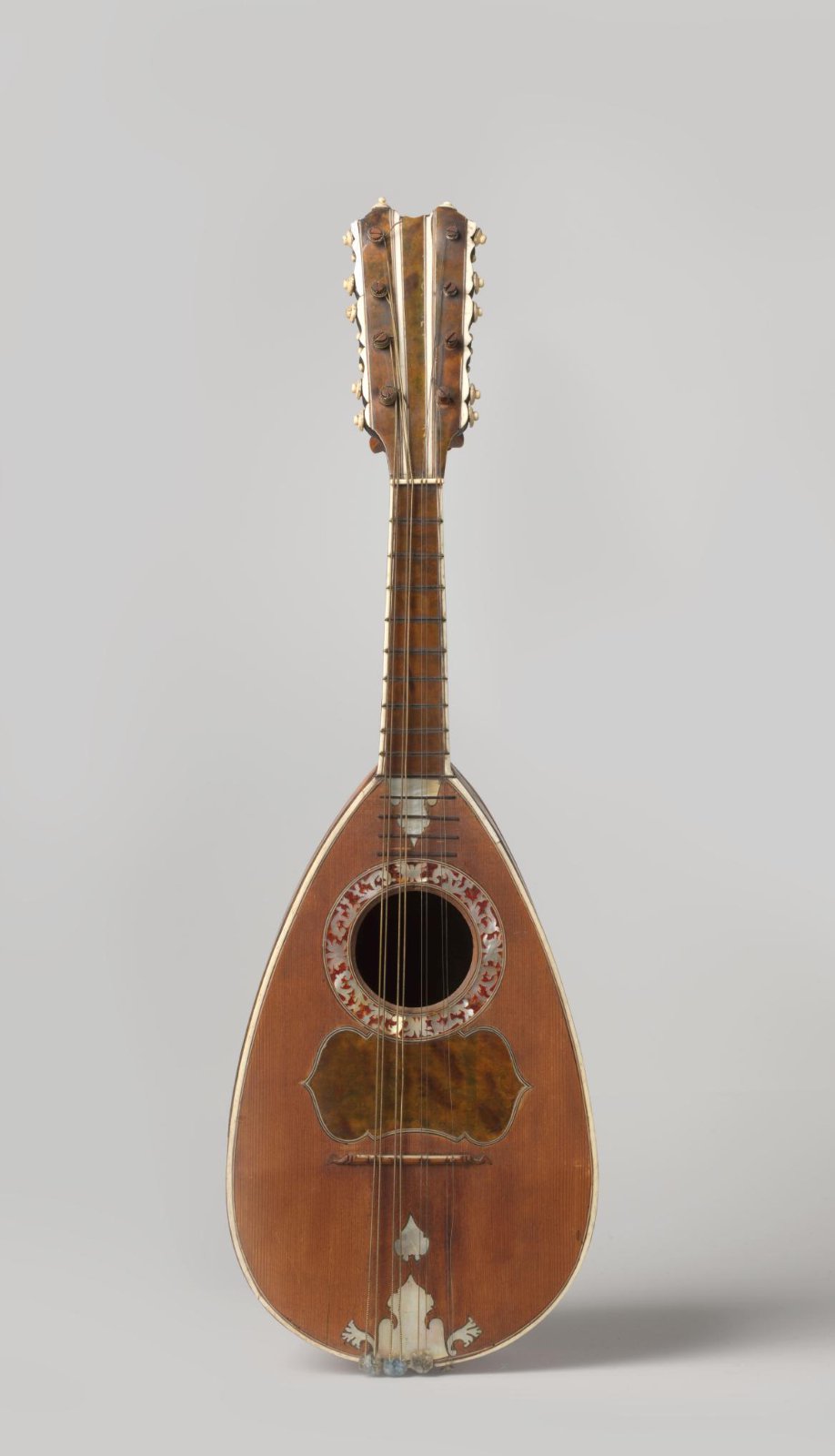
Neapolitan mandolin
Also titled Napelse mandoline
c. 1770 - c. 1780
- Medium
- tortoise shell, metal, wood (plant material), mother of pearl, bone (material)
- Classification
- Neapolitan mandolin
- Dimensions
- length 59 cm x width 16 cm x depth 12.5 cm
- Museum
- Rijksmuseum
- Credit line
- Purchased with the support of the State of the Netherlands and the Vereeniging van Noord-Nederlandsche Muziekgeschiedenis
- Rights
- Public Domain Mark, as the museum states it.
- Who can see it
- Tweens profiles and older: its subjects are known and suit older children. How works are placed
About this work
This type of mandolin was invented in Naples in the mid-18th century. Its strings are grouped in four pairs and tuned in fifths to the same pitches as the violin. In addition, its fingerboard is fretted to facilitate intonation, which made the mandolin easier to play than the violin and particularly successful among amateur performers.