Window mode follows your eyes with your camera, in this browser only: no picture or position leaves your device.
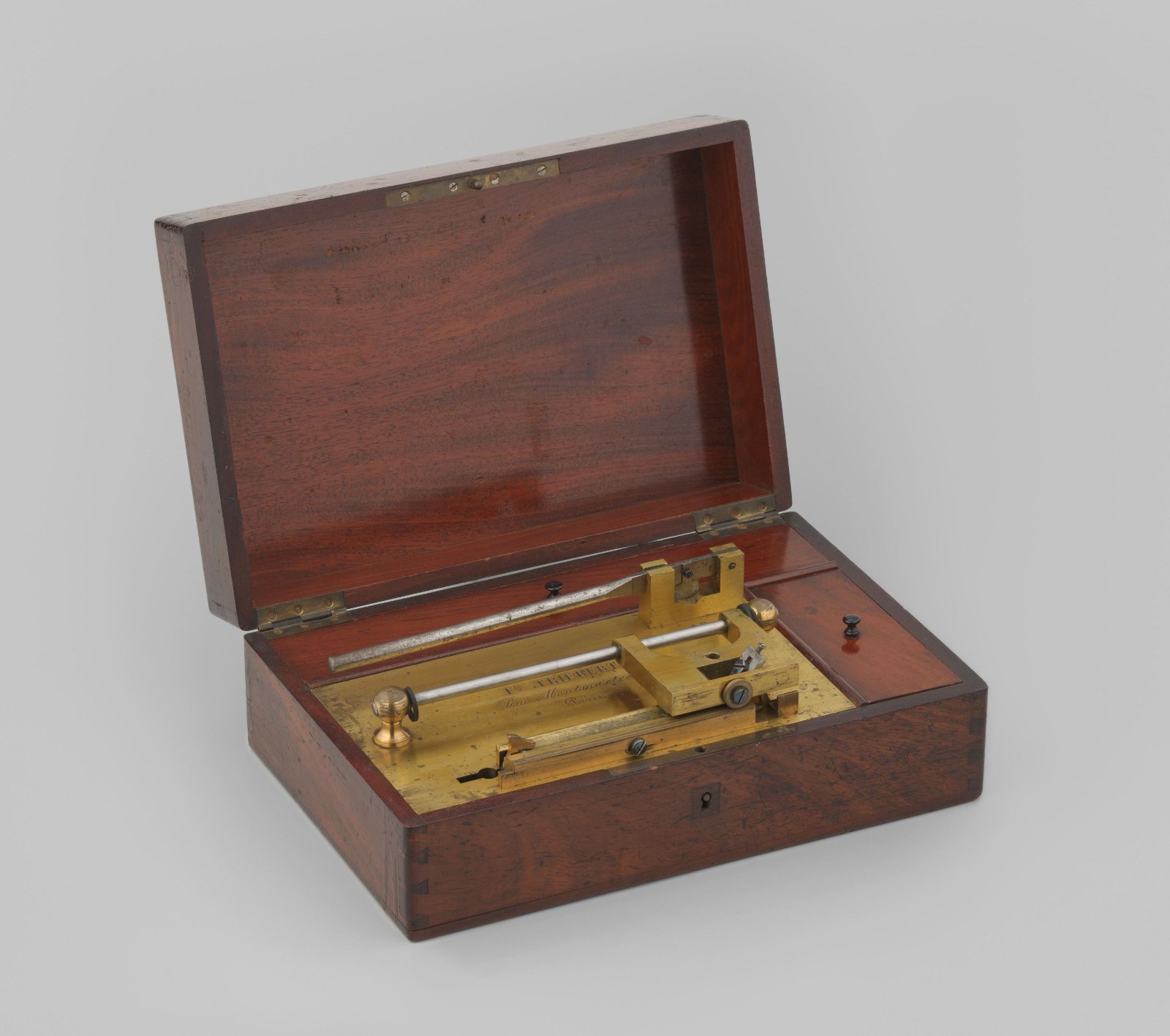
Reed Gouging Machine
Also titled Machine voor het afschrapen van riet
Guillaume Triébert (Hessen, 1770–1848)
c. 1840 - c. 1850
- Medium
- mahogany (wood), iron (metal), brass (alloy)
- Classification
- musical instrument
- Dimensions
- length 26.8 cm x width 17.5 cm x height 10 cm
- Museum
- Rijksmuseum
- Credit line
- Gift Han de Vries Collection, Amsterdam
- Rights
- Public Domain Mark, as the museum states it.
- Who can see it
- Tweens profiles and older: its subjects are known and suit older children. How works are placed
About this work
Reed-making Equipment. The sound of the oboe is produced by blowing air through the reed, which is fixed at the upper end of the instrument. It consists of a slip of Arundo donax (cane) folded in half, with a small opening at the tip. The wood is scraped thinly so that it will vibrate when blown through. Players must make their own reeds, which they learn how to do during their training. In the 19th century, French oboe makers designed various tools to simplify the reedmaking process.