Window mode follows your eyes with your camera, in this browser only: no picture or position leaves your device.
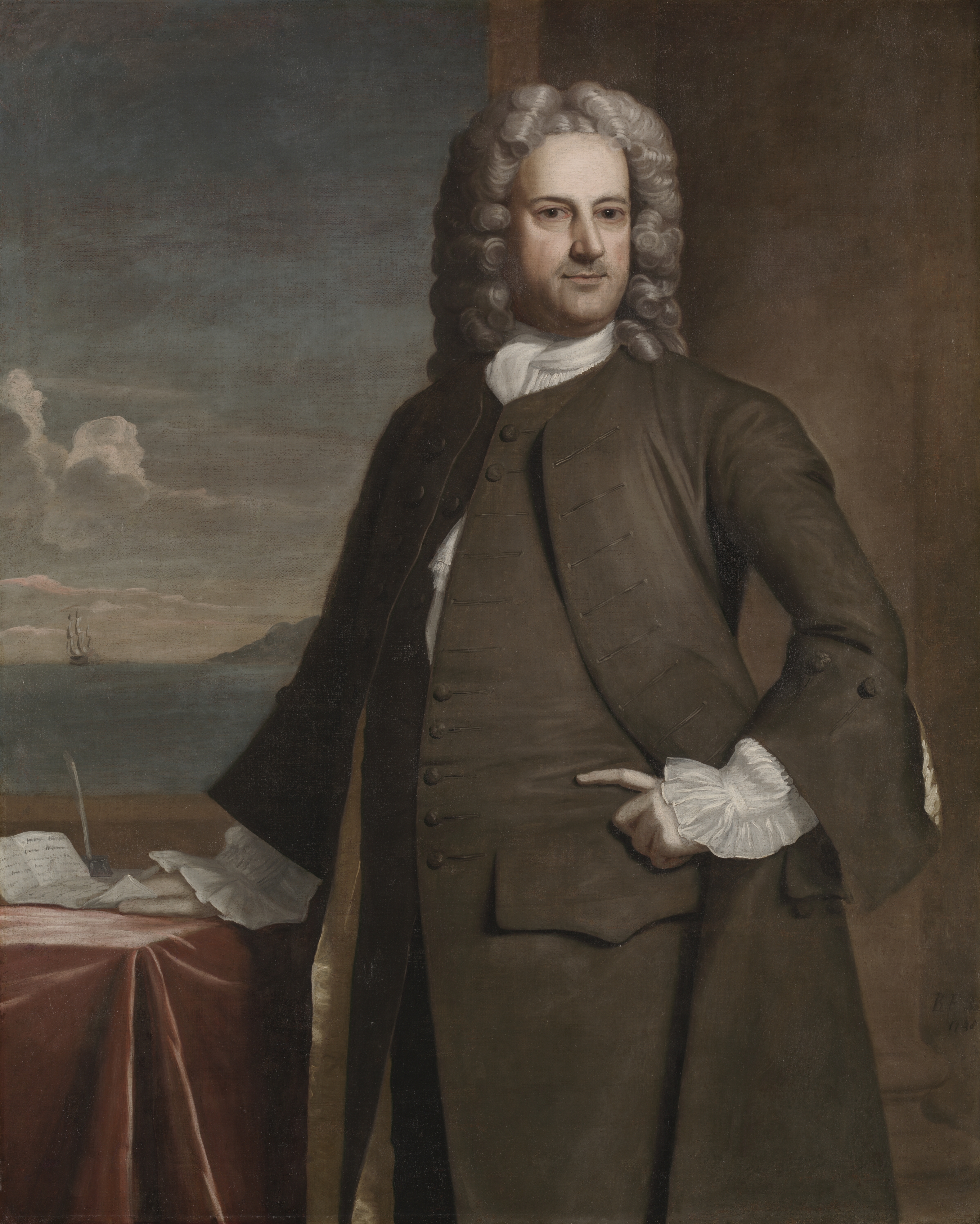
Charles Apthorp
Robert Feke (American, born The Thirteen Colonies, c. 1707–c. 1752)
1748
- Medium
- oil on canvas
- Classification
- Painting
- Dimensions
- Framed: 141.5 x 117.5 x 7.5 cm (55 11/16 x 46 1/4 x 2 15/16 in.); Unframed: 127 x 101.5 cm (50 x 39 15/16 in.)
- Culture
- United States
- Museum
- Cleveland Museum of Art, American Painting and Sculpture
- Credit line
- Gift of the John Huntington Art and Polytechnic Trust
- Rights
- Public domain (CC0), as the museum states it.
- Who can see it
- Teens profiles and older: its museum says too little about what it shows to place it for younger viewers. How works are placed
View at the Cleveland Museum of Art
About this work
Called “the greatest merchant on this Continent” in his obituary, Apthorp helped transform Boston into one of the key commercial centers in the American colonies. When the fashionable painter Robert Feke came to town, Apthorp commissioned this elegantly tailored and confidently posed likeness of himself. The sailing ship in the distant background symbolizes Apthorp’s deep financial interests in the Atlantic trade, which included not only textiles, wine, and guns, but also enslaved people. In fact, the slave trade and its attendant commerce comprised a significant portion of colonial Boston’s economy until the decades after the Revolutionary War, when anti-slavery attitudes in New England gained momentum.