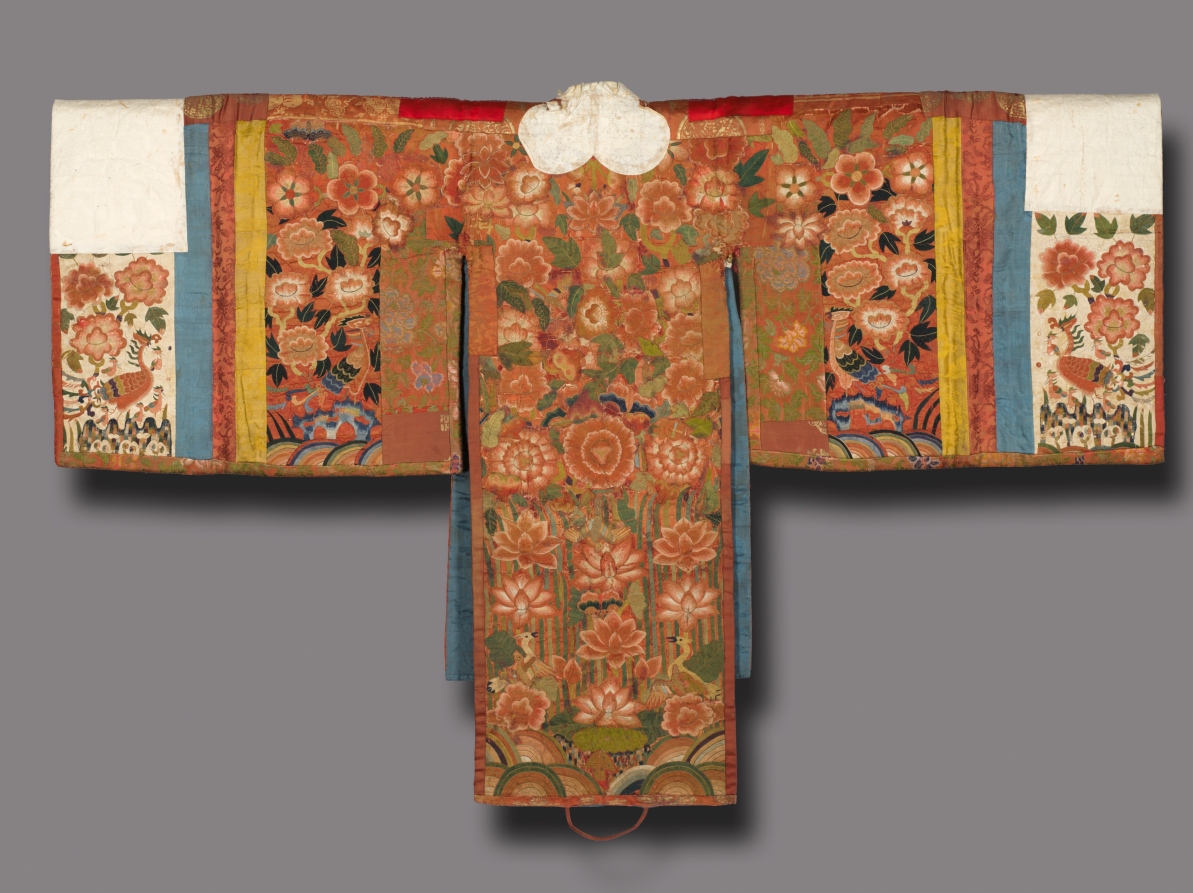
Bridal Robe (Hwarot)
1850–1910
- Medium
- Satin weave silk; silk embroidery; paper edging on neck and sleeves
- Classification
- Garment
- Dimensions
- Overall: 121.9 x 186.7 cm (48 x 73 1/2 in.)
- Culture
- Korea, Joseon dynasty (1392–1910)
- Museum
- Cleveland Museum of Art, Textiles
- Credit line
- The Worcester R. Warner Collection
- Rights
- Public domain (CC0), as the museum states it.
- Who can see it
- Teens profiles and older: its museum says too little about what it shows to place it for younger viewers. How works are placed
View at the Cleveland Museum of Art
About this work
This bride's robe is exquisitely embroidered with various symbols of happiness in colorful silk threads. Butterflies stand for marital happiness; the phoenix, numerous offspring; and lotus flowers and white cranes, longevity. Yet, the bridal robe does not attest to the life of luxury. To the contrary, many traces of repairs, trimmings, and patchwork reflect Joseon period women’s commitment to value neo-Confucian aesthetics of frugality and modesty.
Substantial repairs and patching reveal that this robe served as an important communal resource to be shared and passed down through several generations. Its collar and sleeves are covered in thick white paper; this paper is replaced with new paper for each bride, while the robe itself was reused for decades.