Window mode follows your eyes with your camera, in this browser only: no picture or position leaves your device.
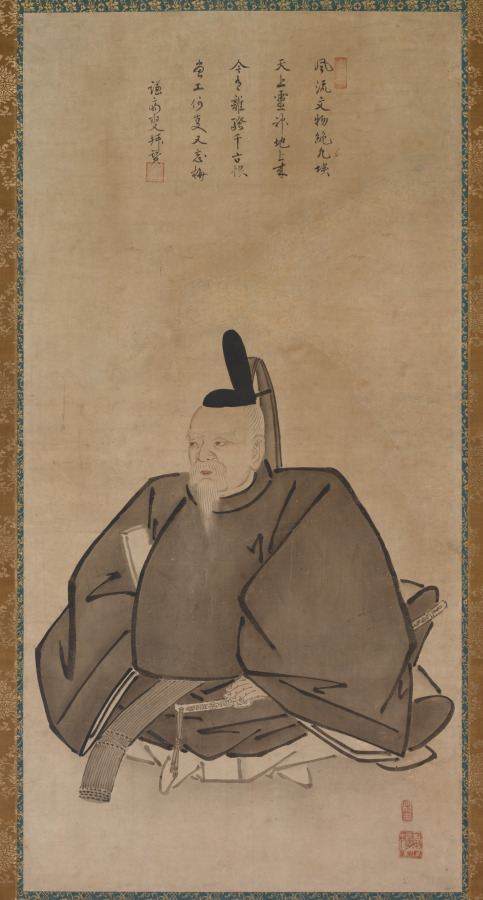
Portrait of Sugawara Michizane
Yōgetsu (Japanese, active late 1400s to early 1500s)
late 1400s–early 1500s
- Medium
- hanging scroll; ink and color on paper
- Classification
- Painting
- Dimensions
- Painting: 100.8 x 50.2 cm (39 11/16 x 19 3/4 in.); Mounted: 189.2 x 65.2 cm (74 1/2 x 25 11/16 in.)
- Culture
- Japan, Muromachi period (1392–1573)
- Museum
- Cleveland Museum of Art, Japanese Art
- Credit line
- Gift from the Collection of George Gund III
- Rights
- Public domain (CC0), as the museum states it.
- Who can see it
- Tweens profiles and older: its subjects are known and suit older children. How works are placed
View at the Cleveland Museum of Art
About this work
Sugawara Michizane (845–903) was a Kyoto aristocrat who died in exile in Dazaifu in Japan’s southern island of Kyushu, having been slandered at court. His vengeful spirit was later pacified by the construction of shrines in his name. His image was incorporated into the repertoire of Zen Buddhist figure painting, which included bodhisattvas, Daoist immortals, and other enlightened beings. Eminent monk Sakugen Shūryō (1501–1579) inscribed this work, which was painted by monk-painter Yōgetsu of Kyushu, who traveled east to study either in Kyoto or Kamakura. The Chinese-style poem is an ode to Michizane in his guise as the deity Tenjin.