Window mode follows your eyes with your camera, in this browser only: no picture or position leaves your device.
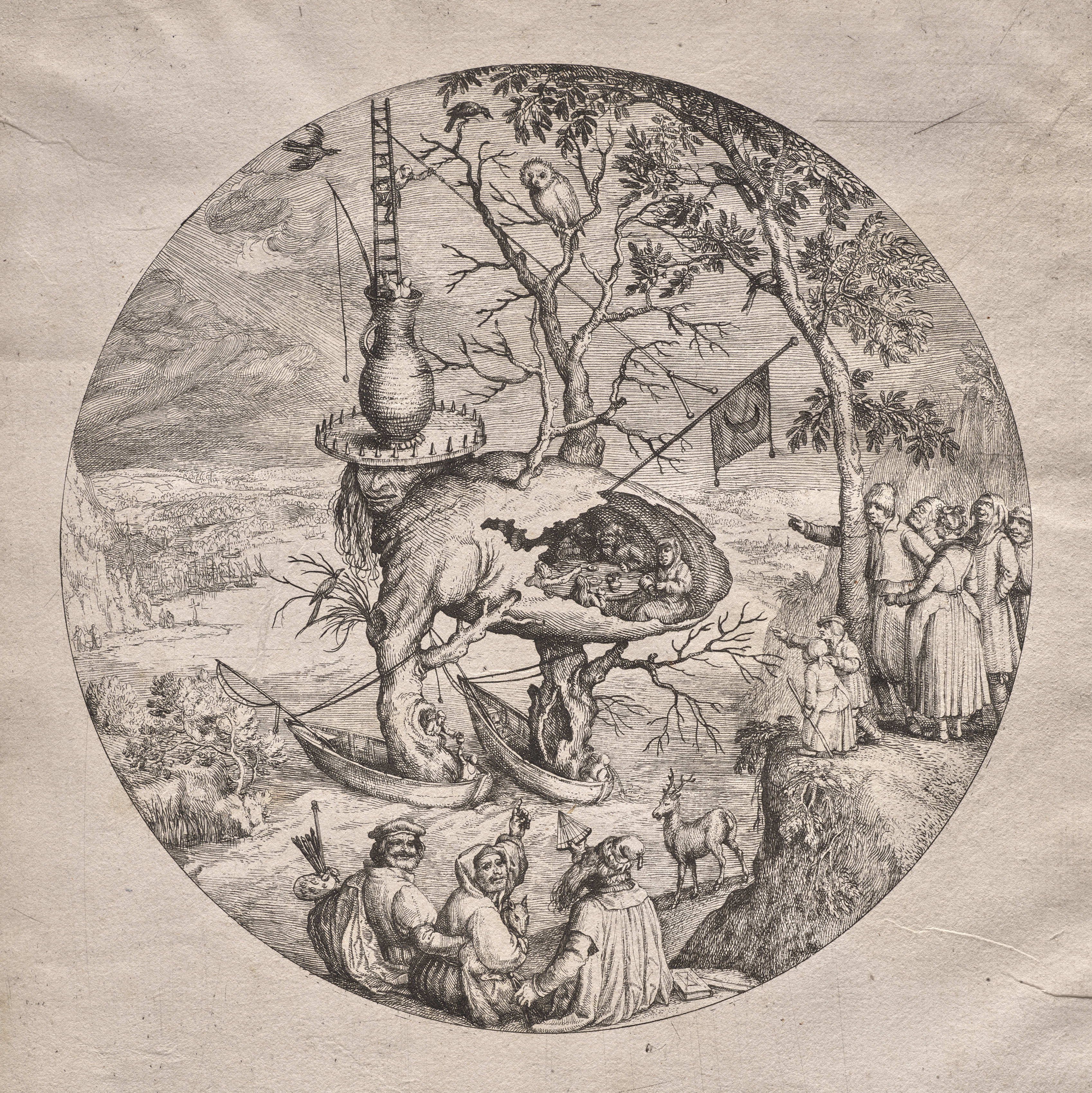
The Tree Man
after Hieronymous Bosch (Netherlandish, c. 1450–1516)
c. 1560–1600, first edition printed c. 1715
- Medium
- etching and engraving
- Classification
- Dimensions
- Platemark: 20.8 cm (8 3/16 in.); Sheet: 37 x 26.2 cm (14 9/16 x 10 5/16 in.)
- Culture
- Netherlands
- Museum
- Cleveland Museum of Art, Prints
- Credit line
- Severance and Greta Millikin Purchase Fund
- Rights
- Public domain (CC0), as the museum states it.
- Who can see it
- Tweens profiles and older: its subjects are known and suit older children. How works are placed
View at the Cleveland Museum of Art
About this work
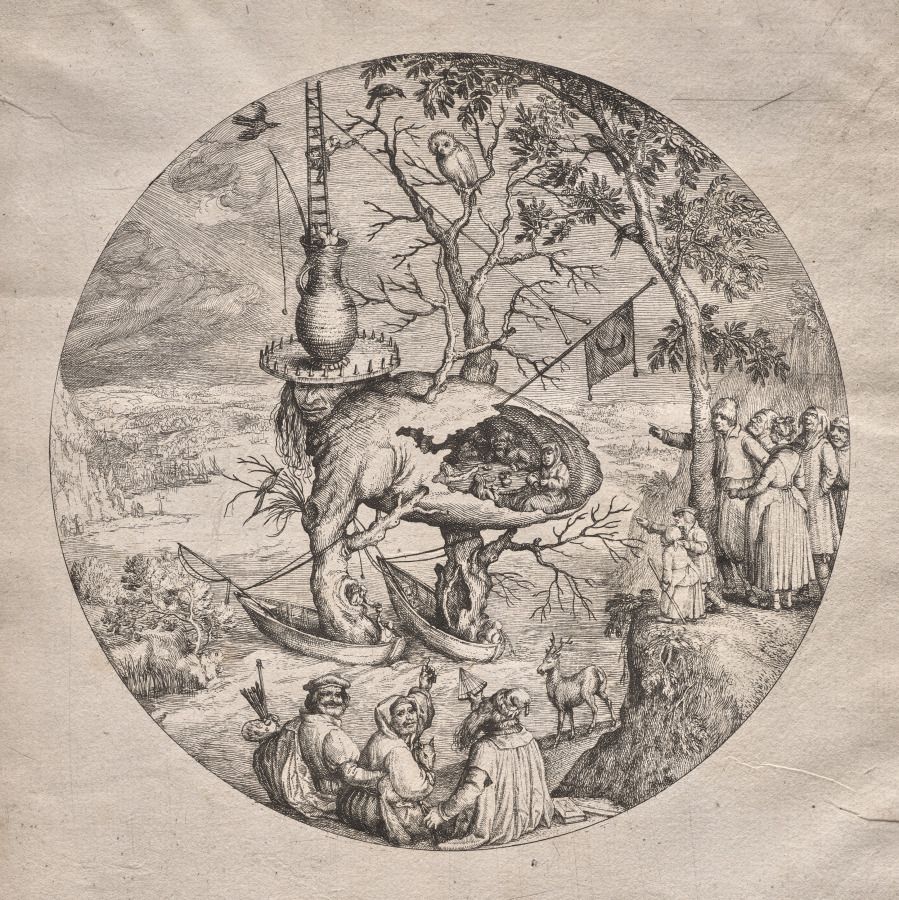
Hieronymus Bosch is largely considered the first European artist to give free rein to his imagination, as embodied in his depiction of fantastic, often diabolical creatures in the context of the traditional Catholic altarpiece. Based on a drawing by Bosch now at the Albertina Museum, Vienna, this etching of the Tree Man cleverly and uncannily merges anthropomorphic, organic, and man-made elements into a monstrous creature who stands at the center. The creature combines various proverbial subjects that appear throughout Bosch’s oeuvre, such as a ship of fools (denoting collective foolishness), and a cracked egg (a symbol of earthly vanity). Onlookers to the right and below act as witnesses to the folly. In the Christian context within which Bosch made the composition, the figure may broadly be understood as an image of sinful decrepitude. Yet, the Tree Man’s significance cannot be reduced to single, definitive meaning.