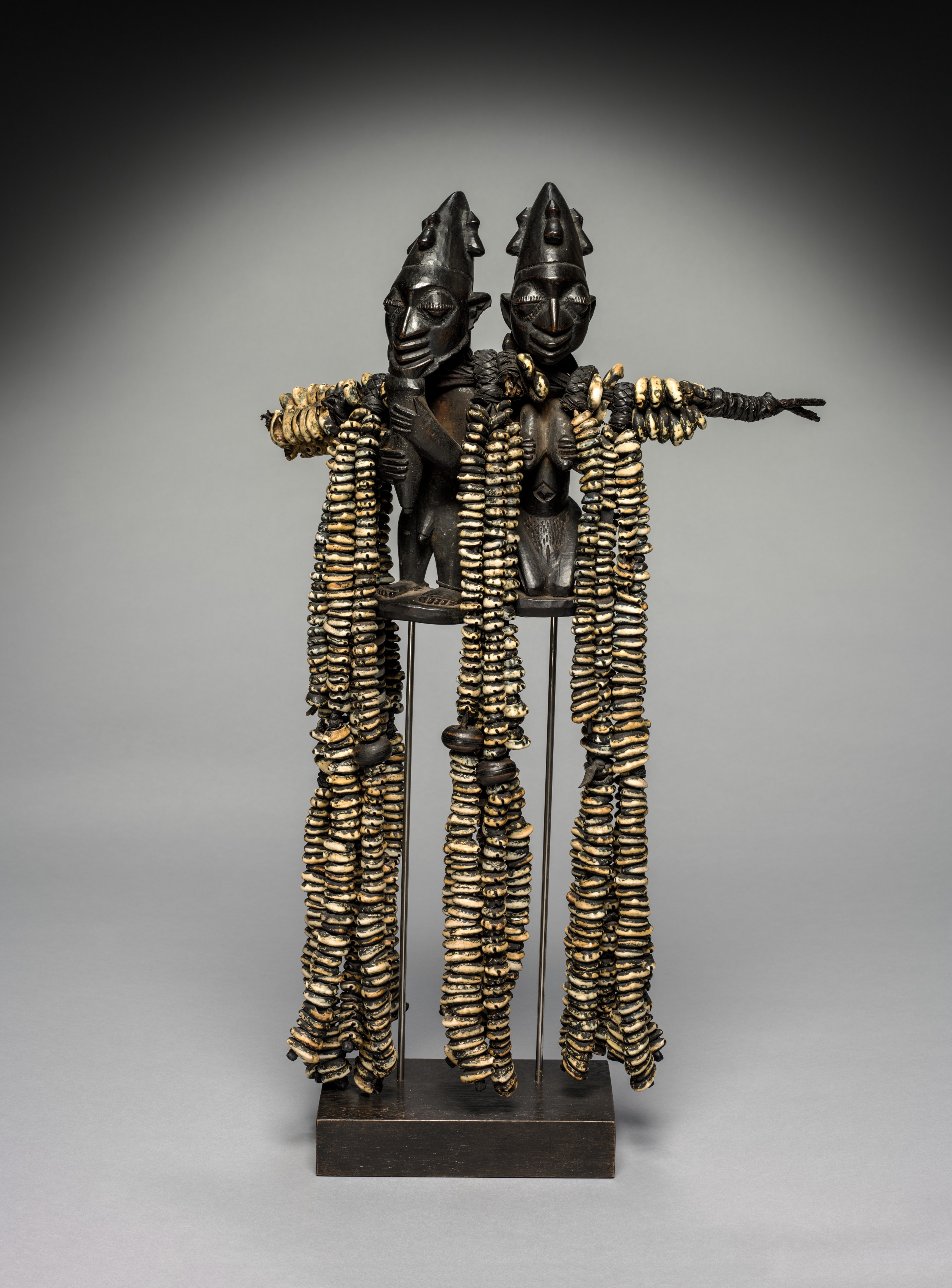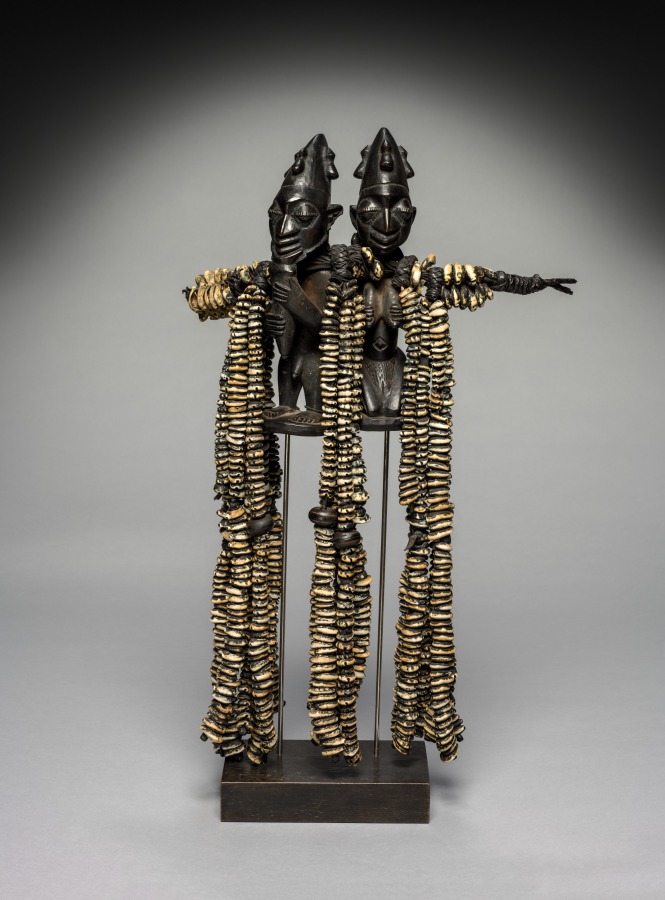
Dance staff for Èṣù (Ògò Èlẹ́gba)
1800s
- Medium
- Wood, leather, cowrie shells, seeds, and natural fiber
- Classification
- Sculpture
- Dimensions
- 62 cm (24 7/16 in.)
- Culture
- Africa, West Africa, Nigeria, Yorùbá-style maker
- Museum
- Cleveland Museum of Art, African Art
- Credit line
- John L. Severance Fund
- Rights
- Public domain (CC0), as the museum states it.
- Who can see it
- Tweens profiles and older: its subjects are known and suit older children. How works are placed
View at the Cleveland Museum of Art
About this work
Èṣù (also called Èḷégba) embodies the most complex deity in the Yorùbá pantheon of gods. The messenger of the Yorùbá gods, Èṣù is also the bearer of sacrifices, guardian of the ritual way of life, and is associated with highly significant places including crossroads, markets, and home entrances. As seen here, Èṣù's power is often visually represented in Ògò Èḷégba (dance staffs); in this example, the unusually paired man and woman reference his ability to switch between the two genders, turn death into life (through childbirth), and to overcome the tension between the sexes. The male character bears a ritual flute reserved for this god. The abundance of cowrie shells means that Èṣù brings wealth.