Window mode follows your eyes with your camera, in this browser only: no picture or position leaves your device.
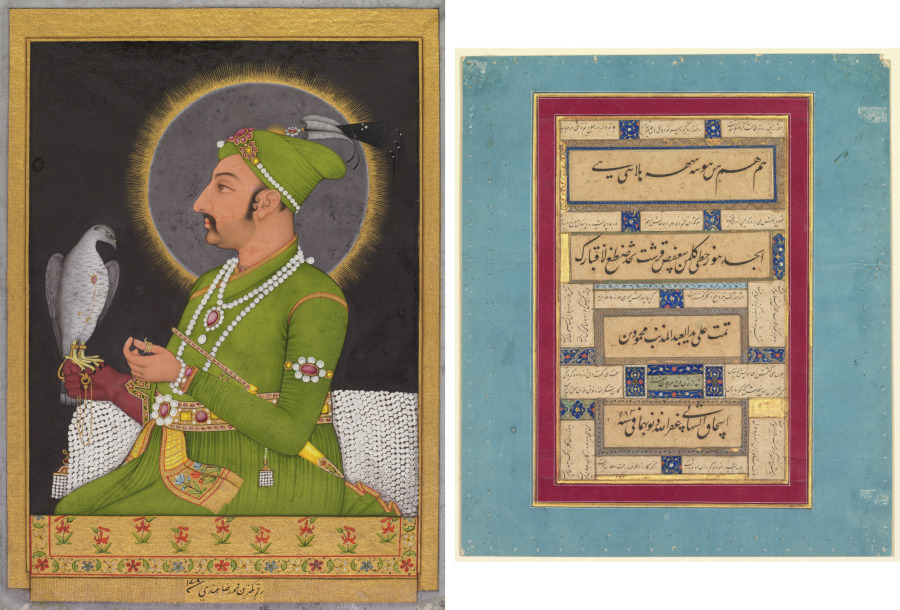
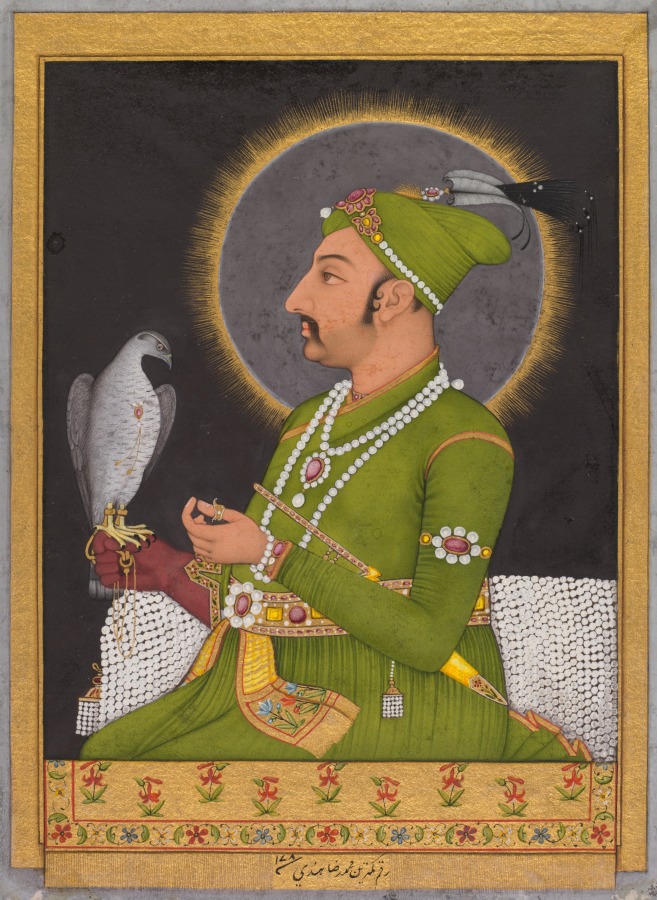
Posthumous portrait of the Mughal emperor Muhammad Shah (reigned 1719–1748) holding a falcon (recto)
Muhammad Rizavi Hindi (Indian, active mid-1700s)
1764
- Medium
- Gum tempera, ink, and gold on paper
- Classification
- Painting
- Dimensions
- Painting only: 14.4 x 10.3 cm (5 11/16 x 4 1/16 in.); Page: 28 x 23.8 cm (11 x 9 3/8 in.)
- Culture
- Mughal India, probably Uttar Pradesh, Lucknow
- Museum
- Cleveland Museum of Art, Indian and Southeast Asian Art
- Credit line
- Gift in honor of Madeline Neves Clapp; Gift of Mrs. Henry White Cannon by exchange; Bequest of Louise T. Cooper; Leonard C. Hanna Jr. Fund; From the Catherine and Ralph Benkaim Collection
- Rights
- Public domain (CC0), as the museum states it.
- Who can see it
- Teens profiles and older: its subject is for older viewers (war, death, the Passion, drink or the like). How works are placed
View at the Cleveland Museum of Art
About this work
The artist used the carpet, the floor cushion, and the halo to indicate the royal status of the seated figure. He has turned the picture plane into the space of a window, over the sill of which a golden carpet ornamented with a field of lilies marks his location for outsiders. His signature in Persian, the Mughal lingua franca, interrupts the fringed border.
Painted after the emperor’s death and the dissolution of much of the Mughal court, this refined portrait pays tribute to the wealth and power of the imperial past.