Window mode follows your eyes with your camera, in this browser only: no picture or position leaves your device.
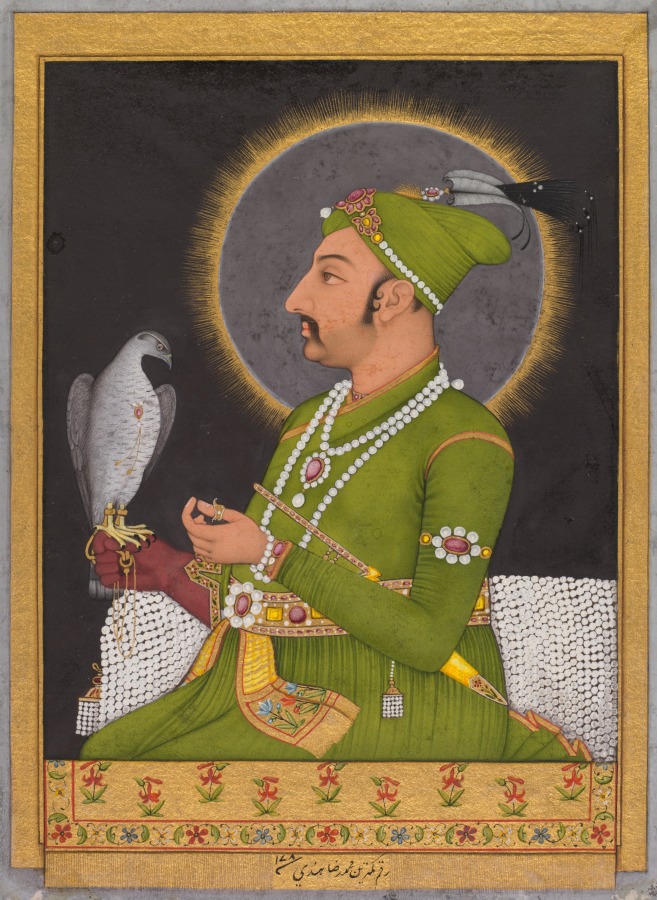
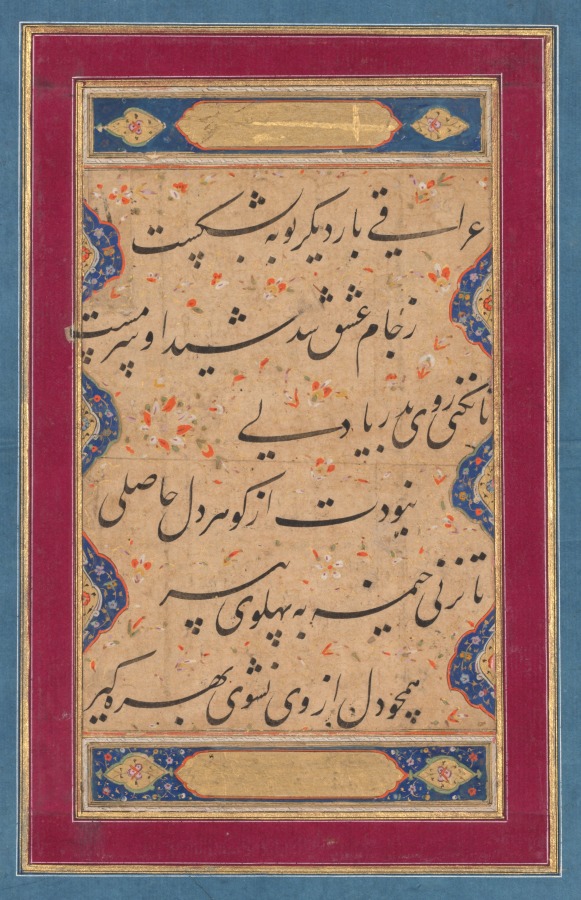
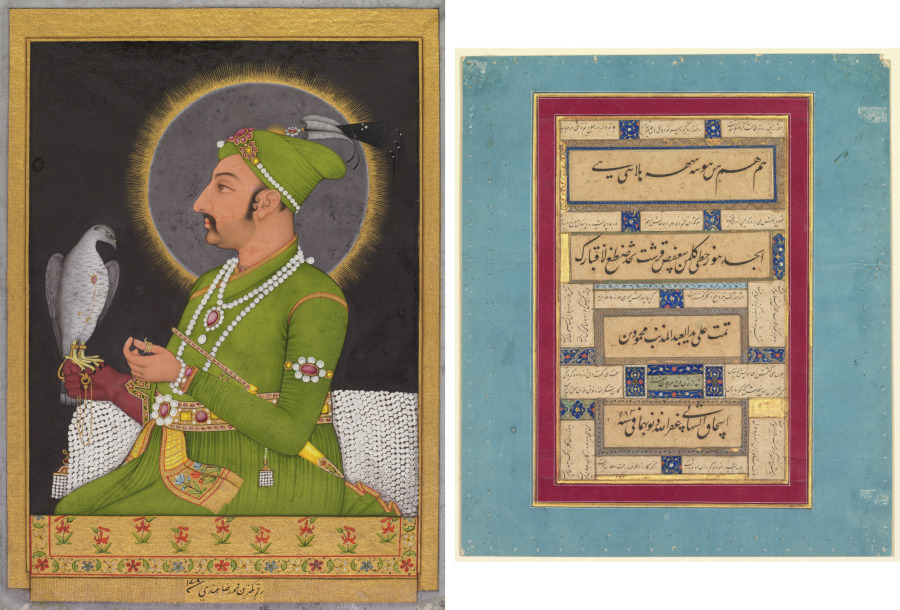
Posthumous portrait of the Mughal emperor Muhammad Shah (reigned 1719–1748) holding a falcon (recto); Calligraphy (verso)
Muhammad Rizavi Hindi (Indian, active mid-1700s)
calligraphy by Mahmud ibn Ishaq al-Shahabi (Persian, active mid- to late 1500s)
1764
- Medium
- Gum tempera, ink, and gold on paper
- Classification
- Painting
- Dimensions
- Painting only: 14.4 x 10.3 cm (5 11/16 x 4 1/16 in.); Page: 28 x 23.8 cm (11 x 9 3/8 in.)
- Culture
- Mughal India, probably Uttar Pradesh, Lucknow
- Museum
- Cleveland Museum of Art, Indian and Southeast Asian Art
- Credit line
- Gift in honor of Madeline Neves Clapp; Gift of Mrs. Henry White Cannon by exchange; Bequest of Louise T. Cooper; Leonard C. Hanna Jr. Fund; From the Catherine and Ralph Benkaim Collection
- Rights
- Public domain (CC0), as the museum states it.
- Who can see it
- Teens profiles and older: its subject is for older viewers (war, death, the Passion, drink or the like). How works are placed
View at the Cleveland Museum of Art
About this work
Emperor Muhammad Shah, who reigned from 1719 to 1748, was known as “Rangila,” which means “the Colorful.” The innovative use of a black background sharply sets off the chartreuse green of his jama and the pearls of his adornments and bolster. On his left thumb he wears an archer’s ring, and a stabbing dagger is tucked into his bejeweled belt. Even his trained hunting falcon has a ruby necklace. In this formal posthumous portrait, the master artist conveys a heightened realism that emerges effortlessly from elegant contour lines and bold use of color. The work was part of an album of paintings collected in India before 1811 by a Scottish politician who worked for the British East India Company.