Window mode follows your eyes with your camera, in this browser only: no picture or position leaves your device.
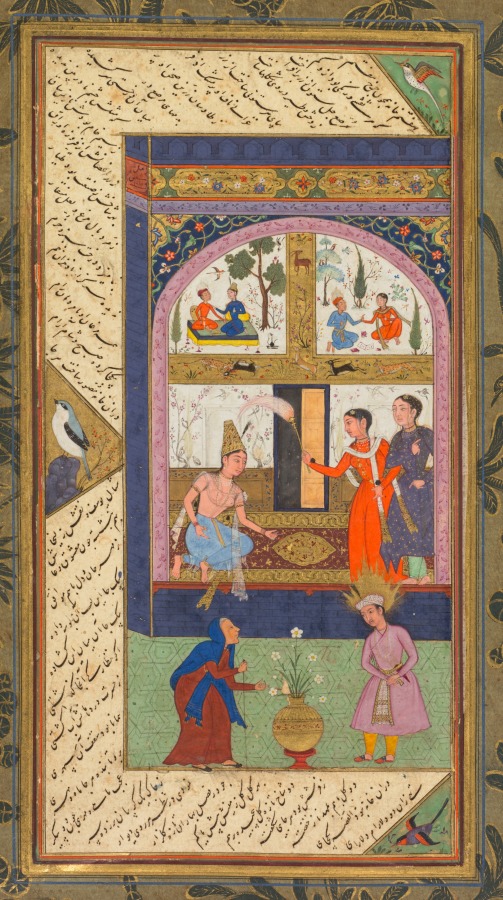
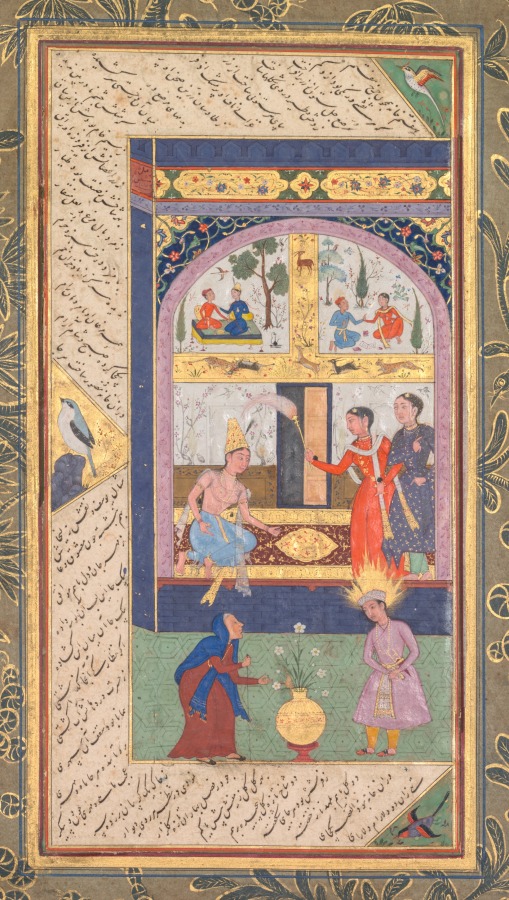
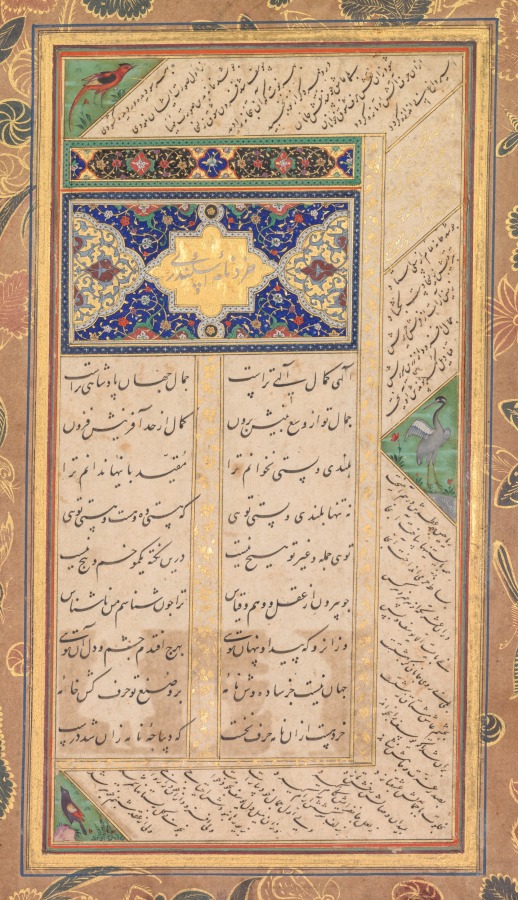
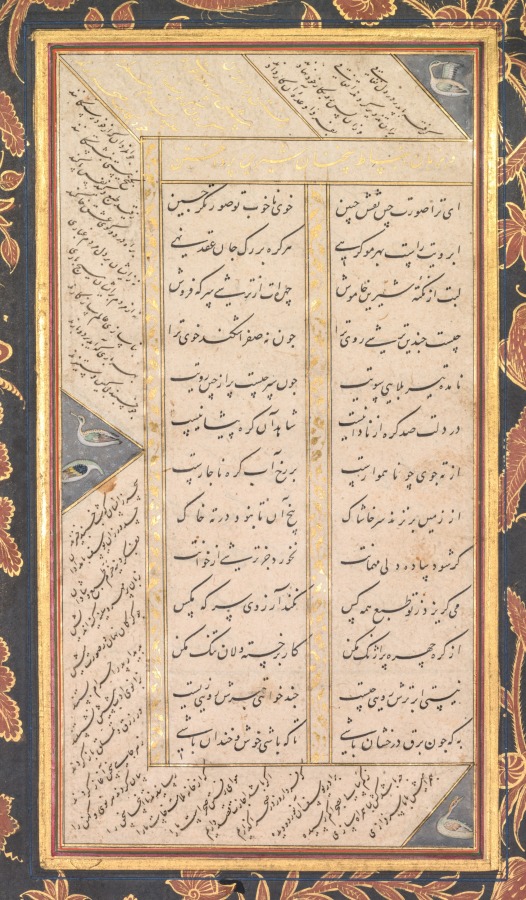
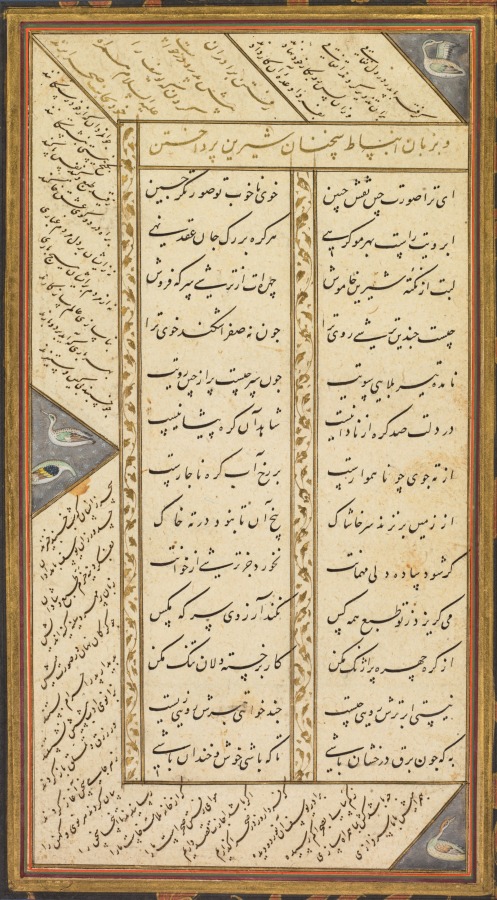
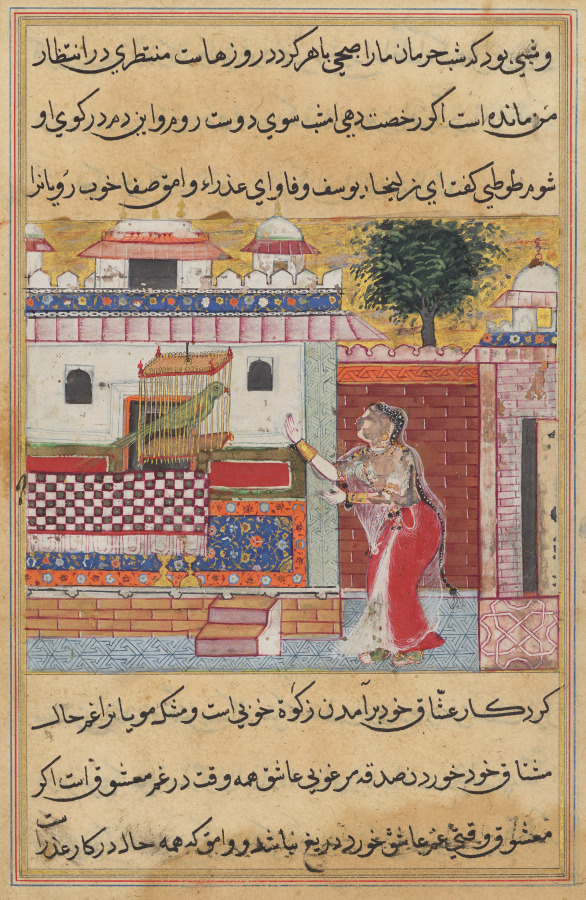
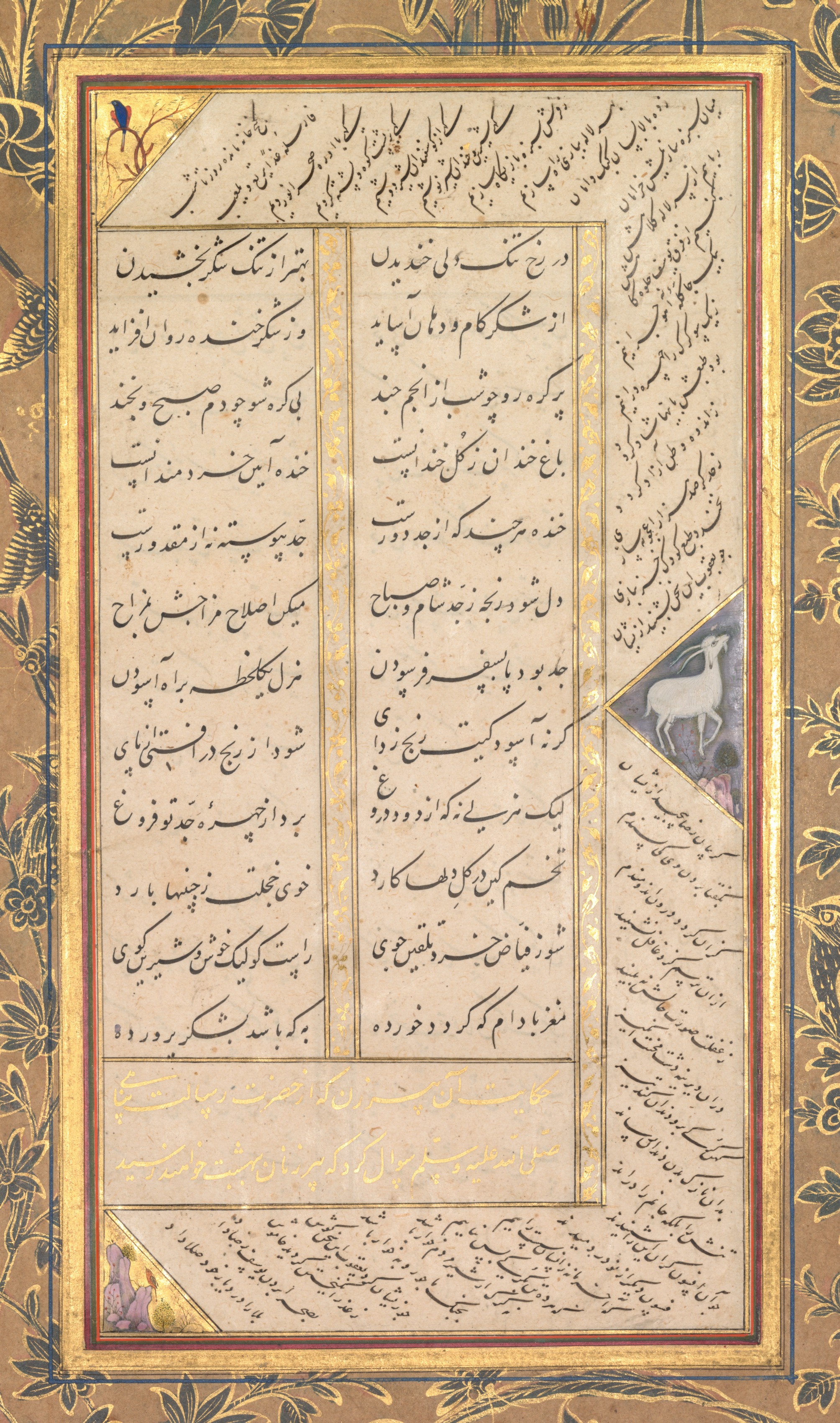
Page from a Panj Ganj (Five Treasures) of Abd al-Rahman Jami (Persian, 1414–1492), with two Persian masnavis: Yusuf va Zulaykha (Joseph and Zulaykha) and Subhat al-abrar (Rosary of the Righteous) (verso)
Mushfiq (Indian, active early 1600s)
and others (Indian)
1520–1607
- Medium
- Gum tempera, ink, and gold on paper
- Classification
- Painting
- Dimensions
- Page: 30.2 x 18.1 cm (11 7/8 x 7 1/8 in.)
- Culture
- Northern India, Mughal, early 17th century
- Museum
- Cleveland Museum of Art, Indian and Southeast Asian Art
- Credit line
- Gift in honor of Madeline Neves Clapp; Gift of Mrs. Henry White Cannon by exchange; Bequest of Louise T. Cooper; Leonard C. Hanna Jr. Fund; From the Catherine and Ralph Benkaim Collection
- Rights
- Public domain (CC0), as the museum states it.
- Who can see it
- Teens profiles and older: its museum says too little about what it shows to place it for younger viewers. How works are placed
View at the Cleveland Museum of Art
About this work
This page is from a prized manuscript owned by one of the most respected statesmen of the imperial Mughal court, Abd al-Rahim. He served as the Khan Khanan, or vizier, the trusted minister under both Akbar and Jahangir. Abd al-Rahim was an avid book collector and patron of the arts. He acquired this book of five extended narrative poems, which included the story told in rhyme of the romance between Joseph and the Egyptian lady Zulaykha, about 80 years after its completion. The book’s illumination had not been finished, so Abd al-Rahim commissioned the exuberant decor of the borders and insets along with fullpage paintings that illustrate key scenes in the text.