Window mode follows your eyes with your camera, in this browser only: no picture or position leaves your device.
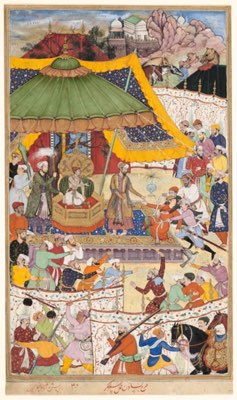
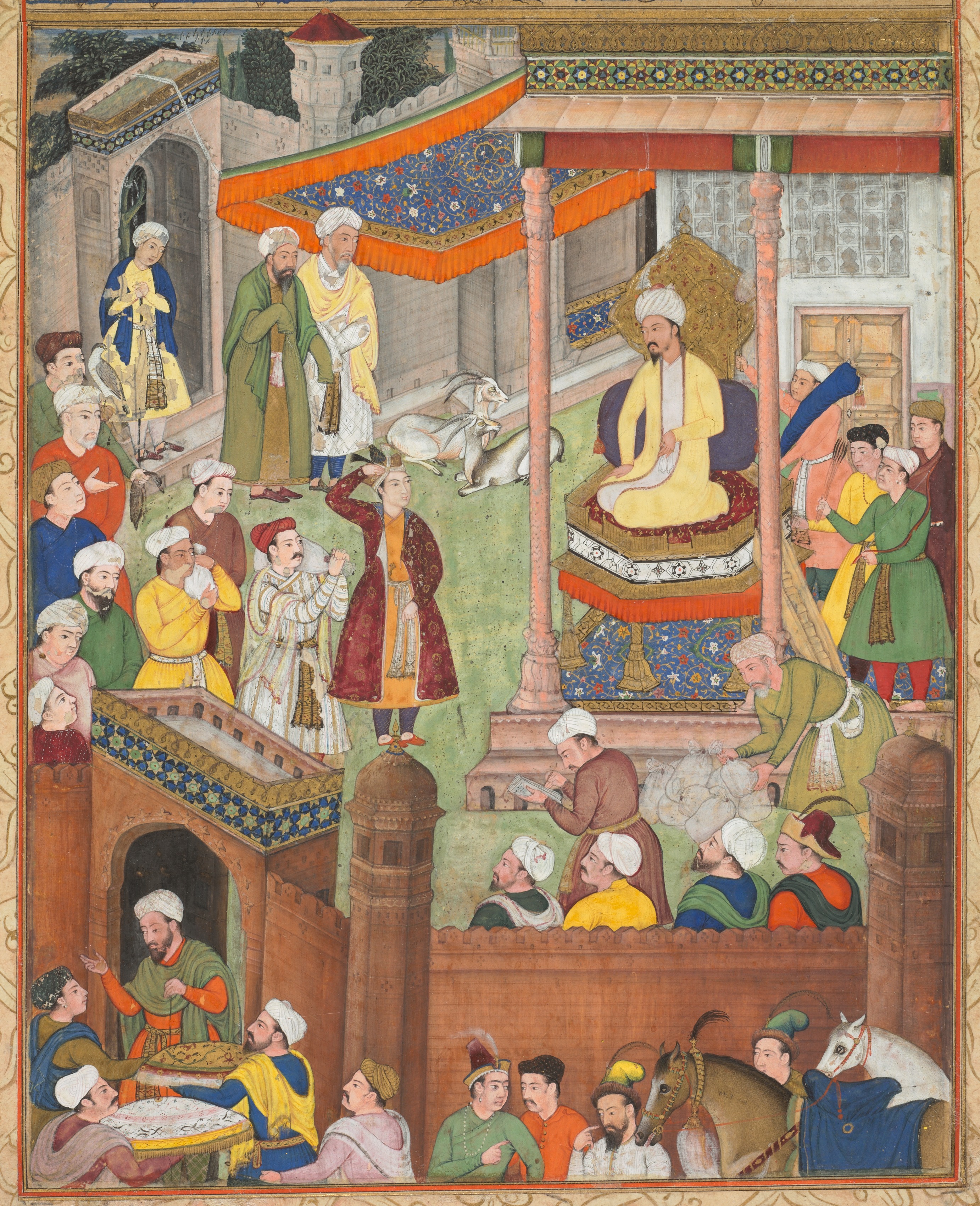
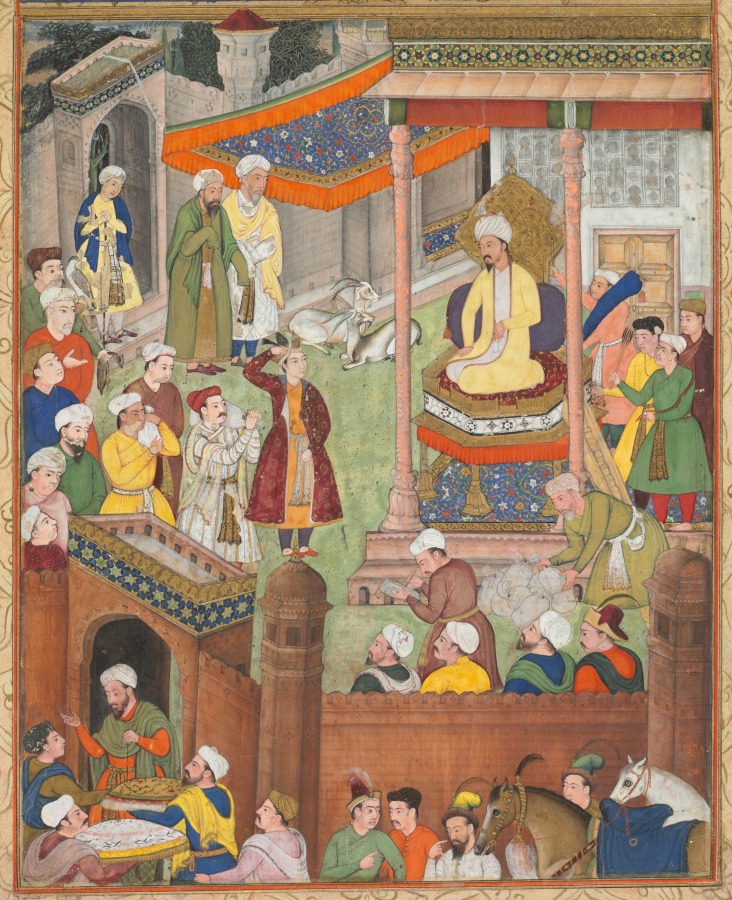
Babur receives booty and Humayun’s salute after the victory over Sultan Ibrahim in 1526, from an Akbar-nama (Book of Akbar) of Abu’l Fazl (Indian, 1551–1602)
c. 1596–1597 or 1604
- Medium
- Gum tempera and gold on paper
- Classification
- Painting
- Dimensions
- Page: 42 x 27.6 cm (16 9/16 x 10 7/8 in.)
- Culture
- Mughal India, court of Akbar (reigned 1556–1605)
- Museum
- Cleveland Museum of Art, Indian and Southeast Asian Art
- Credit line
- Gift in honor of Madeline Neves Clapp; Gift of Mrs. Henry White Cannon by exchange; Bequest of Louise T. Cooper; Leonard C. Hanna Jr. Fund; From the Catherine and Ralph Benkaim Collection
- Rights
- Public domain (CC0), as the museum states it.
- Who can see it
- Teens profiles and older: its museum says too little about what it shows to place it for younger viewers. How works are placed
View at the Cleveland Museum of Art
About this work
The first Mughal emperor Babur sits enthroned as men bring gifts and sacks of tribute to mark a successful expansion of his territories. Emblematic of his role in leading the victory, his son Humayun wears a wine-and-gold robe of honor despite the Delhi heat in late April.
Marking the royal space are a carpet and canopy painted with a lapis lazuli ground. The floral vine motif called arabesque swirls around a central lobed medallion. These delicate patterns are inspired from Persian manuscript illuminations. Contemporary historians describe awnings of gold embroidery, brocade, and velvet along with colorful carpets resembling a beautiful flower bed.