Window mode follows your eyes with your camera, in this browser only: no picture or position leaves your device.
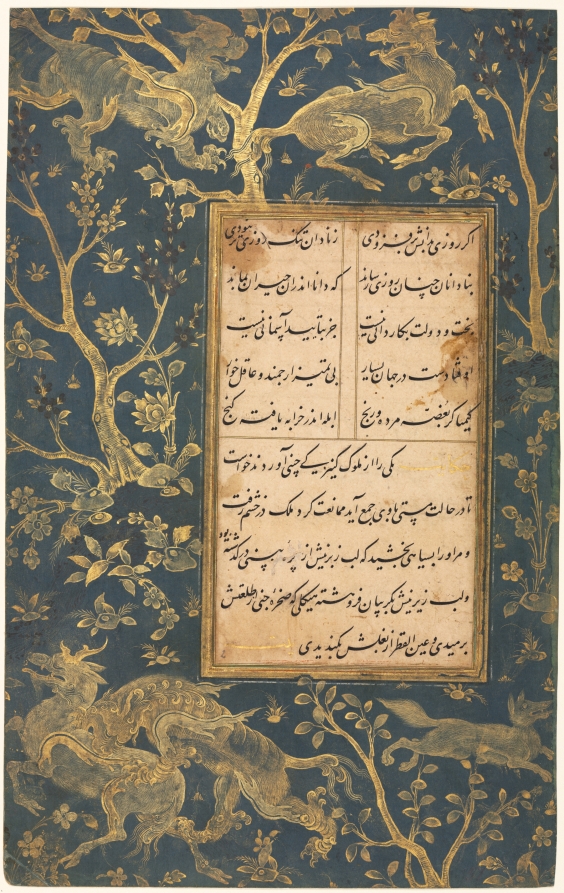
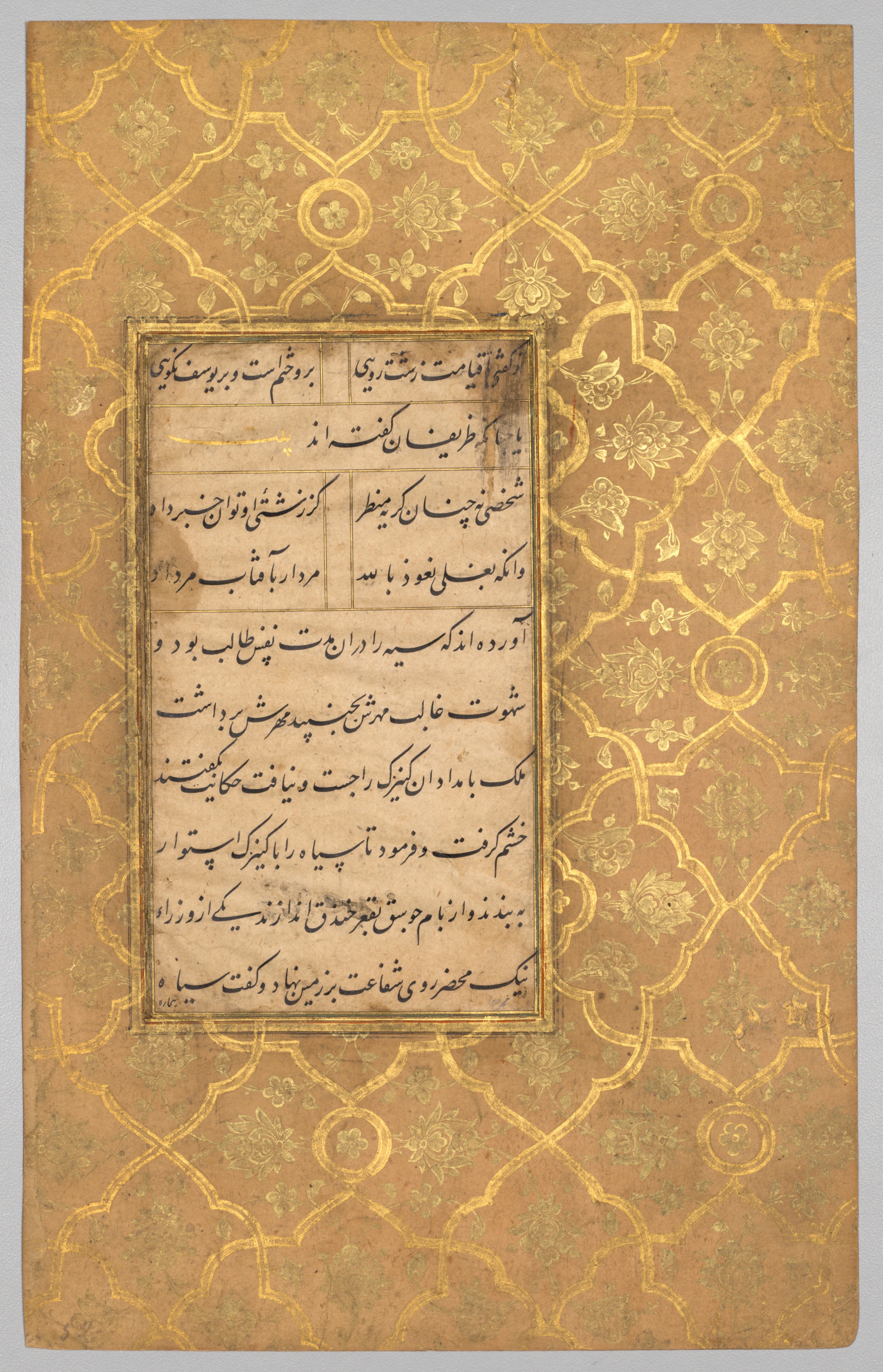
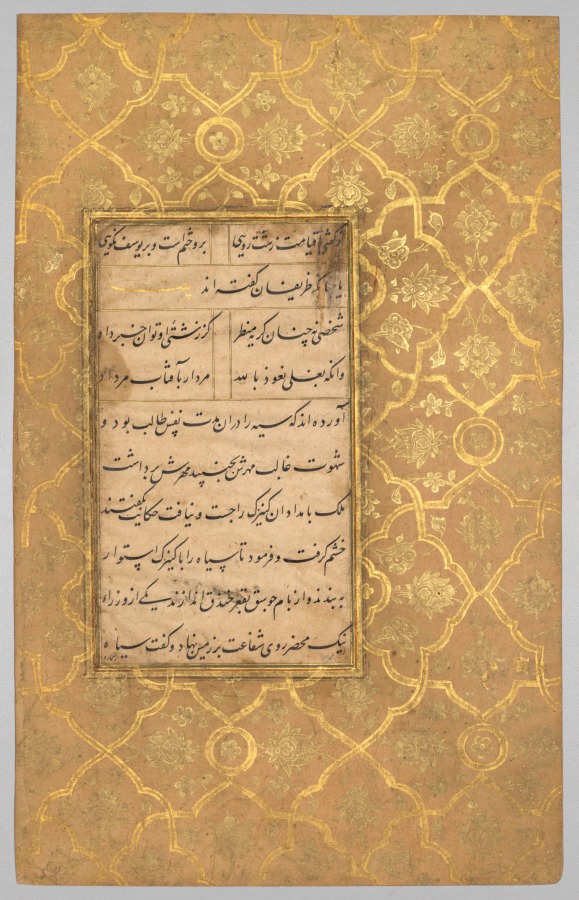
Illuminated folio (verso) from a Gulistan (Rose Garden) of Sa'di (c. 1213–1291)
Sultan 'Ali al-Mashadi (Iranian, 1430–1520)
calligraphy: c. 1475–1500; border: c. 1550
- Medium
- Gum tempera, ink, gold, and silver on paper
- Classification
- Manuscript
- Dimensions
- Overall: 30 x 19 cm (11 13/16 x 7 1/2 in.); Text area: 16.3 x 9.8 cm (6 7/16 x 3 7/8 in.)
- Culture
- Iran
- Museum
- Cleveland Museum of Art, Islamic Art
- Credit line
- Gift of William Kelly Simpson in memory of his wife Marilyn M. Simpson and her grandparents Mr. and Mrs. John D. Rockefeller Jr.
- Rights
- Public domain (CC0), as the museum states it.
- Who can see it
- Little Ones profiles and older: it shows gentle subjects for the very young. How works are placed
View at the Cleveland Museum of Art
About this work
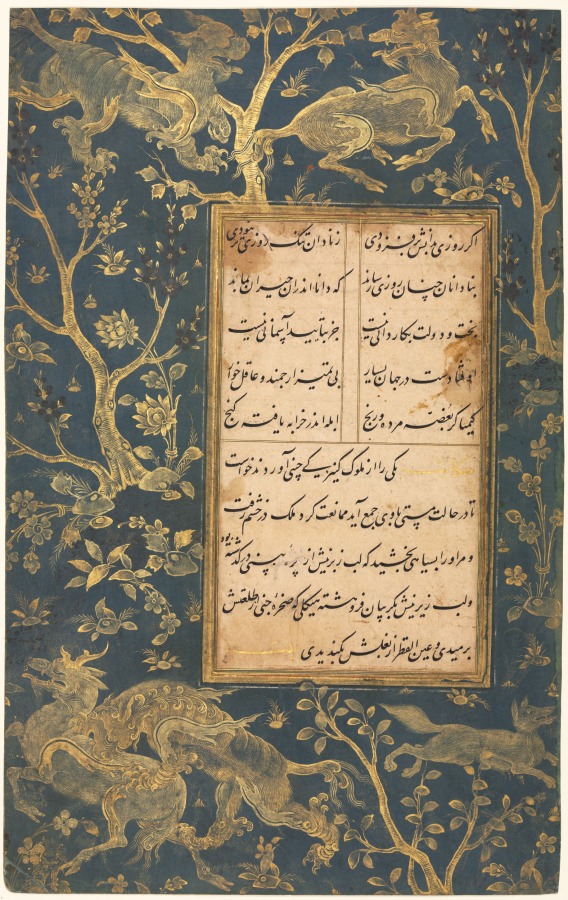
The border scene is set in a magical forest bursting with blossoms. At the top, a winged lion chases a winged deer, who is caught in the bottom border. The imagery of a lion biting down on its prey dates from the Achaemenid period in Iran (550–330 BCE) and references the valor of the king. A fox scurries off to the right.
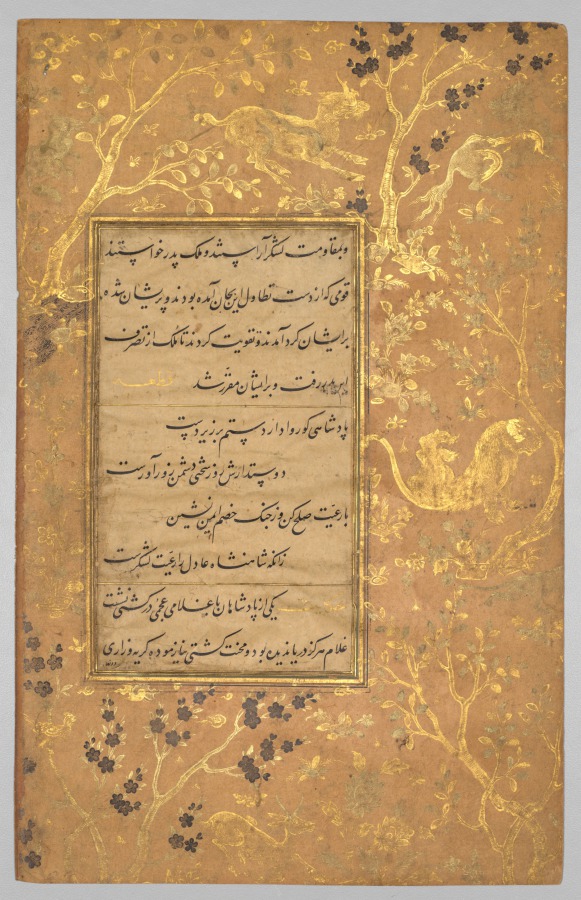
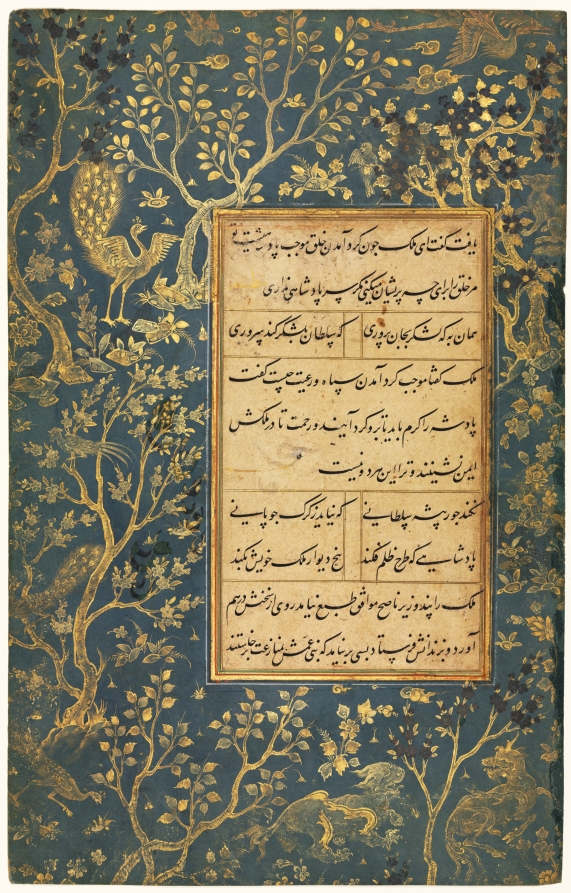
The verse is written in the Persian language using nastaliq script. Sultan ‘Ali Mashadi was widely renowned for perfecting the nastaliq script, and his calligraphy was a model for many followers across the Islamic world.