Window mode follows your eyes with your camera, in this browser only: no picture or position leaves your device.
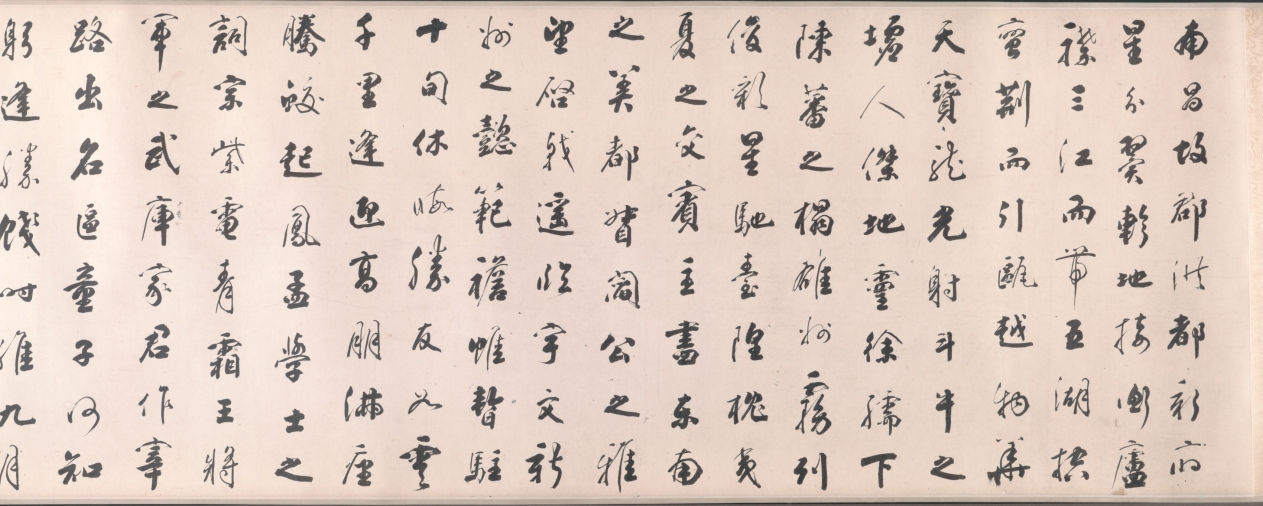
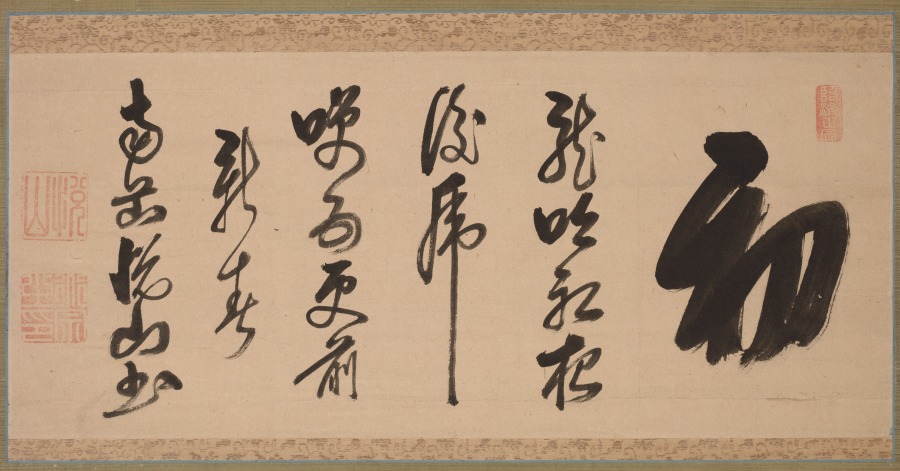
Calligraphy in Semi-Cursive Style (xing-caoshu)
Yueshan Daozong (Chinese, 1629–1709)
c. 1660–1709
- Medium
- Hanging scroll; ink on paper
- Classification
- Calligraphy
- Dimensions
- Image: 28.6 x 64.1 cm (11 1/4 x 25 1/4 in.); Overall with knobs: 115.6 x 73.8 cm (45 1/2 x 29 1/16 in.)
- Culture
- China, Qing dynasty (1644–1911)
- Museum
- Cleveland Museum of Art, Chinese Art
- Credit line
- Gift of Mr. and Mrs. Robert T. Gow
- Rights
- Public domain (CC0), as the museum states it.
- Who can see it
- Tweens profiles and older: its subjects are known and suit older children. How works are placed
View at the Cleveland Museum of Art
About this work
This spontaneous, bold calligraphy style is characteristic of members of the Japanese Ōbaku school (Huangbo in Chinese) of Chan (Zen in Japanese) Buddhism, which was founded in Japan by Chinese monks in the 1600s. The monk Yueshan emigrated to Japan from the Chinese province of Fujian, taking a priestly post at Manpukuji, the headquarters of the Ōbaku school in Japan. He later became the seventh abbot of the distinguished temple.
Yueshan’s calligraphy features rounded characters that allow him to fuse strokes and characters in speedy brush movements. Here the text begins with the large character chu (初, “the beginning”), the initial focus of meditation on the text: The dragon murmurs after sunset. The tiger roars before dawn.