Window mode follows your eyes with your camera, in this browser only: no picture or position leaves your device.
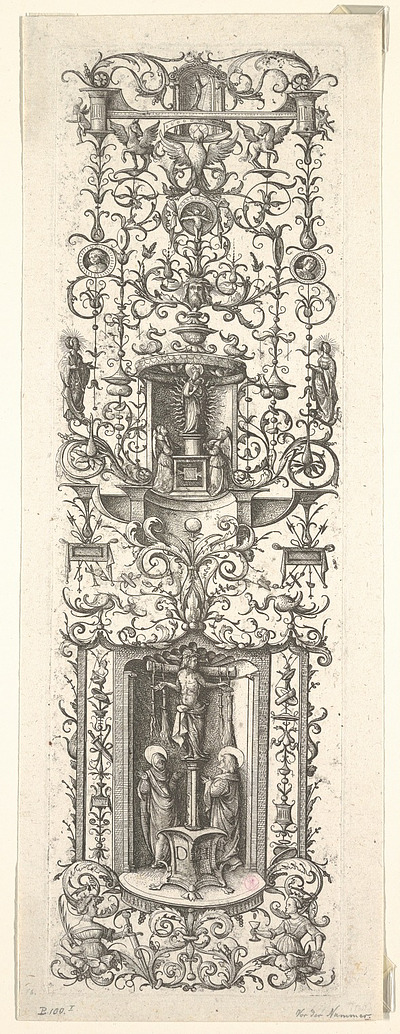
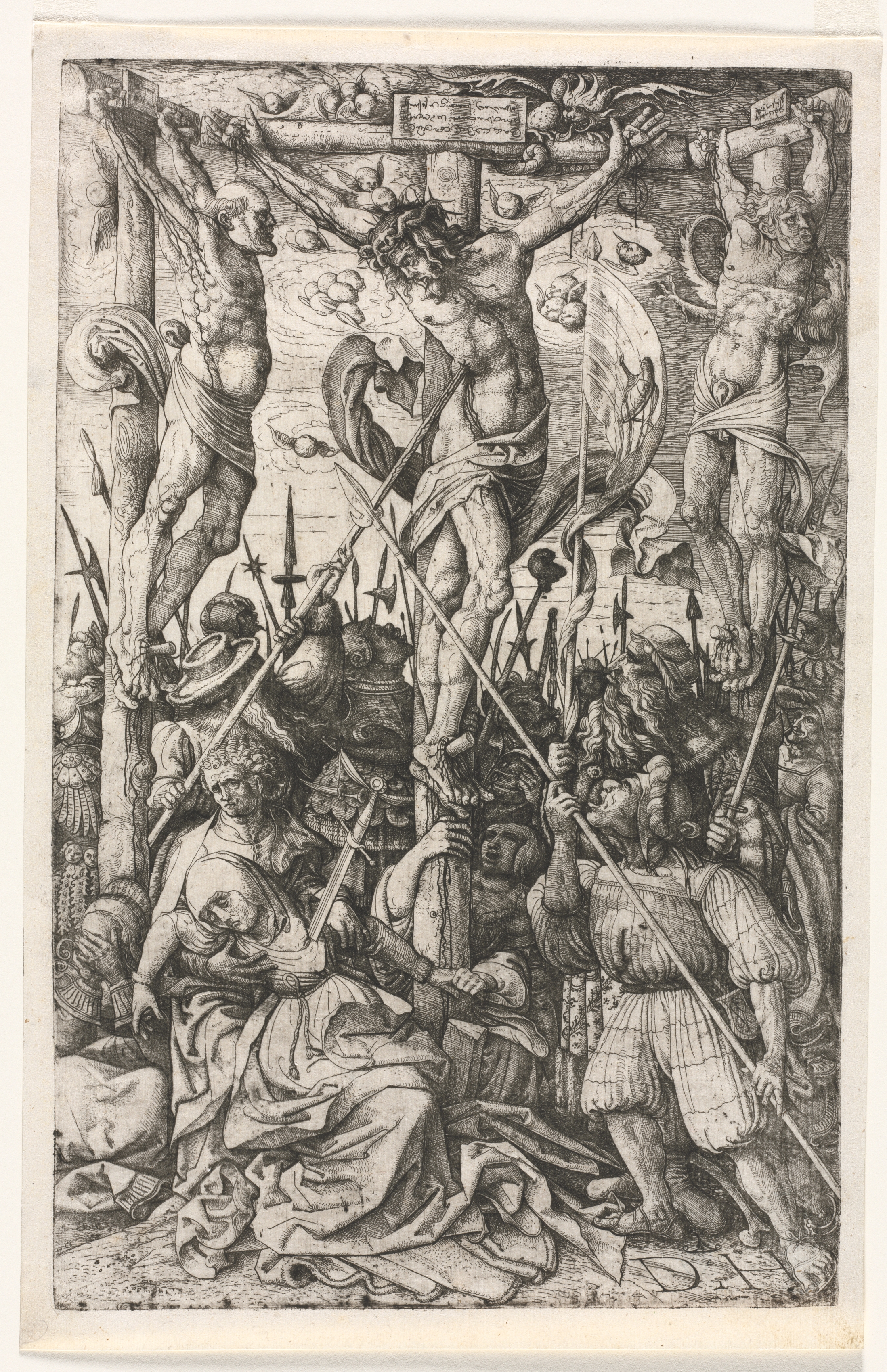
The Calvary
Daniel Hopfer (German, c. 1470–1536)
c. 1520
- Medium
- etching
- Classification
- Culture
- Germany
- Museum
- Cleveland Museum of Art, Prints
- Credit line
- Edwin R. and Harriet Pelton Perkins Memorial Fund
- Rights
- Public domain (CC0), as the museum states it.
- Who can see it
- Teens profiles and older: its subject is for older viewers (war, death, the Passion, drink or the like). How works are placed
View at the Cleveland Museum of Art
About this work
Although recipes for etching iron and steel are recorded at least as early as 1400, scholars have been unable to show that armor designs were etched in Italy or Germany before the end of the 15th century. As early as 1500 iron plates were also used to make prints, probably first in Augsburg, Germany, in the workshop of Daniel Hopfer. Etching allows the artist to draw freely on the plate and so is less laborious than engraving. Because of the acid then available, only iron or steel plates could be used and these rusted. For this reason only a small number of etchings were made (including six by Albrecht Dürer) until about 1550, when the technical difficulties of using copper plates had been overcome.