Window mode follows your eyes with your camera, in this browser only: no picture or position leaves your device.
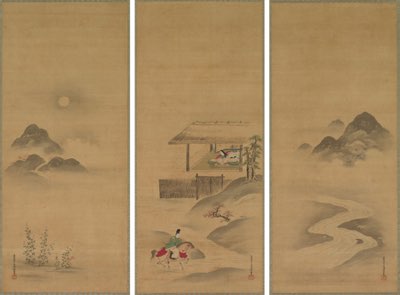
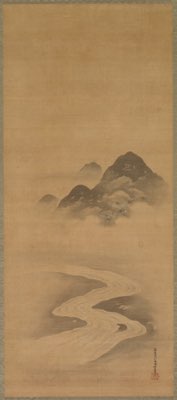
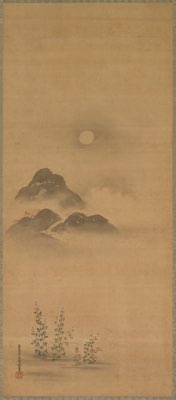
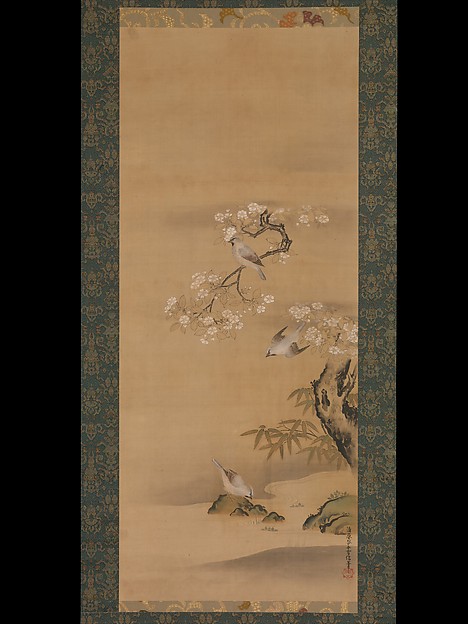
Autumn in Takao
Kiyohara Yukinobu (Japanese, 1643–1682)
late 1600s
- Medium
- hanging scroll; ink and color on silk
- Classification
- Painting
- Dimensions
- Painting only: 89.7 x 32.7 cm (35 5/16 x 12 7/8 in.); Including mounting: 170.2 x 49.6 cm (67 x 19 1/2 in.)
- Culture
- Japan, Edo period (1615–1868)
- Museum
- Cleveland Museum of Art, Japanese Art
- Credit line
- Seventy-fifth anniversary gift of Takashi Yanagi
- Rights
- Public domain (CC0), as the museum states it.
- Who can see it
- Teens profiles and older: its museum says too little about what it shows to place it for younger viewers. How works are placed
View at the Cleveland Museum of Art
About this work
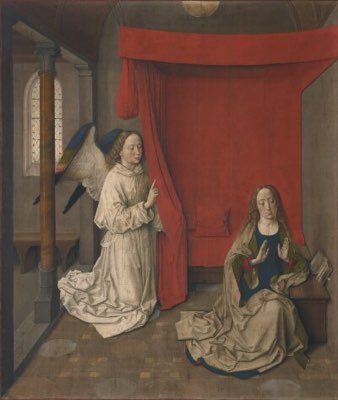
Kiyohara Yukinobu, a native of Kyoto, studied with Kano Tan'yū (1602–1674), the artist-in-residence to the shogun (military ruler) whose official residence was in Edo (Tokyo). Tan'yū traveled extensively because he bore responsibility for the decorative schema and large mural painting programs of the shogunal castles and residences in Nagoya and Kyoto. These were very large projects, requiring the services of legions of craftsmen, including Tan'yū's painting studio. Following her apprenticeship with Tan'yū, Kiyohara established her own career, which featured classical literary themes of the Heian era (10th–12th centuries). This image is set in autumn, and the poem card attached to the maple tree likely signifies the passage of a love affair. Takao is a popular scenic area in the mountains north of Kyoto, where autumn and spring foliage attracts many visitors.