Window mode follows your eyes with your camera, in this browser only: no picture or position leaves your device.
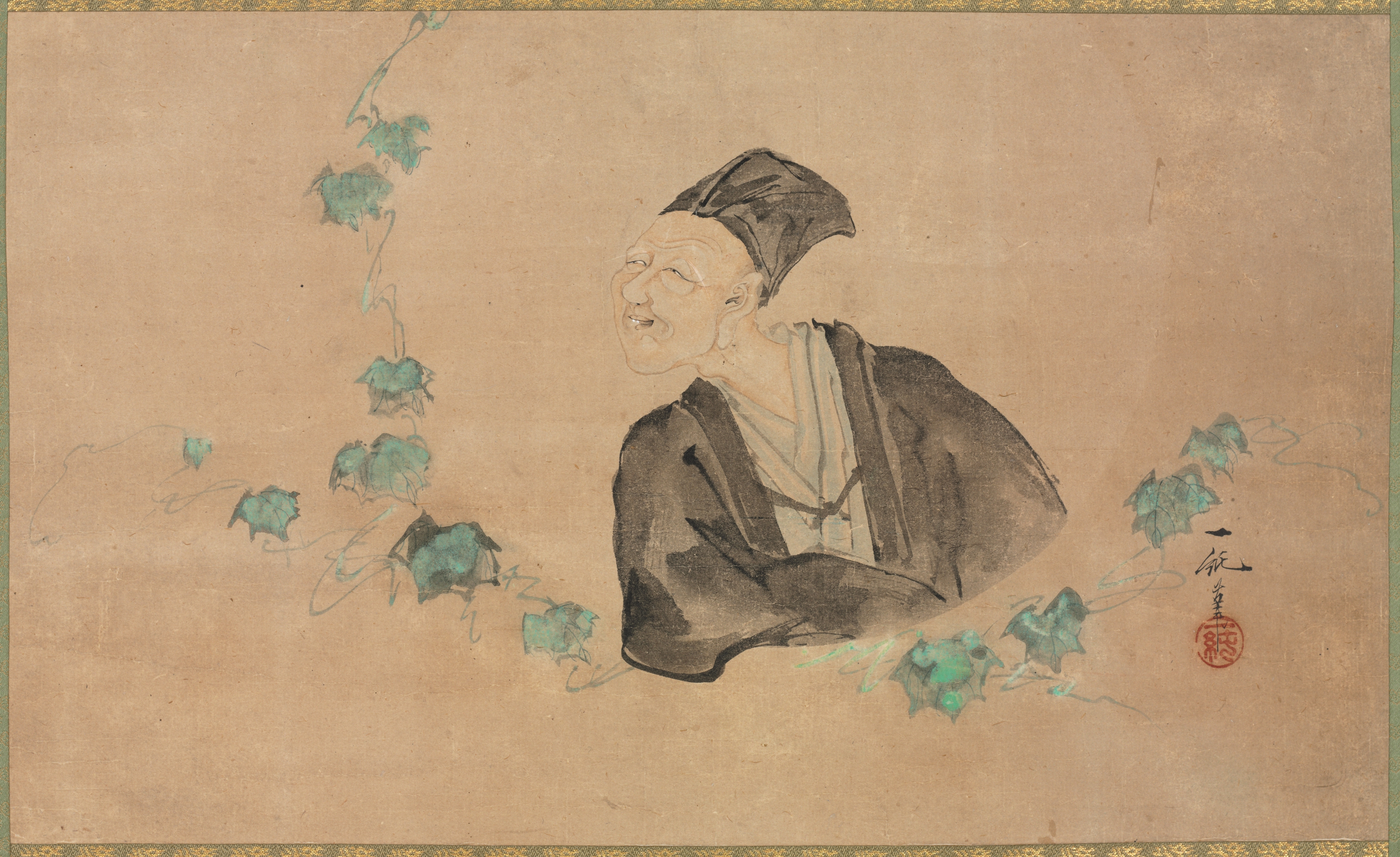
Portrait of Basho
Ichijun (Japanese, active 1700s)
1700s
- Medium
- hanging scroll; ink and color on paper
- Classification
- Painting
- Dimensions
- Painting only: 28.2 x 47 cm (11 1/8 x 18 1/2 in.); Including mounting: 112.5 x 64.2 cm (44 5/16 x 25 1/4 in.)
- Culture
- Japan, Edo period (1615–1868)
- Museum
- Cleveland Museum of Art, Japanese Art
- Credit line
- John L. Severance Fund
- Rights
- Public domain (CC0), as the museum states it.
- Who can see it
- Tweens profiles and older: its subjects are known and suit older children. How works are placed
View at the Cleveland Museum of Art
About this work
The 15th-century poet Matsuo Basho is still considered Japan’s greatest master of the haiku poem, a short, 17-syllable verse form that relates some aspect of nature to the human experience. Although he was one of the most celebrated men of his day, he pursued a simple life of self-imposed poverty and solitude. In this portrait, Ichijun alluded to Matsuo’s haiku about the transient life: warau beshi naku beshi, waga asagao no, shibomu toki (to smile or to cry when my face in the morning [glory] is wilted).