Window mode follows your eyes with your camera, in this browser only: no picture or position leaves your device.
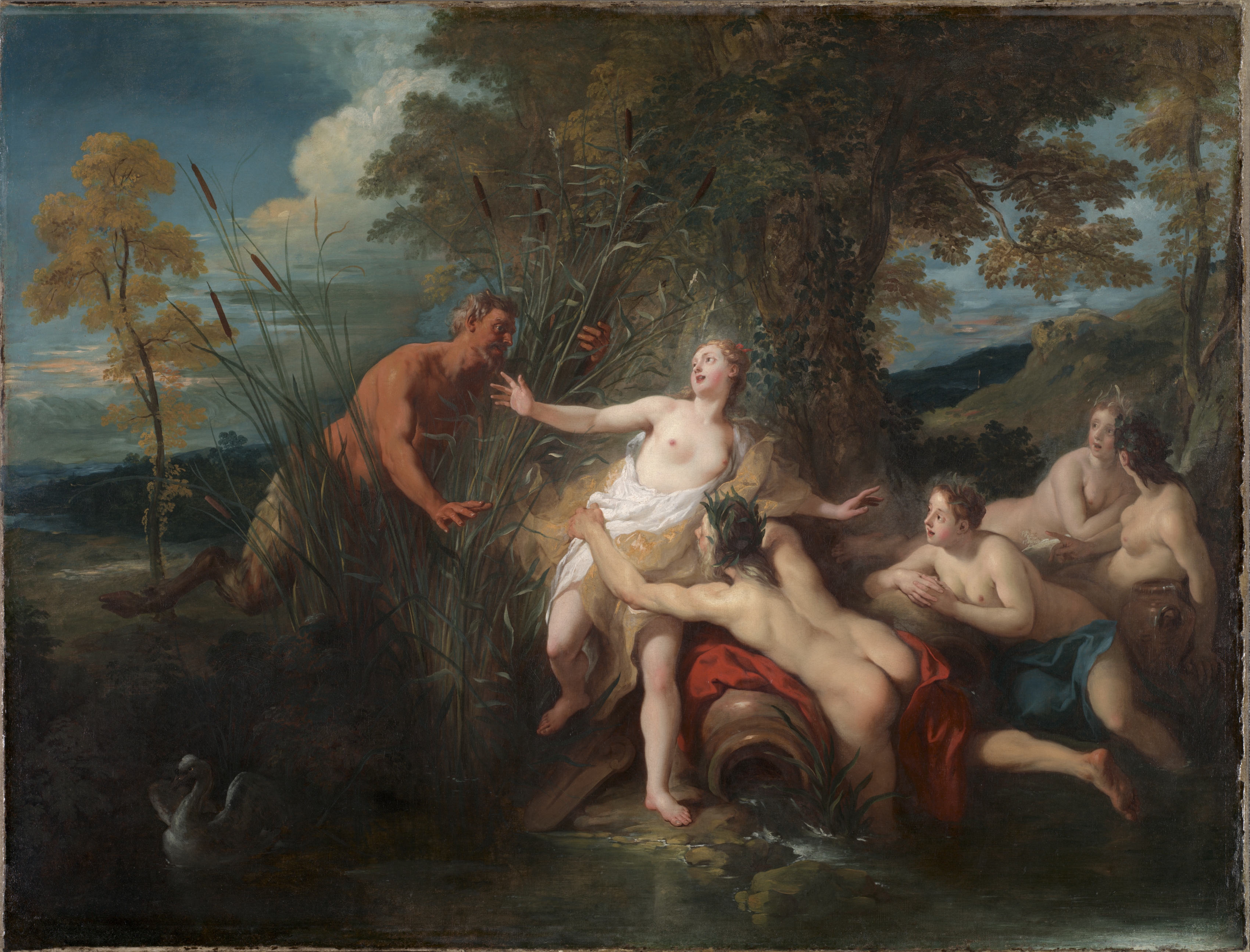
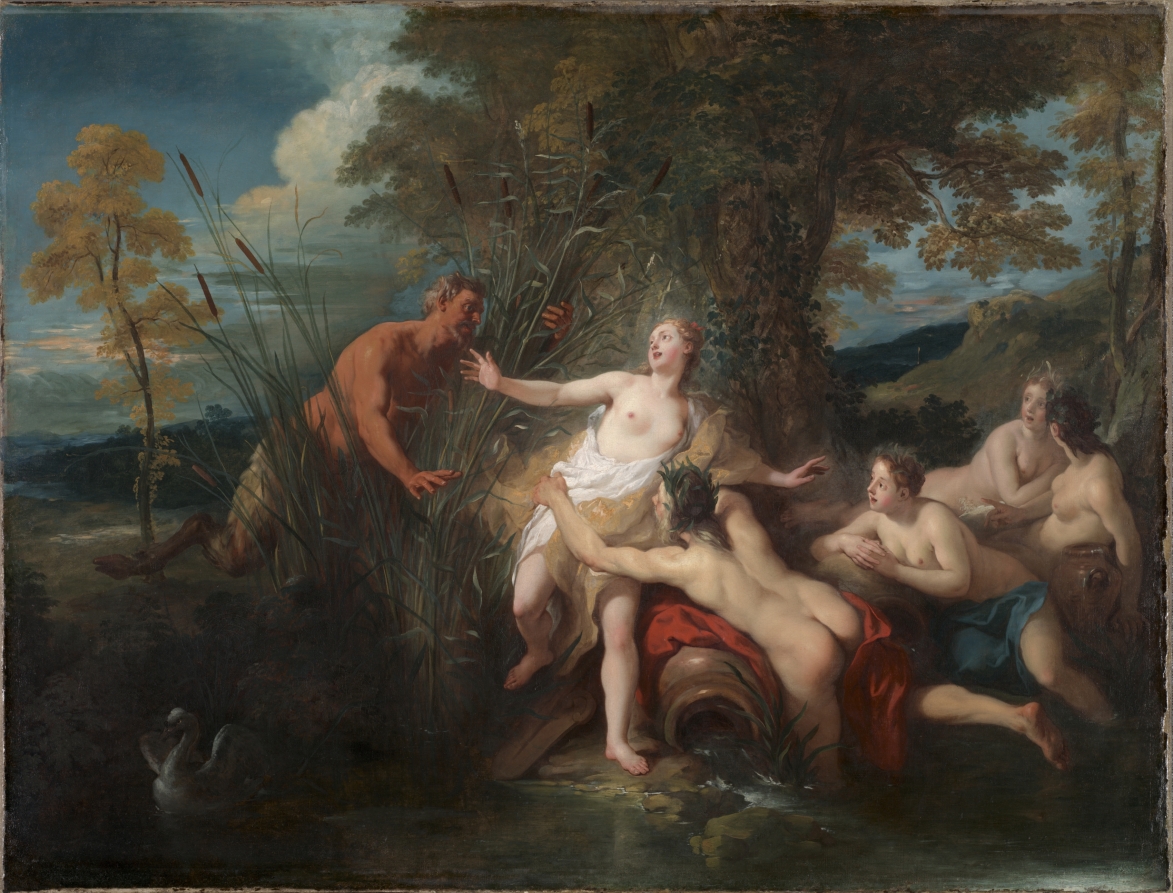
Pan and Syrinx
Jean François de Troy (French, 1679–1752)
1720
- Medium
- oil on canvas
- Classification
- Painting
- Dimensions
- Framed: 123.5 x 159.5 x 12 cm (48 5/8 x 62 13/16 x 4 3/4 in.); Unframed: 106 x 139 cm (41 3/4 x 54 3/4 in.)
- Culture
- France
- Museum
- Cleveland Museum of Art, European Painting and Sculpture
- Credit line
- Mr. and Mrs. William H. Marlatt Fund
- Rights
- Public domain (CC0), as the museum states it.
- Who can see it
- Teens profiles and older: its museum says too little about what it shows to place it for younger viewers. How works are placed
View at the Cleveland Museum of Art
About this work
Subjects drawn from classical mythology posed a challenge for painters: they demanded skill in depicting the human body in complex poses, as well as knowledge of ancient texts and an ability to interpret them imaginatively. Jean François de Troy’s rich colors and voluptuous figure types were ideal for depicting the sorts of mythological subjects favored by his elite patrons, which generally focused on themes of love. In a myth recounted in the Roman poet Ovid’s Metamorphoses, the nymph Syrinx fled from the lecherous advances of the god Pan. Trapped at the edge of a river, she begged for a way to escape, and the gods transformed her into reeds. Pan later gathered these reeds to form the pan pipes, the musical instrument forever associated with him.