Window mode follows your eyes with your camera, in this browser only: no picture or position leaves your device.
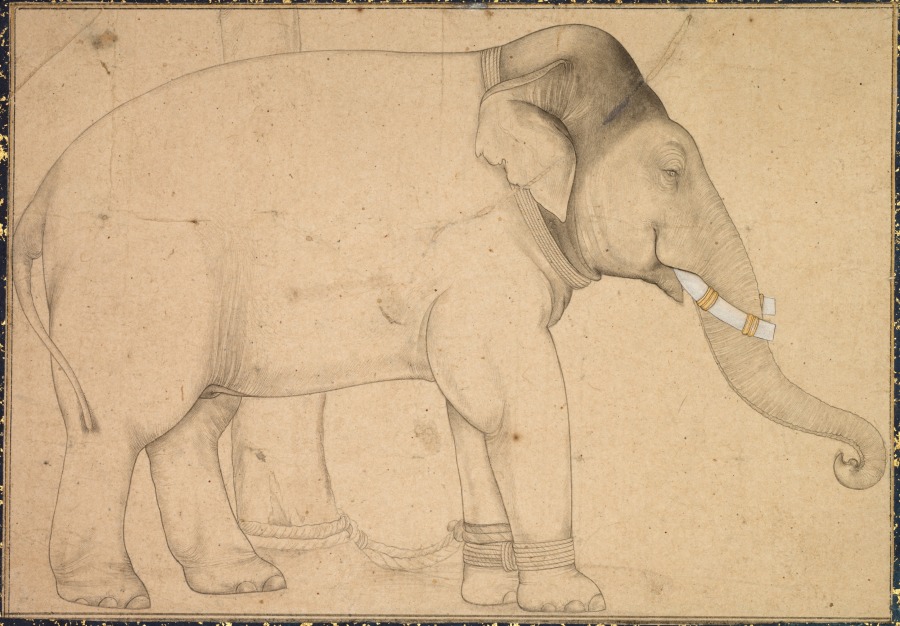
Drawing of an Elephant
c. 1700
- Medium
- ink on paper
- Classification
- Painting
- Dimensions
- Image: 12.8 x 18.1 cm (5 1/16 x 7 1/8 in.); Overall: 20 x 25.3 cm (7 7/8 x 9 15/16 in.)
- Culture
- India, Mughal School, early 18th Century
- Museum
- Cleveland Museum of Art, Indian and Southeast Asian Art
- Credit line
- Edward L. Whittemore Fund
- Rights
- Public domain (CC0), as the museum states it.
- Who can see it
- Little Ones profiles and older: it shows gentle subjects for the very young. How works are placed
View at the Cleveland Museum of Art
About this work
Beginning with Babur, but especially with Akbar, the Mughal emperors displayed an enormous interest in and affection for the elephants of India. The palace housed many elephants, used by the royal court for practical tasks such as carrying heavy loads through rivers and over difficult ground, for charging into battle, and, sometimes, for executing captives. They were also used for entertainment purposes such as riding, ceremonial processions, hunting, and fighting. Royal elephants were cared for by trained staff and kept on a special diet. Their tusks, necks, and ankles were often decorated with golden chains and hoops encrusted with jewels and pearls.