Window mode follows your eyes with your camera, in this browser only: no picture or position leaves your device.
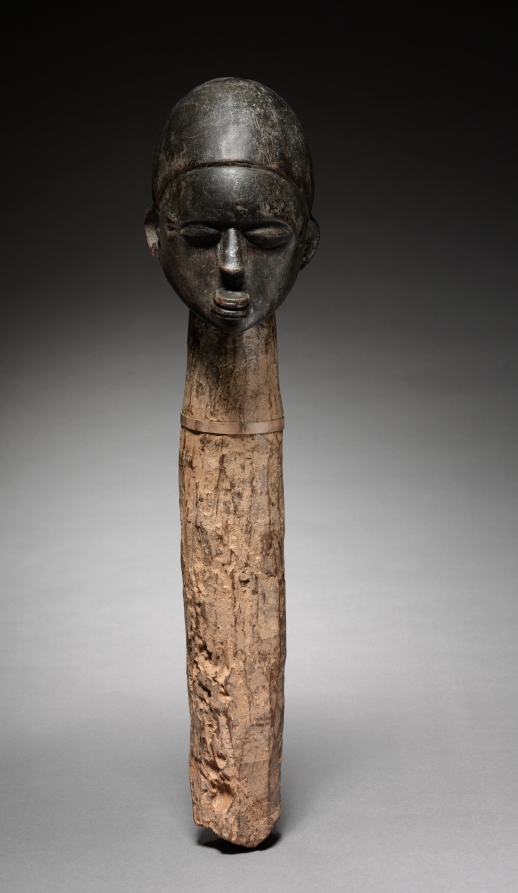
Figure (baàthíl)
c. 1900
- Medium
- Wood and organic materials
- Classification
- Sculpture
- Dimensions
- Overall: 63.6 cm (25 1/16 in.)
- Culture
- Burkina Faso, Ghana, or Côte d’Ivoire, Lobi–style artist
- Museum
- Cleveland Museum of Art, African Art
- Credit line
- Gift in memory of Mr. and Mrs. Ralph M. Coe from various donors
- Rights
- Public domain (CC0), as the museum states it.
- Who can see it
- Tweens profiles and older: its subjects are known and suit older children. How works are placed
View at the Cleveland Museum of Art
About this work
This headpost (baàthíl) was likely a temporary sanctuary for khélé, a harmful spirit released after killing a person or dangerous animal. Around 1900, members of the Milkuùr religious association used baàthíla to counteract khélé. While the head resembles that of a teenage girl with pierced upper lip and earlobes, the roughly hewn, pole-like bottom suggests otherwise. Buried in an altar, devotees ritually applied materials that darkened the exposed head. When the owner died, the khélé left the sculpture; no longer sacred, it was buried. Milkuùr’s strict rules ensure these objects are made from the appropriate wood and that artists’ names remain secret.