Window mode follows your eyes with your camera, in this browser only: no picture or position leaves your device.
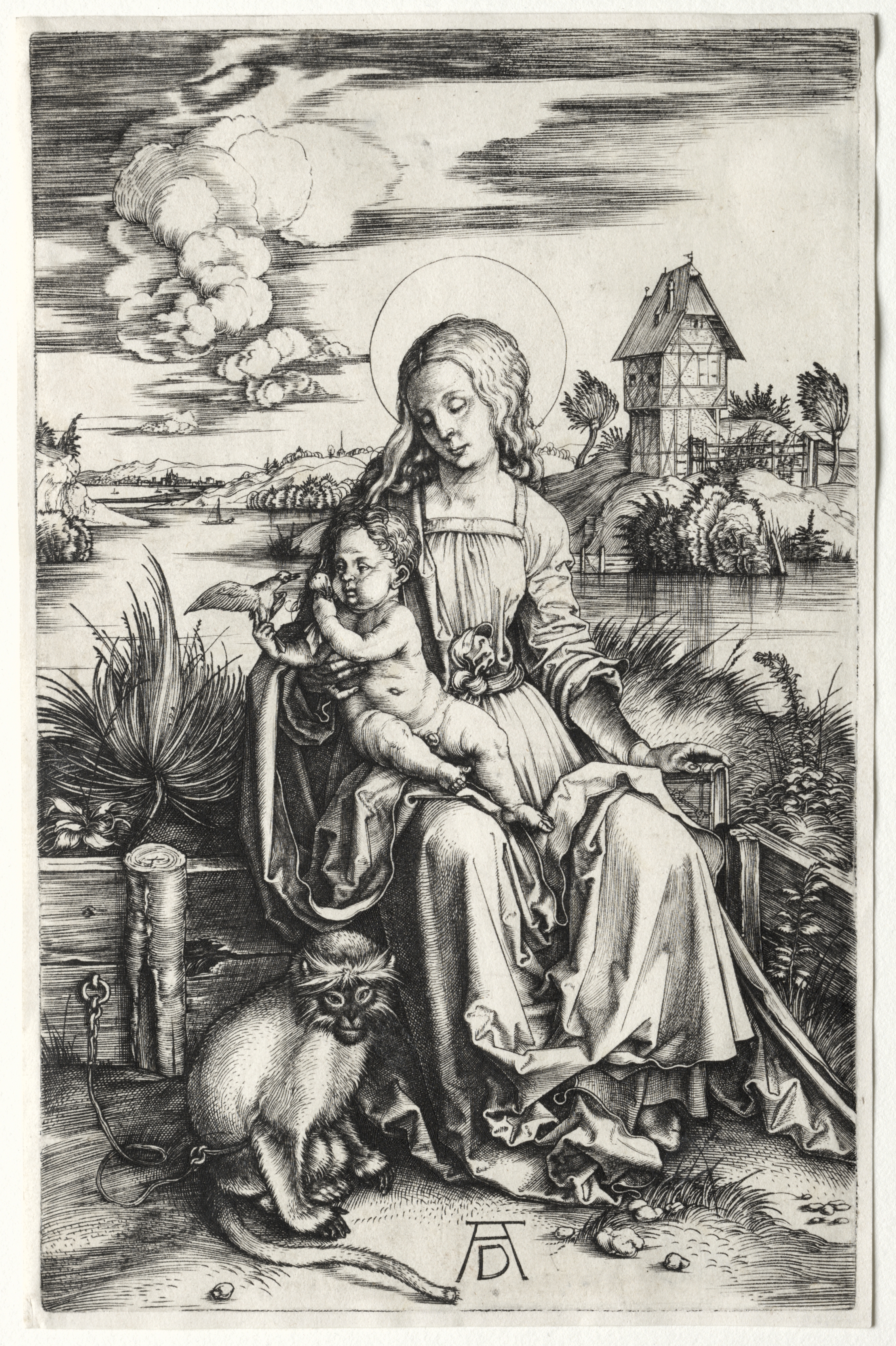
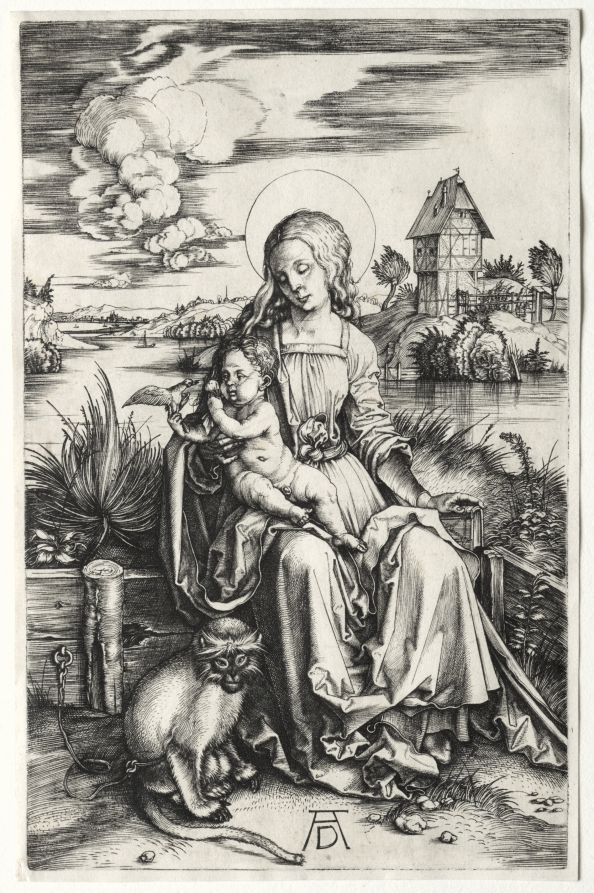
The Virgin and Child with a Monkey
Albrecht Dürer (German, 1471–1528)
c. 1498
- Medium
- engraving
- Classification
- Dimensions
- Image: 19 x 7.9 cm (7 1/2 x 3 1/8 in.)
- Culture
- Germany, late 15th Century-early 16th Century
- Museum
- Cleveland Museum of Art, Prints
- Credit line
- Dudley P. Allen Fund
- Rights
- Public domain (CC0), as the museum states it.
- Who can see it
- Tweens profiles and older: its subjects are known and suit older children. How works are placed
View at the Cleveland Museum of Art
About this work
Catholic theology during the Renaissance taught the Virgin Mary as a woman born without original sin, an idea manifested in botanical and zoological symbols. Albrecht Dürer portrayed the Virgin and Christ child within a garden enclosed by a low wood gate. Mary gazes down at her son, who holds a bird with his left hand, a symbol of the souls he will save through his Crucifixion. The tamed monkey, chained to the fence, is an accurate zoological study (probably a Barbary macaque) with a theological role: associated with bodily pleasure, it shows the power of Mary’s virtue over Eve’s sin.